12 months – 12 moments: a year in review
January: Setting the scene for prevention
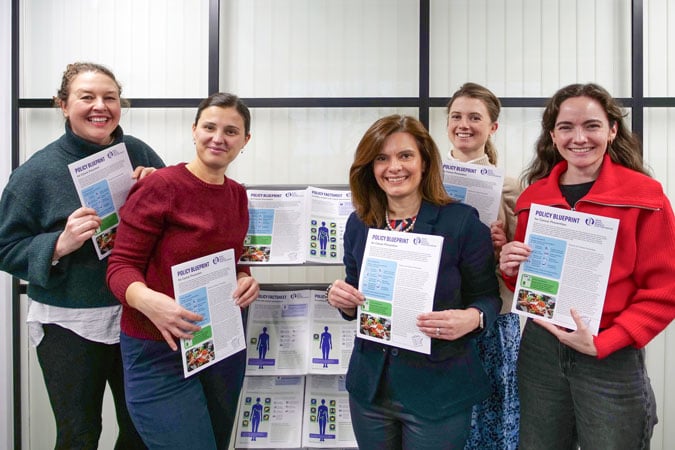
We started the year strongly with the launch of our Policy Blueprint for Cancer Prevention, our new flagship advocacy tool outlining a clear roadmap for policymakers to curb rising cancer rates through prevention. Bringing together evidence and policy guidance across diet, weight, breastfeeding, physical activity, and alcohol, the blueprint offers practical tools and factsheets to support healthier environments and reduce inequities.
It also highlights the wider co-benefits of prevention for resilient health systems, economies, and societies. Since launch, it has been downloaded 1433 times (and is our 5th most popular download) and presented at 2 conferences.
February: Taking international nutrition policy to UK Parliament
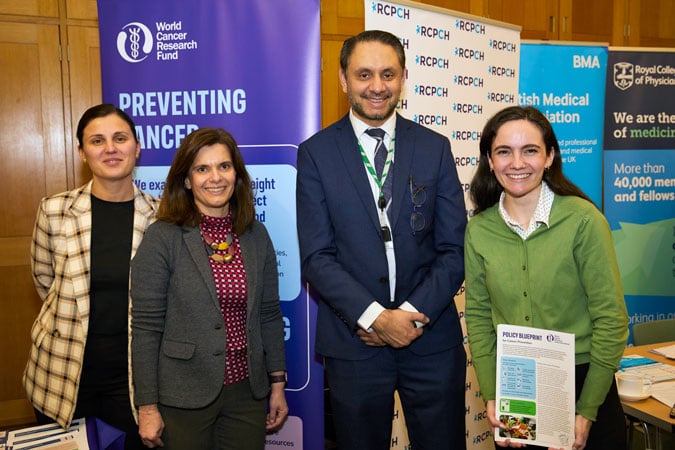
We participated in our first Obesity Health Alliance parliamentary event, meeting with the Minister for Prevention and 11 other Members of Parliament (MPs) to share our expertise in international nutrition policy.
We highlighted the link between obesity and cancer and the need for an integrated policy approach, as set out in our Policy Blueprint for Cancer Prevention.
We also shared best practice examples from other countries that the UK can learn from – critically demonstrating to MPs that it is possible for the UK to take meaningful action on obesity.
March: Welcoming new Policy Advisory Group members
Our Policy Advisory Group brings together leading policy experts from government, academia, and civil society around the world to guide WCRF’s efforts to turn evidence into action.
In March we officially welcomed four new members to the group: Dr Henry Li (UK), Dr Terry Slevin (Australia), Pubudu Sumanasekara (Sri Lanka), and Dr Si Thu Win Tin (Fiji) – expanding the group’s expertise to include more of our policy priority areas and increasing regional representation.
April: Making prevention central to England’s National Cancer Plan
Following the UK government’s World Cancer Day announcement of a new National Cancer Plan for England, we responded to the call for evidence with a clear message: prevention must be central.
Global reviews show most National Cancer Control Plans overlook prevention, and England must not repeat this mistake. Our submission therefore called for strong primary and tertiary prevention measures and bold action on modifiable risk factors such as alcohol and obesity.
Prevention remains the most sustainable and cost-effective way to reduce the growing cancer burden. We expect the National Cancer Plan for England to be published in early 2026.
May: Influencing global health for cancer prevention
In May, we attended the UN’s Multi-stakeholder Hearing in New York ahead of the 4th High-Level Meeting (HLM) on NCDs and mental health. We delivered a clear statement urging governments to prioritise cancer prevention through evidence-based, cost-effective policies.
We also launched our advocacy push around our HLM policy brief – calling for bold action on prevention, equity, and protection from industry interference – while meeting with key negotiating blocs.
We highlighted that around 40% of cancers are preventable by addressing modifiable risk factors. This engagement was a key moment in building momentum ahead of the Political Declaration negotiations later in the year.
June: Sparking a national conversation on alcohol and cancer
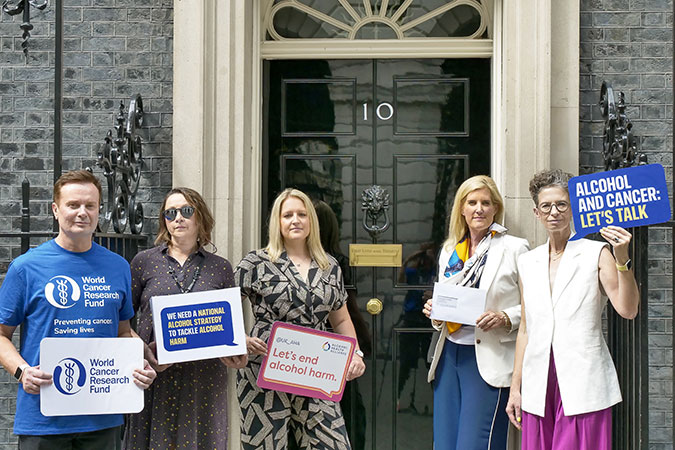
June was a highlight of our year as we marked Cancer Prevention Action Week (CPAW) in the UK, this time focusing on the little-known link between alcohol and cancer. Our bold campaign sparked a national conversation on alcohol consumption and raised awareness of the fact that it increases the risk of 7 cancers.
Working alongside more than 20 organisations and experts, we urged the government to implement a National Alcohol Strategy for England including evidenced-based policies such as minimum unit pricing, marketing restrictions and labelling.
We are thrilled that the government heeded one of our calls, with a commitment to introduce mandatory labelling.
July: Creating UK Parliamentary history
We also supported the first-ever UK Parliamentary debate on alcohol and cancer, which marked a historic moment in raising awareness of this long-overlooked cause of preventable cancer.
Led by Cat Smith MP, the cross-party discussion called for a comprehensive National Alcohol Strategy aligned with WHO ‘Best Buys’. Although the government ruled out a strategy, it did commit to mandatory alcohol labelling with health warnings and nutritional information – a welcome but partial step.
We’ve kept the pressure on alcohol policy since, with work on alcohol licensing, drink driving limits and the forthcoming consultation on labelling.
August: Presenting at the International Congress on Nutrition
We showcased our science and policy expertise on nutrition, cancer prevention and survivorship at the International Congress of Nutrition (ICN) at the end of August in Paris.
This included co-hosting a scientific symposium with Fédération Française de Nutrition (FFN) on our CUP Global Dietary and Lifestyle patterns report, as well as e-posters on our Policy Blueprint for Cancer Prevention and Policy recommendations to reduce the health impacts of alcohol.
September: Global Spotlight – UN High-Level Meeting on NCDs and Mental Health
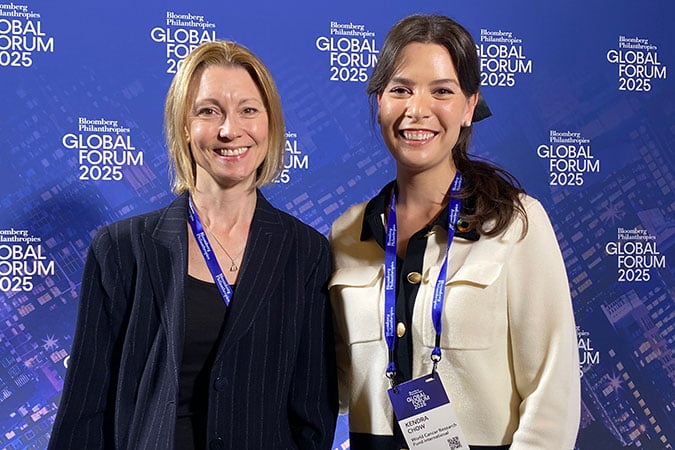
After an intense year of global health activity, the 4th UN High-Level Meeting on NCDs and mental health took place on 25 September in New York. The week was packed with NCD-focused side events and bilateral meetings, where we advocated for stronger, bolder global action on NCDs.
Although the final Political Declaration fell short on ambition for prevention, it included important recognition of cancer and the vital role of quality research. Many heads of state and ministers expressed strong national commitments to tackling NCDs and mental health and emphasised the need for urgent, bold action.
October: The 5th European Code Against Cancer
In October, the 5th edition of the European Code Against Cancer was launched, summarising the most up-to-date knowledge of the preventable causes of cancer.
It includes a set of 14 recommendations to help prevent cancer for individuals, including tobacco smoking, overweight and obesity, unhealthy diet, and lack of physical activity.
We are very proud that our research on these risk factors helped shape these 14 evidence-based recommendations.
November: Connecting with global cancer leaders
We attended the World Cancer Leaders’ Summit, strengthening global partnerships and exploring new collaboration opportunities – including with Australian research leaders and partners from Hong Kong ahead of next year’s World Cancer Congress.
We also met with IARC as they prepare for their 60th anniversary and aligned with the Union for International Cancer Control on promoting the new World Cancer Declaration.
We ended the week in Melbourne visiting Cancer Council Victoria, meeting our grant holders and PhD students – an inspiring reminder of the global partnerships that power our mission to prevent cancer worldwide.
December: Making mandatory alcohol labelling a reality
After securing a major public health victory with the UK government’s commitment to introduce mandatory alcohol labels featuring health warnings and nutritional information, the team is now consulting international partners in countries where similar measures have been considered such as Ireland, South Korea and Norway, to inform our position.
The evidence is clear: cancer warnings are particularly effective in changing consumption behaviours and can help address low awareness of alcohol’s link to cancer. Throughout 2026 and beyond, we will be working to ensure that labels are protected from industry influence and implemented at pace – this is a public health imperative.
Coming up in 2026:
- Review of NOURISHING and MOVING frameworks and databases
- Expanded policy work on breastfeeding, infant nutrition and cancer
- Greater policy focus on cancer survival and adherence to our Cancer Prevention Recommendations
- Providing policy perspectives to new CUP Global reviews and recommendations – including Ultra-processed foods
- Presence at the World Cancer Congress 2026
Read our previous annual round-ups

Get the latest Policy updates
Receive the latest on our databases, publications and how we’re getting involved in cancer prevention policy around the world