
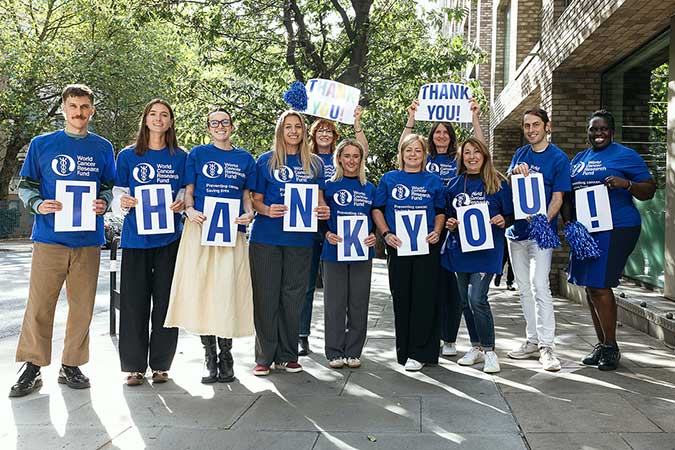
Thank you for your support in 2025!
Understanding the origins of bowel cancer risk
Our funded research showed greater birthweight or body size during childhood, adolescence or young adulthood was linked with higher risk of bowel cancer in later life.
It was the first CUP Global review to analyse and judge all the research examining how factors such as weight, height and body size in early life relate to our risk of bowel cancer as we get older.
Brisk walking cold reduce your cancer risk
Our funded researchers published evidence that brisk walking is linked to a lower risk of 5 cancers, including anal, liver, small intestine, thyroid, and lung.
Smaller waist or more exercise? For cancer prevention, both is best
In the world’s first study looking at the effectiveness of combining maintaining a smaller waist with staying active, we found that only doing one is not enough to lower our risk of cancer.
The study found that people not meeting World Health Organization (WHO) guidelines on waist circumference are at 11% greater risk, even if they are physically active.
And people not meeting WHO guidelines for physical exercise are at 4% greater risk, even if “abdominally lean” (i.e. they have a smaller waist). Achieving neither means a 15% greater risk.
The simple rule that cuts cancer risk by 23%
We released a first-of-its-kind study into how the number of different food types consumed, measured as Dietary Species Richness (the number of species an individual consumes per year) affects the risk of developing gastrointestinal cancer.
The study found that individuals with the most diverse diets had a 23% lower risk of developing gastrointestinal cancers compared with those with the least variety. The risk decreased by 6% for every 10 extra species per year added to their diet.
The growing need for your support
Your generous donations have enabled us to fund 19 new research grants this year, worth a total of £5 million, bringing our network’s achievements over the last 20 years to more than 200 research grants awarded and over £50m invested in research overall.
Over the past year, 13 projects came to a close, delivering inspiring new findings. These completed studies explored many ways to prevent cancer, improve treatment, and support people living with and beyond the disease. They examined how factors like body weight, nutrition, inflammation, and even sleep patterns may influence cancer risk, treatment side effects, and recovery.
Some looked at how early-life infections, obesity, and physical activity can affect cancer risk later in life, while others tested promising treatments or searched for new ways to use cancer drugs. There were also studies researching how to help people living with and beyond cancer live healthier lives, from technology-based tools and personalised vitamin D supplements to culturally tailored support for Indigenous communities and families of children with cancer.
As the number of cancer diagnoses grows worldwide, research into cancer prevention is more vital than ever. Thanks to your continuing support, we can continue to fund novel and innovative research and push the boundaries of knowledge on cancer research so that fewer people die from a preventable cancer.


Preventing cancer. Saving lives
While society continues to search for a cure, our prevention and survival work helps people to live longer, healthier lives – free from the devastating effects of cancer.