
Conference bursary programme
At the end of 2025, we launched our Conference Bursary Programme. This bursary call was open to researchers in low- and middle-income countries (LMICs) to provide financial support to attend IARC’s 60th Anniversary Scientific Conference: Cancer Research into Action.
There’s a global need for more research into cancer prevention and survivorship in underrepresented populations. WCRF International is committed to supporting researchers in LMICs and building future leaders in cancer research in these regions.
We therefore launched a Conference Bursary Programme to provide funding for researchers to attend a key conference in the field.
Through this bursary, we seek to continue our support for researchers in LMICs by facilitating international conference attendance and networking opportunities.
We have awarded bursaries to 6 researchers to attend the conference and present their abstracts on nutrition, alcohol, early life factors, physical activity, and education. These researchers are based in Brazil, Mexico, Côte d’Ivoire, and India.
Bursary Awardees
Abhishek Anand
 Institute: International Institute for Population Sciences
Country: India
Abstract title: From Evidence to Action: Development of a Culturally Appropriate Personalised Nutritional Intervention for Total Gastrectomy in Cancer Survivors in India
This study developed a personalised dietary support intervention for patients with stomach cancer who have had their stomach removed.
By combining global research, clinical guidelines, and patient experiences in India, the study outlines an approach for translating evidence to improve recovery, nutrition, and quality of life after surgery.
Ana Paula Drummond Lage
 Institute: Faculdade de Ciências Médicas de Minas Gerais
Country: Brazil
Abstract title: Implementation Research – Effectiveness of School-Based Cancer Education Intervention and to Generate Policy-Relevant Evidence
This study tested a short, low-cost school program in Brazil that teaches adolescents about cancer prevention, risk factors, patients’ rights, and how to navigate the public health system if cancer is suspected.
The programme improved students’ knowledge and encouraged healthier behaviours. Part of this knowledge was still retained months later, showing the potential for lasting impact and for sharing prevention information with families and communities.
Jaime Ivan Castillo Silva
 Institute: Instituto Nacional de Salud Pública
Country: Mexico
Abstract title: Time-Varying Association of Physical Activity and Survival after Breast Cancer over Long-Term Follow-Up
The study looked at the benefits of physical activity on breast cancer. The results showed that postmenopausal women who exercised for 2.5 or more hours per week before diagnosis had improved survival outcome.
The strongest benefit was seen early after diagnosis but remained significant after 20 years, representing the importance of meeting guideline-level activity before diagnosis.
Kouamé Ambroise Kintossou
 Institute: Institut Pasteur de Côte d’Ivoire
Country: Côte d’Ivoire
Abstract title: Early-life factors and risk of acute leukaemia in children
This research investigated the influence of very early-life factors on childhood leukaemia. Their systematic reviews and meta-analyses showed that some maternal and early-life factors, such as breastfeeding and maternal diet, may protect against leukaemia, while others like high birth weight, certain maternal health conditions, and high coffee intake during pregnancy may slightly increase the risk.
These findings support the development of prevention-oriented strategies targeting early-life exposures.
Jessica Magalhães Cotias Ristow Branco
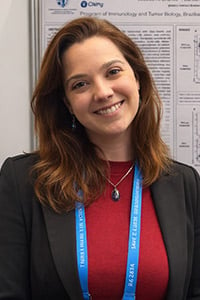 Institute: Brazilian National Cancer Institute – INCA
Country: Brazil
Abstract title: Investigation of dietary influence on lipid droplets biogenesis in colon cancer development
This study investigated how metabolic reprogramming, induced by a high-calorie diet, modulates the environment surrounding the tumour in colorectal cancer, focusing on the accumulation of lipid droplets.
The findings demonstrate tumour cells differing abilities to use lipid droplets as key to cancer progression, suggesting that lipid droplets may serve as both markers for disease progression and novel targets in anti-cancer strategies.
Liliana Gómez Flores Ramos
 Institute: Instituto Nacional de Salud Pública
Country: Mexico
Abstract title: Evidence for Public Health Interventions to Reduce Alcohol Consumption for Breast Cancer Prevention: Results from the Mexican Teachers’ Cohort
This research aimed to assess the impact of alcohol consumption on the incidence of breast cancer in Mexico, due to limited evidence on this relationship in LMICs, especially where women’s alcohol intake tends to be low.
The research showed that even small amounts of alcohol, such as one alcoholic drink per week, can increase the risk of breast cancer in Mexican women, highlighting the importance of public health programmes that aim to reduce alcohol consumption, in women.

View all our funded grants
Search through our database of projects that we support