Achieving a balanced combination of exercise and controlling our waistline is far more effective in reducing our risk of cancer than doing just one or the other, according to a study funded by World Cancer Research Fund.
In the world’s first study looking at the effectiveness of combining these measures, we found that only doing one is not enough to lower our risk of cancer. The study, which looked at more than 300,000 people, found that:
- People not meeting World Health Organization (WHO) guidelines on waist circumference are at 11% greater risk, even if they are physically active.
- People not meeting WHO guidelines for physical exercise are at 4% greater risk, even if “abdominally lean” (ie they have a smaller waist).
- Achieving neither means a 15% greater risk.
The study – WHO guidelines on waist circumference and physical activity and their joint association with cancer risk (Lead researcher: Prof Michael Leitzmann, University of Regensburg) – was published in the British Journal of Sports Medicine.
Prof Michael Leitzman
We're excited about the insights we’ve uncovered regarding the interplay between waist circumference and physical activity in reducing cancer risk. Our findings highlight the value of addressing multiple factors together, showing that both maintaining a recommended waist size and being physically active are critical for cancer prevention. This research reinforces the importance of practical, achievable changes that can have a meaningful impact on health over time.
Dr Helen Croker
This is the first study to examine the independent and combined impact of waist circumference and physical activity levels. The findings underscore the importance of a holistic approach instead of focusing on a single factor to reduce cancer risk. Maintaining a healthy weight and, in particular, having a waist circumference within the recommended level and being physically active, along with eating a healthy diet, are all crucial steps to reduce cancer risk. People can start by making small, sustainable changes like incorporating regular movement into daily routines or choosing healthier food options.
World Cancer Research Fund has been at the forefront of cancer prevention in the UK and globally for decades. We developed Activ8, a free 8-week programme to encourage people to move more, eat well and reduce their cancer risk. Every step is backed by science and brings our Cancer Prevention Recommendations to life.
Latest news and blogs
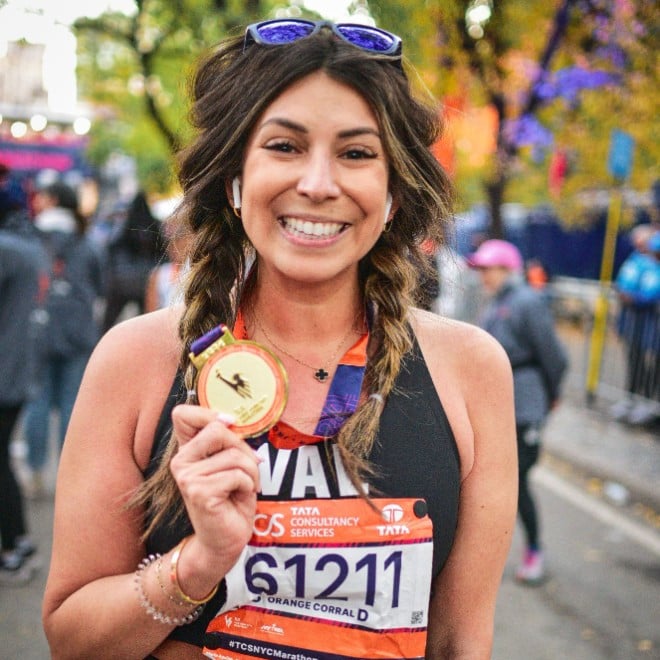
Science and football – while they may not seem like they have much in common, the disciplines meet in the person of Dr Frankie Brown. Frankie is an immunologist and former member of Scotland’s women’s team who has represented her country 96 times on the international stage.
Our funding helped Frankie realise her other dream of researching ways exercise can benefit those living with and beyond cancer.
Helping people with blood cancer
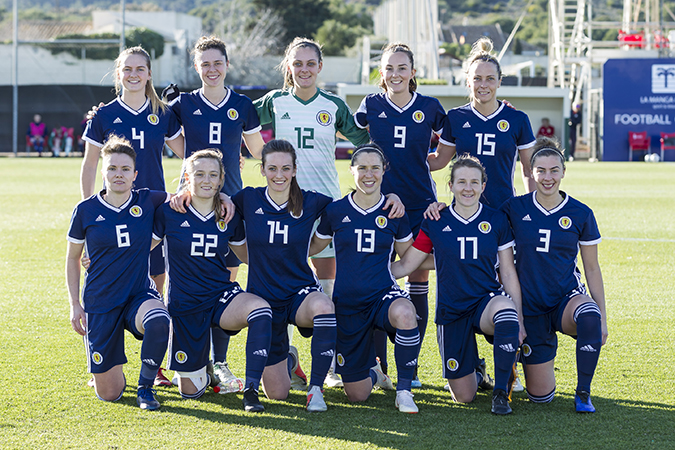
Frankie Brown with her Scotland team-mates
Under Dr Campbell from the University of Bath, Frankie worked in a team on a project funded by us investigating the effects of exercise on the health of patients with chronic lymphocytic leukaemia, a form of blood cancer that affects around 4,000 new people every year in the UK.
The team evaluated the safety and feasibility of a progressive exercise programme for these patients – many who were over 60. Essentially, they tested a “recipe for how to run a big study” more effectively, and even adapted it to continue successfully during the COVID pandemic.
She was inspired by her own background as a professional footballer, as well as her personal experience with cancer:
 “When I was finishing up my PhD, my mum died of breast cancer. That was a real trigger moment for me to look more into oncology. I just couldn’t get my head around it – she had been so healthy. I would wonder, what’s going on here?
“I already knew a lot about health and monitoring my body for football. I started playing football very young, playing with my little brother, and I haven’t stopped since. I was in the Scotland under 17s, then the under 19s, and got into the full squad when I was 21 and was there for 10 years.
“Having spent my whole life in a high-performance environment, with everything being tested and monitored, I became more aware of how my body reacts to even very small shifts in circumstances and situations. It wasn’t hard for me to see how those tiny changes that are so important to athletes can be important for everybody.”
This inspired Frankie to become a researcher, where she found herself on the team led by Dr Campbell and funded by us. There were, however, some setbacks along the way – the biggest being the COVID-19 pandemic. Thanks to the flexibility of our funding programme, Frankie says she and the rest of the team were able to pivot from designing the programme to be in-person, to buying the participants exercise bikes and running a group session over Zoom.
“We had to shift the whole design of the exercise sessions to be home-based and World Cancer Research Fund allowed us to deliver exercise bikes to the participants’ homes. Without that, the trial would have fallen apart.“
‘The more muscle mass you have as you get older, the more independent you will be’
The data showed a 2% increase in lean mass in the exercise group compared with a 0.4% decrease in the control group. This is a significant benefit, as Frankie explains: “The data we have now and the study we’ve done shows that any gain a patient can make with their performance can make a huge difference to their own wellbeing.
“An increase in lean mass – in other words, in muscle mass – in these patients is a huge thing, especially in people over 60. The more muscle mass you have as you get older the more independent you will be. One of our participants lived up some stairs, and whenever I think about the study, I think about them and hope that my work has made it easier for them to get the shopping up and down to their home.”
These results have informed the design of a larger study where Frankie and her team will assess the tumour-suppressing effects and mechanisms of exercise in humans.
Frankie is very vocal about the impact of our support on her work: “In my experience, World Cancer Research Fund has been incredibly supportive of me as a young academic. They’ve provided amazing flexibility at a very uncertain time. I wouldn’t have been able to achieve any of this without you.”