

Grant title: Knockout Cancer: A Cardio Boxing Intervention to Improve Cognitive, Physical, and Psychosocial Function in Older Adults Receiving Immunotherapy
Institution: George Mason University
Grant awarded: September 2026
Funded by: American Institute for Cancer Research
“Starting Knockout Cancer to bring cardio boxing to immunotherapy patients is an exciting first step to improving quality of life for those experiencing the side effects of brain fog. Thanks to the support from the American Institute for Cancer Research, our project will determine the benefits of boxing in immunotherapy patients and we hope to eventually scale our programme and help more patients.”
Assistant Professor Tiphanie Raffegeau
🔍 Click image to enlarge
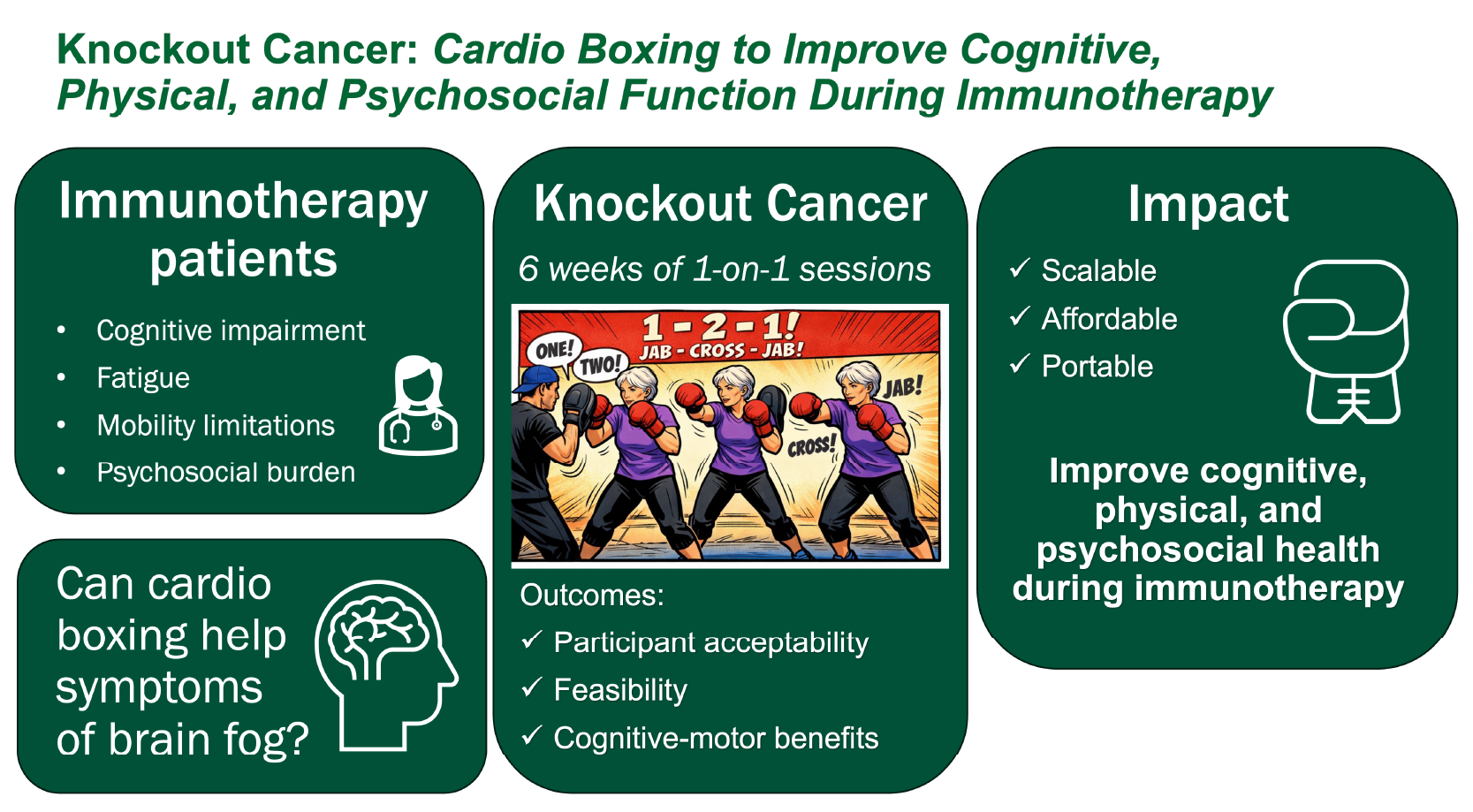
Graphical abstract provided by Assistant Professor Tiphanie Raffegeau
Background
Many people living with cancer describe “brain fog” during or after treatment. This can include trouble focusing, forgetfulness, slower thinking, and less confidence in everyday tasks. Older adults may be especially affected. Treatments that help the immune system fight cancer have improved survival, but they may also add to these thinking problems. Exercise is known to help people with cancer feel and function better, but few studies have tested exercise programmes designed specifically to help brain fog in older adults receiving these treatments.
Aims and objectives
We believe that a supervised cardio boxing programme can be a safe, acceptable, and practical way to support older adults with cancer-related brain fog. We also expect that people assigned to cardio boxing will show early signs of improvement in self-reported brain fog compared with people assigned to an education-only comparison group. The main goals are to learn whether people can be recruited and kept in the study, whether they can attend sessions, whether the programme can be delivered safely, and whether the study measures are useful for a larger future trial. We will also look for early signs of change in thinking, walking, and physical function.
How it will be done
This 12-month study will be carried out through a partnership between George Mason University and Inova Schar Cancer Institute. We will enrol 30 adults aged 60 years and older who have solid cancers, self-reported symptoms of brain fog, have currently or recently received immunotherapy, and are between 3 months and 5 years past their main active treatment, such as surgery and/or chemotherapy. Participants will be assigned by chance to one of two groups. The first group will complete a 6-week cardio boxing programme with two supervised, in-person sessions each week. Sessions will be individual, about 45 minutes long, and delivered on site at Inova to match each person’s abilities and symptoms. The other group will receive weekly phone check-ins and brain fog education using existing Peterson Life with Cancer resources. Everyone will complete questionnaires and simple tests before and after the 6-week study period. We expect about 24 participants to complete the main study assessment. People in the education group will be offered the boxing programme after the main study assessment is finished.
Potential impact
In the short term, this study will show whether this kind of programme can realistically be offered in cancer care and will help improve the plan for a larger trial. In the long term, the findings could support a new, low-cost care option to help older adults manage brain fog, stay active and be independent during and after cancer treatment.
Scientific novelty
This study is new because it focuses on older adults, centres on the symptom patients call brain fog, tests an exercise approach that combines movement with attention, coordination, and quick responses, and is designed to fit within real-world cancer care.