The benefits of brisk walking
Find out how brisk walking can improve your health and wellbeing, with simple tips to help you get started.
Why is walking good for health?
Walking is one of the best ways to add more movement into your day. Being more active in everyday life can improve your health. Walking at a brisk pace, faster than a gentle stroll, may bring even more health benefits.
Research shows that regular brisk walking may help lower the risk of some cancers and help you keep a healthy weight. Being a healthy weight can help protect against at least 13 types of cancer, including bowel, breast and pancreatic cancers.
Walking can also help improve your:
- Mood and mental wellbeing
- Energy levels
- Fitness and heart health
Why is walking good for health?
Brisk walking is a type of moderate-intensity activity. It means walking fast enough to make your heart beat faster and your breathing a bit quicker. You should still be able to talk while you walk. What feels brisk will be different for everyone.
🔗 Download the free NHS Active 10 app to track your steps and see when you are walking at a brisk pace.
How much brisk walking is enough?
Start with a small amount that feels manageable, such as 10 to 15 minutes of brisk walking a day. You do not need to do it all at once. Short walks throughout the day can add up.
In the UK, adults should aim for 20 to 30 minutes of moderate-intensity activity a day. Brisk walking can count towards this goal.
As it gets easier, try walking for longer or a bit faster. If brisk walking feels too much at first, start at a comfortable pace and build up slowly.
🔗 Use our free physical activity diary to plan your walks and track your progress.
Who is brisk walking suitable for?
Start with a small amount that feels manageable, such as 10 to 15 minutes of brisk walking a day. You do not need to do it all at once. Short walks throughout the day can add up.
Brisk walking is suitable for most people. It may be especially helpful if you are:
- New to being active
- Getting back into activity after a break
- Looking for an easy way to move more
- Living with a health condition or disability
Walking can be adapted to suit different needs and abilities. You might walk outdoors or indoors, use a walking aid, walk with a friend or try short walks throughout the day. If you are unsure what is safe for you, speak to a GP, nurse or another qualified health professional before you start.
The most important thing is to start in a way that feels manageable for you.
Getting started with walking
If you are new to being active or getting back into it after a break, start with a few short walks throughout the day. You could try:
- A 5-minute walk around your neighbourhood
- Walking to the end of your street and back
- A short walk during your lunch break
- Walking around your home, garden, local park or shopping centre
- Taking a short walk after a meal
As walking becomes easier, try walking for longer or a bit faster.
Ways to fit more walking into your day
Brisk walking can be part of your everyday routine. You don’t need to set aside lots of extra time. You could try brisk walking when you:
- Walk to the shops or post office
- Get off the bus one stop earlier
- Park a little further away from where you are going
- Walk while talking on the phone
- Meet a friend for a walk instead of sitting indoors
- Join a local walking group
- Walk part of your journey to work
Walking with a buggy, walking aid or wheelchair still counts. The most important thing is to move more in ways that work for you.
Walking outdoors
Outdoor walking can be an enjoyable way to get active. You could walk in your local park, green space, along a canal path or in another outdoor area.
Many people find that spending time outside helps them relax. It may also support your mood, reduce stress and help you feel more connected to your local area.
Looking for new places to walk? Explore canal and river routes or National Trust walks. Many include flat, accessible and family-friendly walking routes.
If you are walking outdoors, wear comfortable shoes, choose well-lit routes where possible and take water on longer walks. Slow down or stop if you feel unwell.
Walking groups and communities
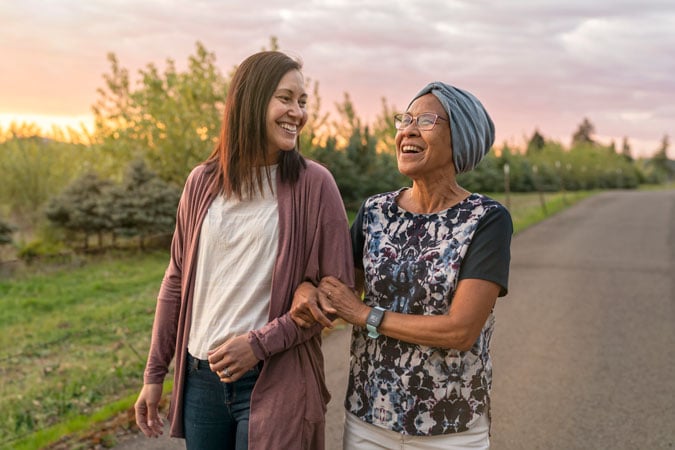
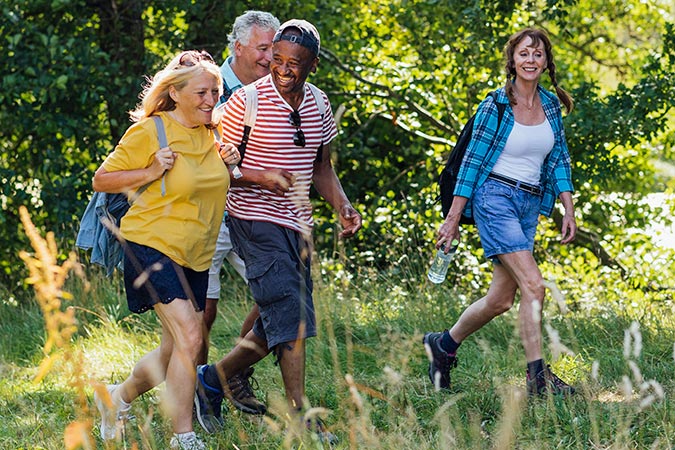
Walking with other people can be a great way to stay motivated, find new routes and enjoy spending time outdoors. Here are some low-cost and free walking and hiking groups across the UK:
- Ramblers: local walking groups across the UK for people of all ages and abilities.
- Disabled Ramblers: helps people with limited mobility enjoy the countryside using mobility scooters and other accessible options.
- Saturday Walkers Club: London and South East England based hiking club.
- The Proper Blokes Club: walk-and-talk groups for men across the UK that combine physical activity with opportunities to socialise and support wellbeing.
- Blaze Trails: walking groups for new parents who want to bring their babies along.
- Find your local authority’s website on gov.uk and search for ‘walking’ or ‘walks’. Many include walking routes and information for people with limited mobility.
Frequently asked questions
Do I need to walk 10,000 steps a day?
You may have heard about aiming for 10,000 steps a day. This is not a rule, and it may not be right for everyone.
The health benefits of walking can start at much lower step counts, especially when you’re walking briskly.
What matters most is:
- Walking more than you do now
- Moving more in your day
- Walking at a pace that feels right for you
Does slow walking count?
Yes. Any walking helps you move your body more. Brisk walking can bring extra health benefits, but walking at a comfortable pace for you is still a great way to move your body more.
Do I need to walk for 20-30 minutes all at once?
No. Shorter walks throughout the day count and can add up over time. For example, you could take a few 5-10-minute walks during the day instead of one longer walk.
Is walking after a meal good for you?
A short walk after a meal can be a simple way to add movement to your day. It may also help with digestion and managing blood sugar after eating. Start gently and choose what feels comfortable for you.
Free guides and programmes to help you move more
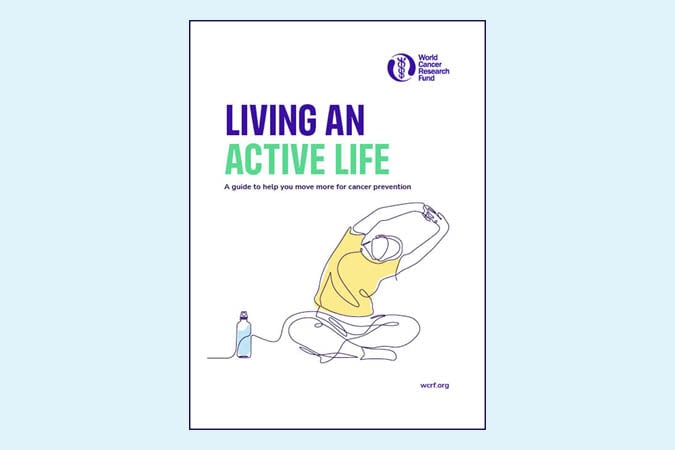
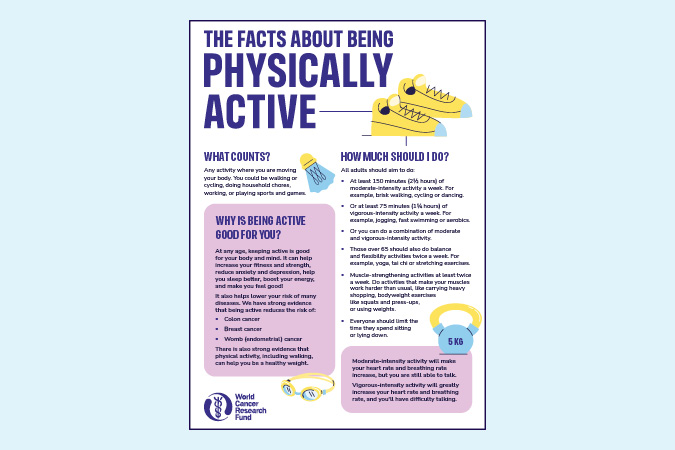
Explore our free guides, factsheets and online programme to help you move more.
-
References
- Stein MJ, Baurecht H, Bohmann P, Ferrari P, Fervers B, Fontvieille E, et al. Usual walking Pace and risk of 28 cancers– results from the UK biobank. BMC Cancer [Internet]. 2025 May 14;25(1):869. Available from: https://doi.org/10.1186/s12885-025-14258-x
- World Cancer Research Fund / American Institute for Cancer Research. Continuous Update Project Expert Report 2018. Diet, nutrition and physical activity: Energy balance and body fatness [Internet]. 2018. Available from: https://www.wcrf.org/research-policy/library/energy-balance-and-body-fatness/
- World Cancer Research Fund / American Institute for Cancer Research. Continuous Update Project Expert Report 2018. Body fatness and weight gain and the risk of cancer [Internet]. 2018. Available from: https://www.wcrf.org/research-policy/library/body-fatness-and-weight-gain-and-cancer/
- World Cancer Research Fund. New study links overweight and obesity to more cancers than previously shown [Internet]. 2023. Available from: https://www.wcrf.org/about-us/news-and-blogs/new-study-links-overweight-and-obesity-to-more-cancers-than-previously-shown/
- NHS. Walking for health [Internet]. 2025. Available from: https://www.nhs.uk/live-well/exercise/walking-for-health/

We are certified by the Patient Information Forum (PIF) as a Trusted Information Creator, recognising that our health information meets trusted quality standards.
Last reviewed: October 2026
Next review date: Oct 2029