High soy intake in early-life linked to lower breast density
There have long remained questions, and indeed misconceptions, around the relationship between soy foods and cancer.
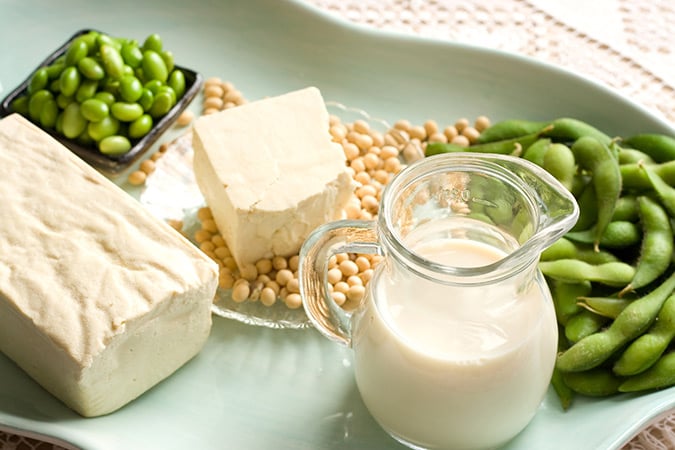
Soy foods, which include tofu, soy milk and other soy-based products are frequently used in traditional Asian diets and eaten throughout life.
Recent research funded by World Cancer Research Fund has found that intake of soy products during childhood and adolescence is associated with lower mammographic density (also known as breast density) in adulthood. Mammographic density – the proportion of dense breast tissue seen on a mammogram is a well-established predictor of breast cancer risk.
The study, led by Professor Suzanne Ho at The Chinese University of Hong Kong and published in the journal Nutrients, assessed the lifetime soy intake of 815 healthy premenopausal women aged 35-45 in Hong Kong across different life stages, including childhood, adolescence, young adulthood and recent intake.
It found that women with consistently high soy intake during early-life had approximately 6% lower breast density than those with consistently low early-life intake.
The Chinese University of Hong Kong’s Emeritus Professor Suzanne Ho said:
“Our findings suggest that soy consumption earlier in life, particularly during childhood and adolescence, is associated with lower breast density in adulthood. As we did not see the same association for recent soy intake, it points to early-life exposure as a potentially important window for breast tissue development in later life.
“Soy is a common component of traditional Asian diets, and this study adds to evidence suggesting that the timing of exposure to soy foods may matter. More research is needed to confirm these findings and to understand whether modifying early-life soy intake could contribute to breast cancer prevention.”
Soy consumption and life stage
The results suggest that soy exposure early in life may influence adult breast tissue composition and provide long-term protective effects that could help reduce breast cancer risk. It follows growing evidence suggesting that the stage of life that soy is consumed may be as important as how much is consumed.
In particular, it is thought that soy consumption during early-life may have a strong influence on later breast cancer risk by affecting mammary gland development. However, evidence linking soy intake at specific life stages to adult breast density has remained limited.
As well as taking mammograms, the research team assessed soy consumption using a validated soy food frequency questionnaire covering 32 soy products. Participants reported their current intake and recalled their intake during childhood, adolescence and young adulthood, supported by life-history prompts.
After adjusting for confounding factors including age, waist circumference, and physical activity, the researchers found that soy protein intake during adolescence and childhood was significantly and inversely associated with adult breast density. In contrast, recent soy intake was not associated with breast density.
World Cancer Research Fund International Hong Kong Ambassador, Professor Anne Lee said:
“The finding that women who ate more soy during childhood and adolescence had lower breast density as adults is especially interesting. It supports the idea that diet during early development may have a lasting effect on breast tissue.
“This study provides useful observational evidence for the idea of “early-life nutritional programming” and highlights the possibility that diet early in life could play a role in reducing breast cancer risk. Furthermore, the use of a Life History Calendar (LHC) with audiovisual aids to enhance the recall of distant dietary habits is a notable methodological innovation.”
The authors emphasise that the study is observational and based on self-reported information. Further studies would help to validate if soy intake directly contributes to the lowering effects on breast density or reduces breast cancer risk.
What are the potential mechanisms?
Soy foods contain isoflavones, bioactive compounds that can interact with oestrogen-related pathways. The findings add to growing evidence that the timing of dietary exposure may be important, with childhood and adolescence representing a key developmental window where the mammary gland undergoes rapid structural and hormonal changes which could influence cancer susceptibility.
World Cancer Research Fund International Executive Director of Research and Policy, Dr Giota Mitrou said:
“While characteristics such as overweight and obesity are well established factors linked to breast cancer risk, only a limited number of studies have evaluated the association between soy intake and breast density, and so far, findings remain inconclusive.
“This study adds to our understanding of how exposures across the life course may shape cancer risk, which is a key area of work for World Cancer Research Fund. It raises the possibility that breast tissue may be particularly susceptible to dietary influences during specific developmental windows and highlights the need for further research into dietary patterns in different population groups.”