Building research where it matters: lessons from studying breast cancer in Sub-Saharan Africa
Health research saves lives. But a truth that many people don’t realise is that most of the science that guides global health policy comes from just a handful of regions – mainly high-income countries.
As a result, billions of people, including those in sub-Saharan Africa, live with diseases that are not fully understood within their own cultural, environmental, and biological context.
As a Ghanaian nutrition and public-health scientist who has worked on large, multi-partner studies – including the African Breast Cancer Screening (ABCS) study – I have seen both the obstacles and the immense potential of African-led research. And that potential is what gives me hope.
This blog explores both sides: the reality of building research in systems that are still developing, and the incredible opportunity we have to generate science that truly serves a global purpose.
- Why Africa needs its own data
- Why the data gap exists — and why it can change
- ABCS: science against the odds
- Turning challenges into opportunities
- Building lasting cancer research capacity
- Conclusion: the future is ours to build
Why Africa needs its own data
Most screening tools and risk models used on our continent were developed for populations other than African. This is not limited to cancer, but also other Non-Communicable Diseases.
The global evidence-base linking diet, lifestyle, and cancer risk from the WCRF/AICR reports to physical activity guidelines is built mainly on European, North American, and Asian cohorts. These studies have shaped what the world believes about healthy eating, physical activity, body weight, and cancer. But Africa is different.
- Our food systems blend traditional staples with rapidly increasing ultra-processed foods.
- Our physical activity is often work-related or transport-related, not gym-based.
- And our nutrition transition is unlike what is seen elsewhere.
In 1993, nutrition scholar Barry Popkin explained how our diets evolve as societies change. In high-income countries, this happened slowly as people have gradually moved from traditional meals to more energy-dense, ultra-processed foods. But in many African countries, this shift is taking place at an astonishing pace.
The result is what public health experts call the double burden of malnutrition: undernutrition and overweight sitting side-by-side in the same communities, the same families, and sometimes even the same individuals. There’s also an additional outcome, diet-related chronic diseases like diabetes and hypertension, creating a third layer of complexity.
Africa’s nutrition story is no longer just about hunger. It’s about the collision of old challenges with new ones, all unfolding in a food system that is changing faster than ever before.
Understanding these interconnected drivers demands research that is grounded in African settings and led by African scientists who understand the context. Tackling health inequity also requires tackling data inequity. In short, African solutions need African data.
Professor Francisca Mutapi’s community-embedded schistosomiasis research in Africa generated the evidence that ultimately led the WHO to revise its paediatric treatment guidelines – proof that locally grounded African science can shift global policy.
If global evidence is the goal, then Africa must be genuinely represented not as an afterthought, but as an equal contributor.
Why the data gap exists — and why it can change
People often ask: “Why is it so hard to conduct research in Africa, specifically Sub-Saharan Africa?” Maybe hard is too strong a word. Challenging is more acceptable, and I know every continent presents its own challenges and opportunities.
However, the simple answers to the challenges are familiar: limited funding, infrastructure gaps, bureaucratic delays.
1. Research has not been a political priority.
Many African governments are focused on immediate needs: water, electricity, roads, the growing climate shocks, and ever-persisting food security. These are pressing, real issues.
Research often feels secondary, even though it is the foundation of effective policy. High-income countries built national research councils, cancer research funds, and strong Centres of Excellence, with national funding, because research for evidence-based decision making is a priority. Most African countries do not yet have equivalent structures, but they can.
2. African Centres of Excellence rely heavily on external funding.
Institutions like WASCAL, WACCI, ACEGID, and others are doing outstanding work, but much of their funding still comes from the World Bank, Rockefeller Foundation, BMGF, or European partners. These investments help – but they also mean research priorities can be donor-driven instead of nationally driven. More African-led funding structures are essential.
3. Universities and governments are not yet fully research-ready.
At many African universities, rising student numbers and heavy teaching loads leave little room for research careers. One can remain in post by teaching alone.
Meanwhile, policymakers rarely consult evidence before making decisions – and researchers too seldom involve policymakers from the start, to make research co-created and its policy recommendations more acceptable. Reviving dedicated research-focused career pathways and building stronger bridges between academia and government would address both problems at once.
But none of these challenges are permanent. Across the continent, change is happening. There is growing recognition – from policymakers, communities, funders, and African scientists – of the value of locally generated evidence.
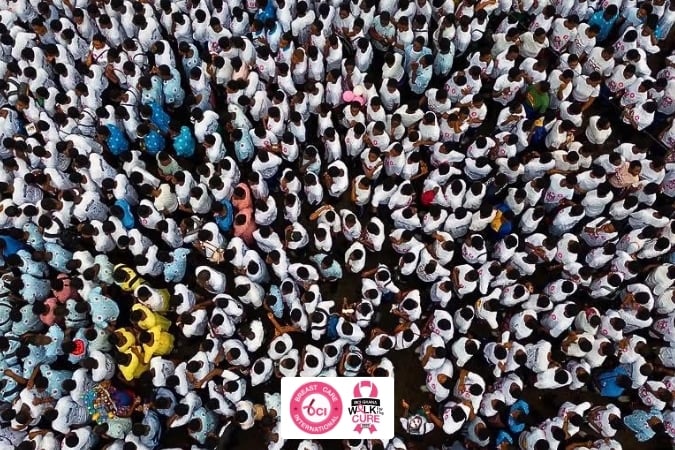
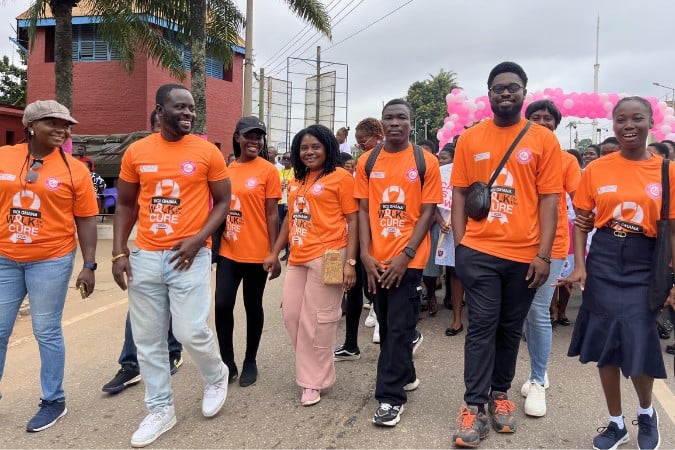
The recent breast cancer awareness walk in Kumasi, Ghana, organized by Breast Care International and led by Dr Beatrice Wiafe, brought tens of thousands of people (pictured above), illustrating a new desire for research and solutions to address pressing needs like breast cancer in Ghana.
ABCS: science against the odds
The ABCS study is one example of what African teams can achieve when determination meets ingenuity. We are investigating how diet, metabolic health, lifestyle behaviours, and the gut microbiome influence breast cancer risk in African women – a pioneering effort in a region where such studies are extremely rare.
This would not have been possible without a structure: the International Union of Nutrition Sciences (IUNS) taskforce, International Collaboration on Cancers in Relation to Nutrition’s (ICONIC) and the Cancer and Nutrition for Africa (CANA).
Here’s what it looks like behind the scenes.
1. Infrastructure hurdles that demand creativity
High-quality biomarker and microbiome research requires cold-chain systems, reliable freezers, and uninterrupted electricity—not guaranteed in some instances. In ABCS study, we are making things work, including:
- Transporting biological samples long distances while maintaining strict temperature control
- Installing multiple power backups (generators, UPS systems, etc.)
- Building molecular lab capacity at KNUST so samples do not need to leave the continent
- Upgrading ordinary rooms into internationally compliant biobanking spaces
Each freezer that stays cold through a blackout is a small triumph.
2. Funding that comes in waves, not streams
Prospective cohorts in high-income countries run for decades with national funding. African teams rely on short donor cycles, which means:
- Recruitment must align with staggered budgets
- Lab work requires careful timing
- Overheads and compliance requirements must be negotiated with multiple institutions
But these challenges have made us more agile, more creative, and more efficient.
3. Ethical and regulatory complexities
In Ghana, one ethical approval cannot cover an entire multi-hospital/site study. Each institution requires its own approval—with fees, administrative steps, and timelines. This slows things down, but harmonisation discussions are underway, and progress is possible.
4. Participant follow-up without formal addresses
One of the key challenges relates to addressing and household identification systems. While some households have formal addresses, these are not always practically useful, as residents may be unable to provide accurate street names or house numbers. These challenges are further compounded by the fact that individuals may be known by different names within their localities, even when they have official names, as well as by frequent relocation and the widespread use of multiple—and often changing—phone numbers. Together, these factors make accurate household location, participant tracking, and follow-up more complex, necessitating the use of alternative and more flexible identification strategies.
So, we are creating and innovating to enable future follow-up of our participants’ successful, including:
- A plan to visit all participants to take GPS mapping of each participant’s home
- Recording all names (official, maiden, local, nickname)
- Using landmarks like markets, churches, and schools
- Collecting several contact numbers, including those of relatives and neighbours
- Building relationships in the community so people guide us to households
We believe this will work—and improve community trust along the way.
5. Building trust and navigating institutions
Some participants worry about blood draws, sample storage, or the purpose of research – so community engagement, local-language communication, and the involvement of women’s groups and health workers are central to what we do.
On the institutional side, African universities operate under strict accountability frameworks which, while important for transparency, can slow fund release considerably. We’ve learned to anticipate delays, build buffer periods, and work closely with administrative teams.
When people – whether community members or university administrators – understand the value of the research, progress follows.
Turning challenges into opportunities
Across Africa, researchers and institutions are transforming obstacles into platforms for scientific leadership. Here are a few inspiring examples.
1. ACEGID (Nigeria): Genomics leadership born from constraint
When Nigeria faced its 2014 Ebola outbreak, the African Centre of Excellence for Genomics of Infectious Diseases responded by rapidly sequencing viral genomes – and hasn’t stopped since. ACEGID produced Africa’s first SARS-CoV-2 genome sequence at the start of the COVID-19 pandemic and has trained more than 2,500 young scientists across 53 African countries.
What began as an emergency response has become a model for continent-wide scientific capacity.
2. WACCI (West Africa): crop improvement for Africa, led by Africa
The West Africa Centre for Crop Improvement has developed climate-resilient crop varieties, trained hundreds of African plant breeders, and attracted global partnerships – all while keeping the research agenda firmly African.
It demonstrates what sustained institutional investment, led from within the continent, can produce.
3. Dr Catherine Nakalembe (Uganda) closing the data gap from above
Dr Nakalembe is redefining food security monitoring by combining satellite imagery, machine learning, and direct farmer knowledge to help governments predict droughts and crop failures before they become humanitarian crises.
Her work is a reminder that African researchers are not just catching up — they are pioneering approaches that the rest of the world is now looking to replicate.
4. WASCAL (West Africa): climate science led from Africa
The West African Science Service Centre on Climate Change and Adapted Land Use (WASCAL), hosted at Kwame Nkrumah University of Science and Technology, is building regional leadership in climate science by training African scientists, advancing climate-resilient research, and fostering strong international partnerships—while keeping its research agenda firmly rooted in African priorities. It demonstrates the impact of sustained, African-led institutional investment in addressing climate and environmental challenges.
Building lasting cancer research capacity
Africa doesn’t just need isolated research projects; it needs enduring scientific systems. That means:
- building modern laboratories that allow samples and data to remain on the continent,
- investing in training and mentorship to expand capacity in bioinformatics, epidemiology, genomics, and related fields.
- strong regulatory and ethics frameworks shaped by African priorities, and
- country-led research agendas that respond directly to Africa’s health, climate, and development needs.
Every major study should leave a legacy: enhanced human capacity and skills, laboratory systems, improved data governance, and a sustained pipeline of African scientific leaders.
Conclusion: the future is ours to build
Yes, research in sub-Saharan Africa comes with challenges. But this is also the most exciting place to innovate, experiment, and redefine what global health science looks like.
What that requires is not just isolated projects but enduring systems – modern laboratories that keep samples and data on the continent, dedicated research career pathways, training and mentorship in bioinformatics, epidemiology and genomics, and regulatory frameworks shaped by African priorities rather than imported ones.
Every major study should leave a legacy: stronger human capacity, better data governance, and a sustained pipeline of African scientific leaders.
Across the continent, researchers are already proving that the brilliance, resilience, and innovation are here. What we need now is sustained belief and investment – from governments, funders, and global partners – to build research where it matters most and bring the world closer to true health data equity.
The ABCS study is one step towards a larger vision: an African Prospective Investigation into Cancers (APIC). The data Africa generates will not just serve African lives. It will change what the world knows about cancer.
Reginald Adjetey Annan is a Professor of Public Health Nutrition and Principal Investigator of the Africa Breast Cancer Screening (ABCS) Study