
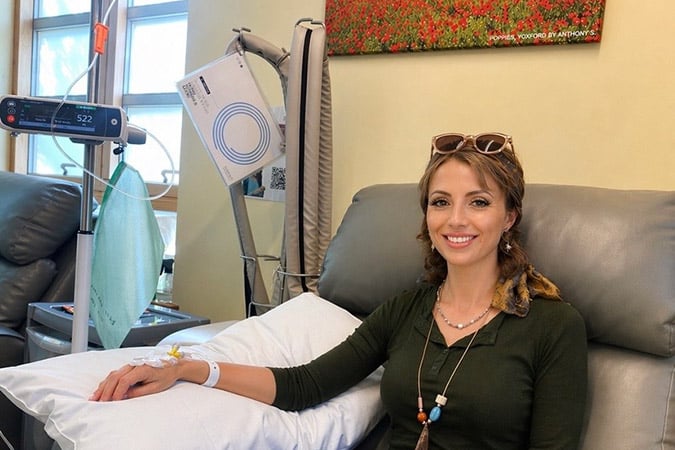
During one of the most special times in her life, paramedic Sarah Husband was diagnosed with HER2-positive breast cancer in October 2024.
Two years on, she shares her story as part of World Cancer Research Fund’s 112 Skips a Day in October challenge, which is fundraising for new treatments and improved advice and support for breast cancer patients.
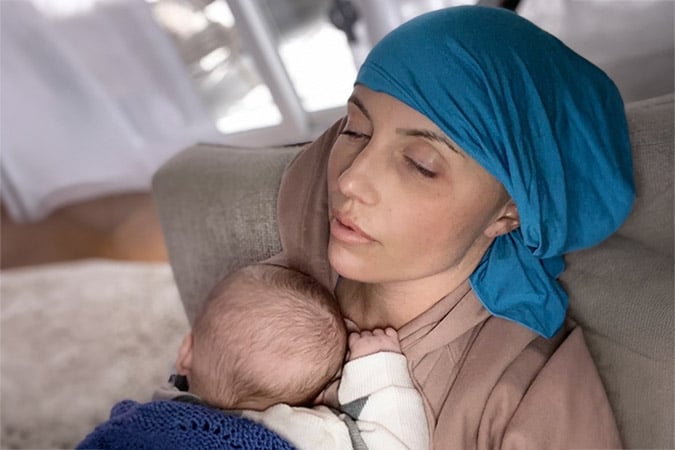
Throughout her pregnancy, Sarah experienced breathlessness, chest discomfort and extreme fatigue alongside intermittent burning pain over a lump in her right breast – which she discovered at around six months pregnant.
Initially believing that her symptoms were pregnancy-related breast changes or a blocked milk duct, Sarah followed the advice she was given and tried warm compresses, but the lump did not go away.
Sarah explained:
“As time passed, I developed a sinking feeling that it may be something more serious, which prompted me to seek further investigation.”
After a biopsy in her third trimester, Sarah received her breast cancer diagnosis just one week after the birth of her son, Ted.
“I should have been soaking up those precious newborn moments, but the joy of becoming a mum again was suddenly overshadowed by fear.”
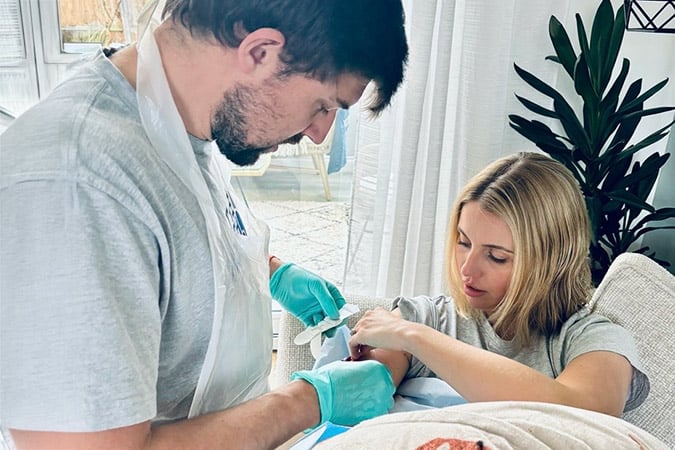
Her treatment began with six rounds of pre-operative chemotherapy, which shrunk the tumour “dramatically” but did not leave Sarah cancer-free.
“There were days I felt exhausted, sick and frightened, but motherhood doesn’t stop because you have cancer. My boys gave me a reason to keep putting one foot in front of the other.”
Further treatment included a skin-sparing mastectomy and lymph node removal, together with a tissue expander to begin the long journey towards breast reconstruction.
“As a paramedic, I was used to caring for others, but overnight I became the patient. My focus shifted from looking after people in their darkest moments to wondering whether I would live long enough to watch my own children grow up.”
Her treatment concluded with 14 rounds of post-operative chemotherapy and five high-dose radiotherapy treatments, followed by a targeted drug to reduce the risk of her cancer returning.
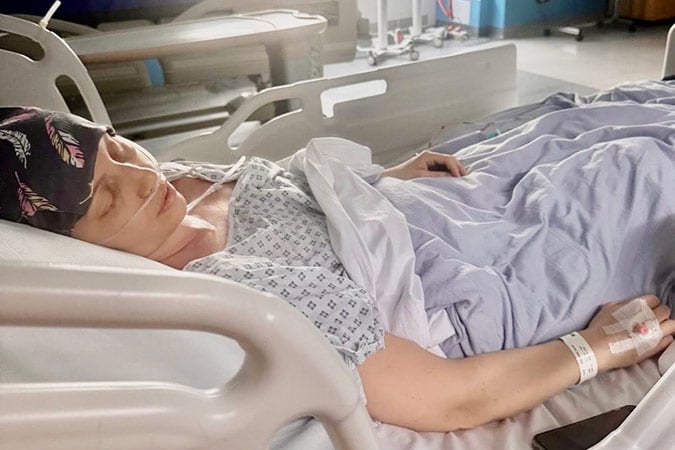
Alongside the side effects of treatment, Sarah describes her inability to breastfeed as one of the “quiet heartbreaks” that stays with her today.
“Like so many mothers, I imagined feeding my baby, comforting him and creating that bond. Instead, cancer took the choice away before I even had the chance. I remember crying for several nights as my milk came in and gradually dried up, knowing I could no longer feed my newborn.”
Today, Sarah’s scans are showing no evidence of disease (NED), which she credits to decades of research and the generosity of people who fundraise for it.
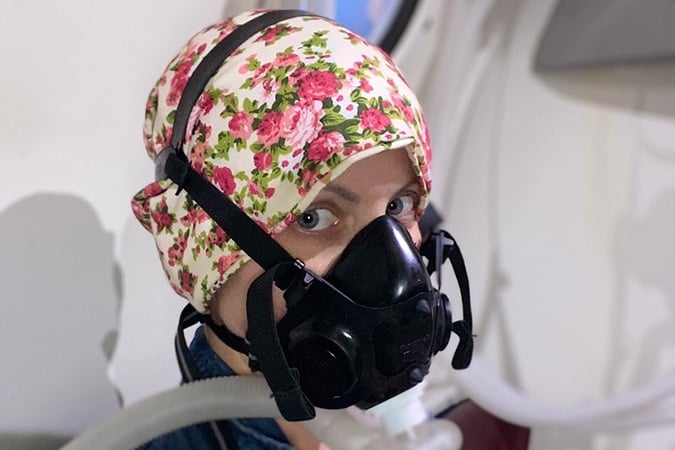
“Cancer research gives me hope. Every breakthrough represents another family who may have more birthdays together, more first days at school and more cuddles.”
Since her diagnosis, Sarah has made mindful changes to her diet, such as eating a wider variety of fruit and vegetables to support her health and help protect against weight gain, overweight and obesity – which are linked to at least 13 types of cancer.
“After experiencing something over which I have such little control, making thoughtful changes helps me feel like I’m doing everything in my power to support my recovery.”
Evidence from World Cancer Research Fund suggests that physical activity can help reduce risk of three common cancers: colon, post-menopausal breast cancer and womb cancer.
By signing up to 112 Skips a Day in October, you can help mothers like Sarah create more memories with their children and take steps to reduce your own cancer risk.
Follow us on social media

Happy #BreastCancerAwarenessMonth!
🤸 WE ARE CHEERING YOU ON. 🤸
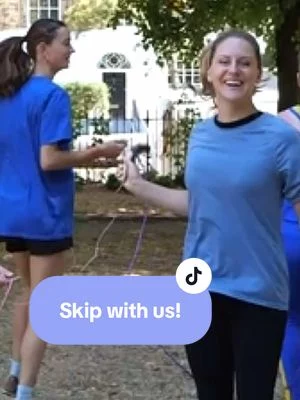
Who is feeling bouncy? Many of our supporters across the UK this month are taking part in a skipping challenge, bouncing to the beat of breast cancer.
Breast cancer occurs when cells in the breasts ...become damaged and grow abnormally, forming a lump or thickening, known as a tumour. Our fundraisers are helping us support research at @Uni_Southampton on how body composition and nutrition affect women with breast cancer.
We'll be sharing many who are skipping on our feed and in our upcoming stories, so please do leave a like to cheer them on. 🎉
#Challenge #Gym #Illness
Skip to our good news. 😁
Since 2020, we’ve been funding a study which asks - is body weight a good enough way to decide how much chemotherapy someone should receive?
This is an observational study, simply setting out ways for this to be investigated in the future. This has ...now led onto a major, ambitious project at @Uni_Southampton, looking at the relationship between body composition and breast cancer treatment/recovery!
Each day we learn more. 😎
#Diet #Exercise #Chemotherapy
Being active has many benefits and helps to reduce your risk of cancer. 💪 Adults should aim to do 1 of the following: 1. At least 150 minutes a week (or 20–25 minutes a day) of moderate-intensity activity such as brisk walking. 2. 75 minutes a week (or 11 minutes a day) of vigorous-intensity... activity such as jogging or a workout. 3. A combination of moderate and vigorous activities. #Skipping #Outdoors #Immunotherapy
This Breast Cancer Awareness Month, meet Alice.
Alice was just four years old when she lost her mum to breast cancer. Devastatingly, cancer has stolen four more people from Alice’s family.
Her sister, @amyconroy10, also faced cancer as a teenager before becoming a four-time ...Paralympian with @teamgb🏅
Today, Alice is turning pain into purpose. She works as a cancer nurse and is passionate about supporting prevention research, ensuring fewer families face the same heartbreak she did 🔬
This October, why not sign up to run the Tokyo Marathon with @wcrfuk to fund research that helps stop cancer in its tracks 👟
Visit the link in our bio today.
#BreastCancerAwarenessMonth #Research #Exercise
It's Hereditary Cancer Awareness Week 🧬
Cancer has torn through James' family. Doctors found a genetic disorder, called Lynch syndrome, in his family tree - which puts people at higher risk of bowel, rectal, womb and ovarian cancers.
This devastating news made James ...determined to make a difference.
By signing up to a @wcrfuk event, you can help people live cancer-free lives. Could Tokyo be your next start line?
Run through one of the world's most iconic cities and help fund life-saving prevention research at the same time 🗼
Feeling up to the challenge? Find out more at the link in bio.
#HereditaryCancerAwarenessWeek #LynchSyndrome #CancerResearch
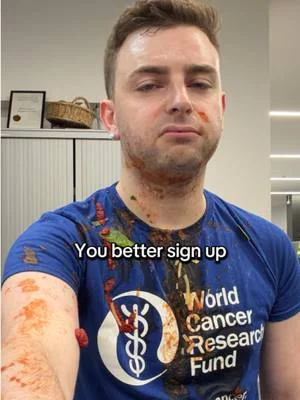
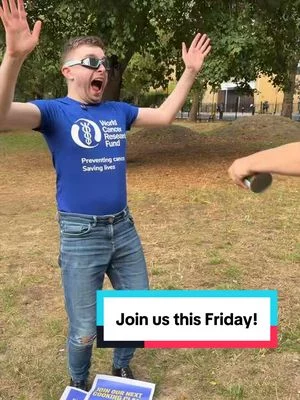
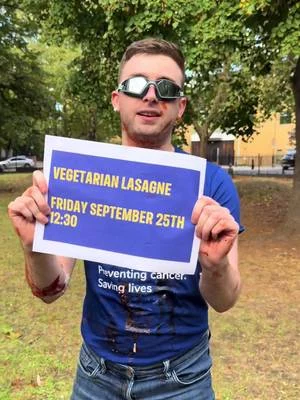
PLEASE COME FRIDAY LUNCHTIME! 😩 Do you know how long it took me to propose this dumb idea (link in bio!!)
And you get a voucher to cover ingredient costs 😇
#Lasagne #Vegeterian #CancerWarrior #Recipes #Prank
It's our final live class of the year (THIS FRIDAY!), so we thought we'd try something... different to encourage you all to come. 🥴 We are so proud of our 'Cook Thorough Cancer' series. Online cookery classes with specific tips on how to transform everyday staples into more ...palatable options for those experiencing cancer. Many are available (all for free!) as recordings on our website... but live is always more fun, as you can ask questions directly to our chef and dietitian. If you're living with cancer or cooking for someone living with cancer, then this class is for you! 👨🍳 #BehindTheScenes #Throw #SubtleForeshadowing #CancerAwareness #Chef
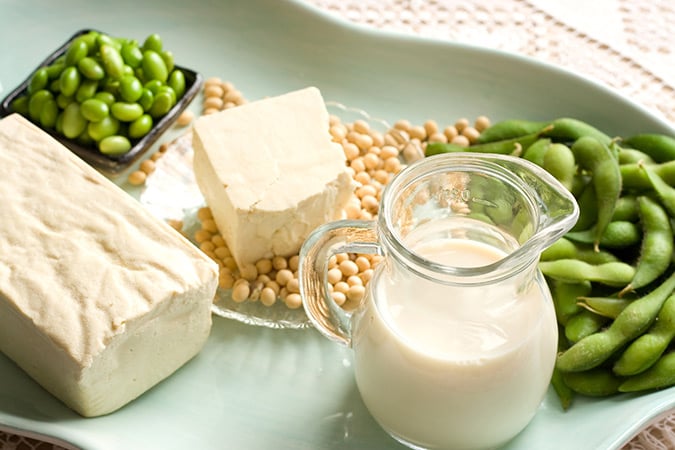
Do you eat tofu, edamame beans or soy milk? 🫛
There have long remained questions, and indeed misconceptions, around the relationship between soy foods and cancer.
Recent research funded by WCRF suggests that exposure to soy foods during early-life may influence ...adult breast tissue composition.
Find out more at the link in bio 🔗
Join our team and get free swag!
Raise £10 for a skipping rope, and £150 for a pink beanie. 🪢🩷
We've created these goodies to help us raise funds for breast cancer research. There’s no single cause of breast cancer, but there are many things that can increase your ...risk. Risk factors include behaviour choices like drinking alcohol, as well as your genes, hormones, and certain environmental factors. Some risks you can't change, but our research informs the ones that can.
Do you think you could raise £10 or more for us? You'll be making a change no matter what you do. Take the jump and click our link in bio. 🩷
#Photoshoot #NonProifit #Giveaway
I had so much more to say... the wind had other plans Click the link in bio to read, please... 🥲 #Clown #Lasagne #Vegeterian #Prank #SubtleForeshadowing
Kinda chic to order any of our free recipe booklets to make your life healthier. 💅
PLEASE COME! Do you know how long it took me to propose this dumb idea (link in bio!!) And you get a voucher to cover ingredient costs 😇 #Lasagne #Vegeterian #CancerWarrior #Recipes #Prank
Read more supporter stories
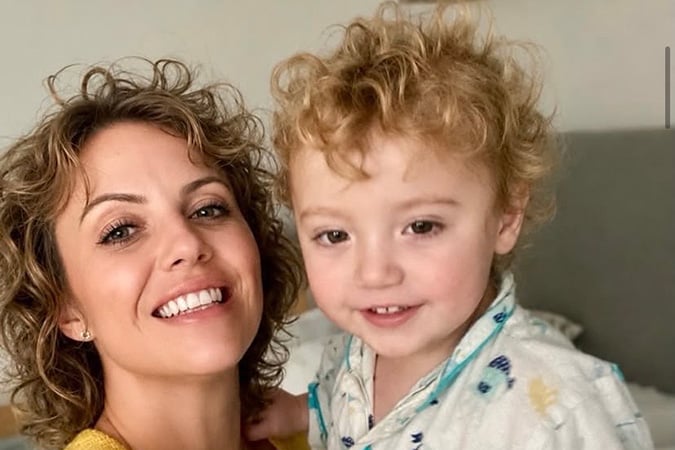
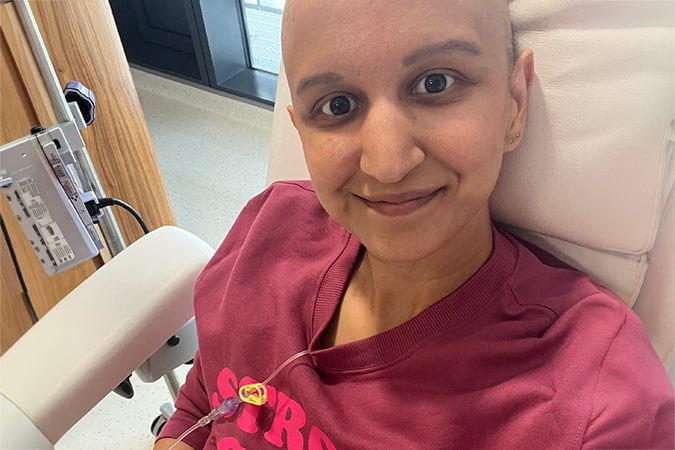
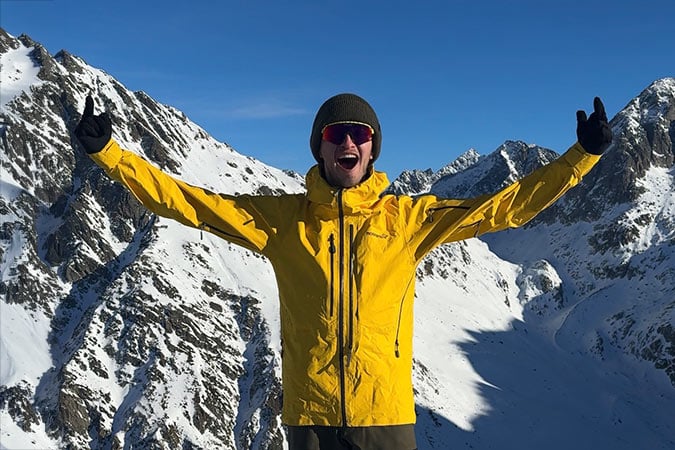
When her sister found a lump in her breast, Meera decided to get one of her own checked, which helped save her life. Now, she urges people to fundraise for research that could save others.
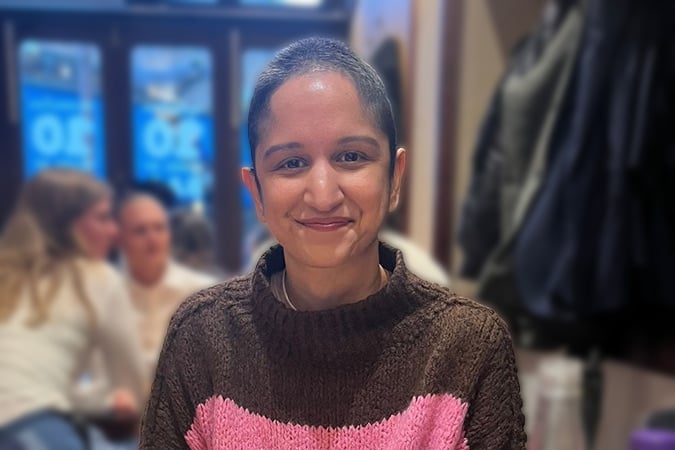
Meera is sharing her story in support of our fundraising for research into targeted treatments and improved advice and support for breast cancer patients.
While juggling life with two small children, Meera discovered a lump in her left breast which she believed was a blocked milk duct.
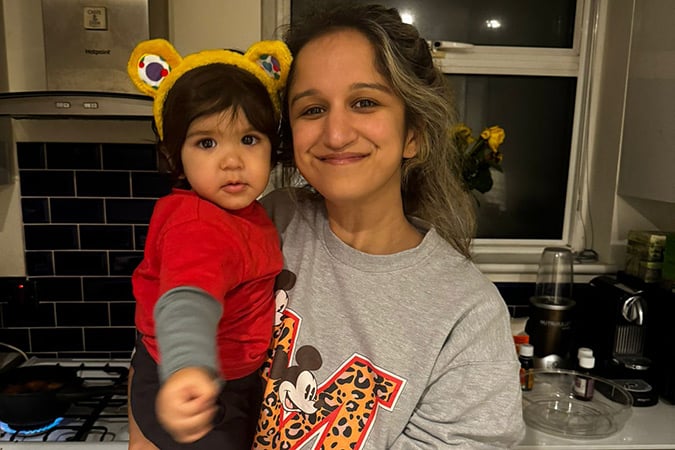
Meera said:
“I breastfed my son from birth. During this time, I noticed many lumps and bumps, so I just ignored it. Like lots of mums with young children, I didn’t think about my own health or prioritise it.”
Months later, Meera’s sister found a lump in her own breast. After being checked and receiving the all-clear, Meera began to think differently about her symptoms.
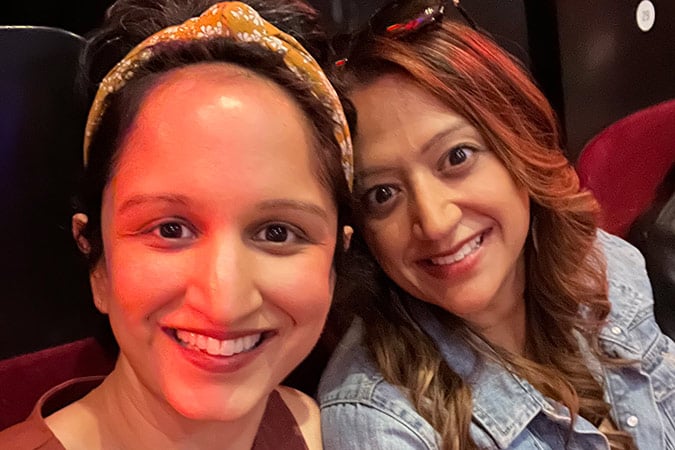
Following a GP visit, Meera was sent for further tests. After scans and a biopsy, she was diagnosed with hormone receptor-positive (HR+) breast cancer in March 2025.
“It’s a reminder of why it’s so important to have these conversations with loved ones. My sister sharing her experience with me effectively saved my life.”
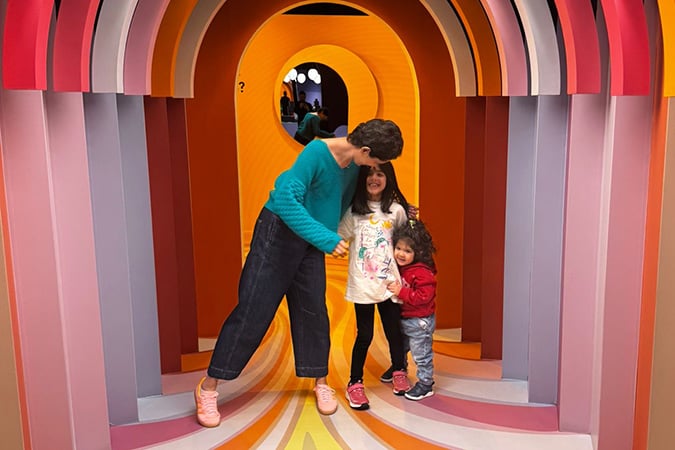
Her treatment involved sixteen rounds of chemotherapy over five months, followed by surgery and twenty rounds of radiotherapy. Reflecting on her diagnosis and treatment, Meera shared:
“It was heartbreaking and a huge shock. My biggest fear was not being around to see my children grow up.”
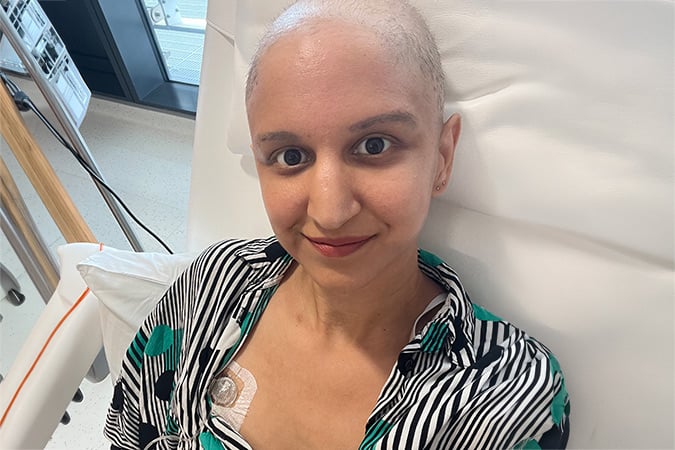
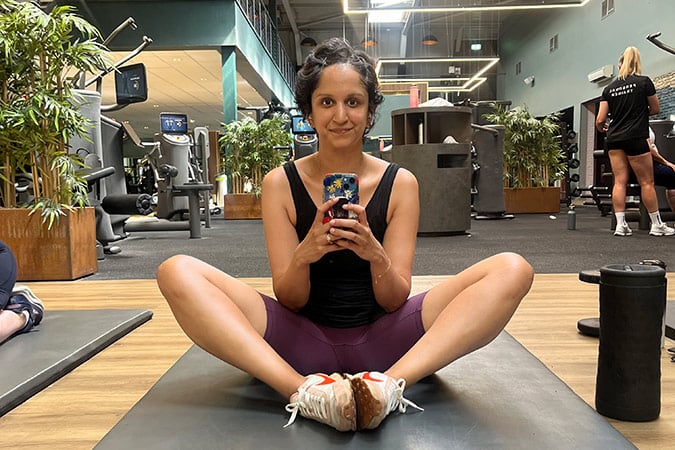
Now in remission, Meera prioritises exercise to support her recovery, visiting the gym at least three times per week to improve her strength and fitness.
“My gym has a machine that calculates your body composition and carries out a strength test to help you lift heavier weights over time.
“When I first took a strength test in January, after nearly a year of cancer treatment, I had the strength of a 73-year-old. My latest test showed that I now have the strength of a 25-year-old! Seeing this transformation has been incredible, as exercise has become a huge part of my life post-treatment.”
Recently, a study we funded showed that following evidence-based lifestyle recommendations can support long-term health after a cancer diagnosis.
Regular physical activity can also help people maintain a healthy weight, and having less excess body fat can reduce risk of several cancers.
Rachael Hutson, World Cancer Research Fund’s CEO, commented:
“We are incredibly grateful to Meera for sharing her experience, which shows how research into breast cancer treatments is changing lives and why it is needed now more than ever. We’re proud to be funding pioneering research at the University of Southampton, which is bringing us one step closer to kinder, more effective treatments for breast cancer patients.”
Supporting breast cancer research is important to Meera after she benefitted from ribociclib, a form of targeted therapy, following its introduction for primary breast cancer patients in February 2021.
“Research makes change happen. My biggest fear is dying while my children are young, and every breakthrough brings me closer to a future where that fear doesn’t become reality. People who fundraise may never meet the people they’re helping, but they give families like mine something priceless: hope and more time together.”
By signing up to one of our challenge events, you can offer the gift of hope to people like Meera.
Follow us on social media
Happy #BreastCancerAwarenessMonth!
🤸 WE ARE CHEERING YOU ON. 🤸
Who is feeling bouncy? Many of our supporters across the UK this month are taking part in a skipping challenge, bouncing to the beat of breast cancer.
Breast cancer occurs when cells in the breasts ...become damaged and grow abnormally, forming a lump or thickening, known as a tumour. Our fundraisers are helping us support research at @Uni_Southampton on how body composition and nutrition affect women with breast cancer.
We'll be sharing many who are skipping on our feed and in our upcoming stories, so please do leave a like to cheer them on. 🎉
#Challenge #Gym #Illness
Skip to our good news. 😁
Since 2020, we’ve been funding a study which asks - is body weight a good enough way to decide how much chemotherapy someone should receive?
This is an observational study, simply setting out ways for this to be investigated in the future. This has ...now led onto a major, ambitious project at @Uni_Southampton, looking at the relationship between body composition and breast cancer treatment/recovery!
Each day we learn more. 😎
#Diet #Exercise #Chemotherapy
Being active has many benefits and helps to reduce your risk of cancer. 💪 Adults should aim to do 1 of the following: 1. At least 150 minutes a week (or 20–25 minutes a day) of moderate-intensity activity such as brisk walking. 2. 75 minutes a week (or 11 minutes a day) of vigorous-intensity... activity such as jogging or a workout. 3. A combination of moderate and vigorous activities. #Skipping #Outdoors #Immunotherapy
This Breast Cancer Awareness Month, meet Alice.
Alice was just four years old when she lost her mum to breast cancer. Devastatingly, cancer has stolen four more people from Alice’s family.
Her sister, @amyconroy10, also faced cancer as a teenager before becoming a four-time ...Paralympian with @teamgb🏅
Today, Alice is turning pain into purpose. She works as a cancer nurse and is passionate about supporting prevention research, ensuring fewer families face the same heartbreak she did 🔬
This October, why not sign up to run the Tokyo Marathon with @wcrfuk to fund research that helps stop cancer in its tracks 👟
Visit the link in our bio today.
#BreastCancerAwarenessMonth #Research #Exercise
It's Hereditary Cancer Awareness Week 🧬
Cancer has torn through James' family. Doctors found a genetic disorder, called Lynch syndrome, in his family tree - which puts people at higher risk of bowel, rectal, womb and ovarian cancers.
This devastating news made James ...determined to make a difference.
By signing up to a @wcrfuk event, you can help people live cancer-free lives. Could Tokyo be your next start line?
Run through one of the world's most iconic cities and help fund life-saving prevention research at the same time 🗼
Feeling up to the challenge? Find out more at the link in bio.
#HereditaryCancerAwarenessWeek #LynchSyndrome #CancerResearch
PLEASE COME FRIDAY LUNCHTIME! 😩 Do you know how long it took me to propose this dumb idea (link in bio!!)
And you get a voucher to cover ingredient costs 😇
#Lasagne #Vegeterian #CancerWarrior #Recipes #Prank
It's our final live class of the year (THIS FRIDAY!), so we thought we'd try something... different to encourage you all to come. 🥴 We are so proud of our 'Cook Thorough Cancer' series. Online cookery classes with specific tips on how to transform everyday staples into more ...palatable options for those experiencing cancer. Many are available (all for free!) as recordings on our website... but live is always more fun, as you can ask questions directly to our chef and dietitian. If you're living with cancer or cooking for someone living with cancer, then this class is for you! 👨🍳 #BehindTheScenes #Throw #SubtleForeshadowing #CancerAwareness #Chef
Do you eat tofu, edamame beans or soy milk? 🫛
There have long remained questions, and indeed misconceptions, around the relationship between soy foods and cancer.
Recent research funded by WCRF suggests that exposure to soy foods during early-life may influence ...adult breast tissue composition.
Find out more at the link in bio 🔗
Join our team and get free swag!
Raise £10 for a skipping rope, and £150 for a pink beanie. 🪢🩷
We've created these goodies to help us raise funds for breast cancer research. There’s no single cause of breast cancer, but there are many things that can increase your ...risk. Risk factors include behaviour choices like drinking alcohol, as well as your genes, hormones, and certain environmental factors. Some risks you can't change, but our research informs the ones that can.
Do you think you could raise £10 or more for us? You'll be making a change no matter what you do. Take the jump and click our link in bio. 🩷
#Photoshoot #NonProifit #Giveaway
I had so much more to say... the wind had other plans Click the link in bio to read, please... 🥲 #Clown #Lasagne #Vegeterian #Prank #SubtleForeshadowing
Kinda chic to order any of our free recipe booklets to make your life healthier. 💅
PLEASE COME! Do you know how long it took me to propose this dumb idea (link in bio!!) And you get a voucher to cover ingredient costs 😇 #Lasagne #Vegeterian #CancerWarrior #Recipes #Prank
Read more supporter stories
When Ben Wagenmann walked through a hospital radiation scanner and triggered every alarm in the corridor, it was not a malfunction. For several days after treatment, Ben is radioactive.
The 27-year-old medical AI student is living with metastatic cervical paraganglioma, a form of cancer so rare that only a handful of documented cases exist worldwide.
Ben’s original tumour developed around the fork of his carotid artery located in his neck. It measured around 5-6cm and required complex surgery lasting over ten hours to remove.
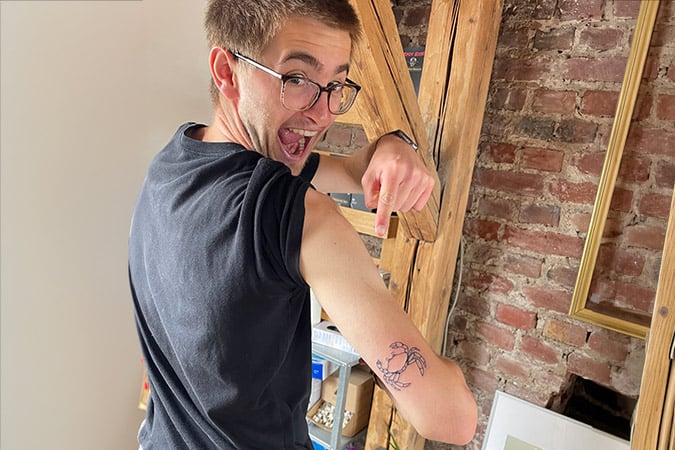
What makes Ben’s case so extraordinary is not only the tumour itself, but where the cancer has metastasised (spread). While cervical paraganglioma is typically benign (non-cancerous), Ben’s has spread throughout his spine, ribs and other bones.
Because no standard treatment exists, specialists across multiple hospitals in Europe worked on an experimental care plan. This included radionuclide treatment, a form of nuclear medicine requiring Ben to enter an underground radiation ward every six weeks.
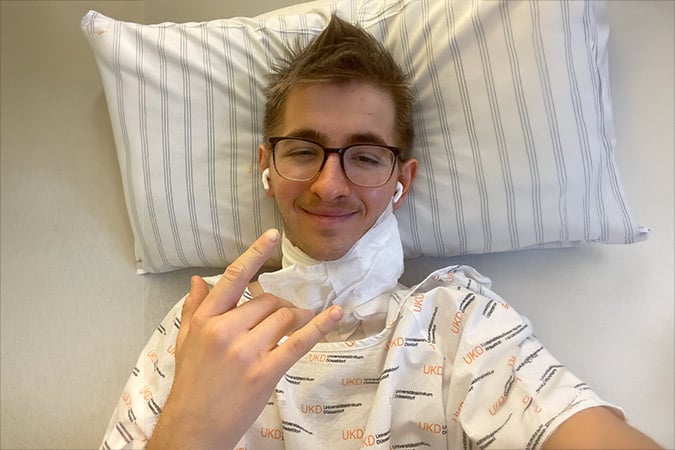
“It genuinely felt like being in a bunker,” Ben said. “There were no door handles, and I couldn’t shower because it would turn the water radioactive.”
At one point, he triggered a hospital radiation detector simply by walking through the corridor.
“That was a surreal moment, realising you’re literally radioactive,” Ben added.
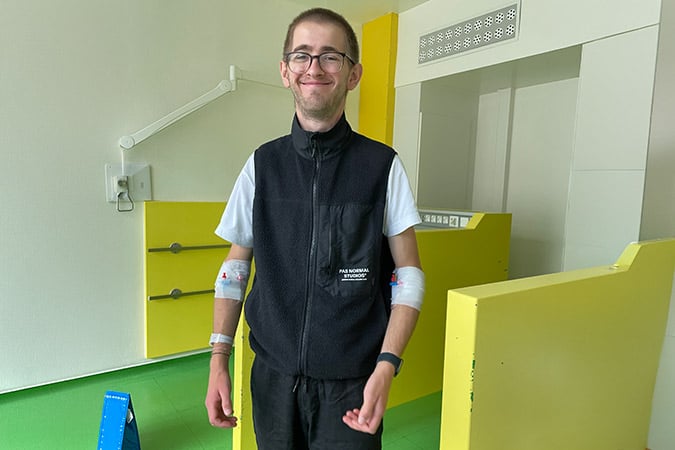
Following hospital discharge, Ben’s radiation levels were still so high that he could not be around pregnant women or small children safely.
Despite intensive treatment, regular hospital travel across Europe and the fragility of his spine, Ben has refused to give up the hobby he loves most – skiing.
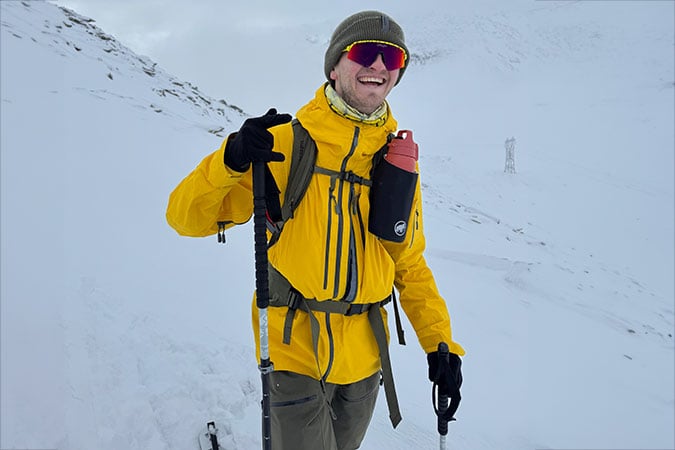
“I’ve had to adapt. I’m more careful now and I notice the pain more, but skiing is one of the most important things in my life. I don’t want cancer to take that away,” he explained.
To raise awareness about cancer in young people, Ben began sharing his journey online through short ‘life recap reels’ on Instagram. Unexpectedly, the project raised hundreds of pounds for World Cancer Research Fund.
“I didn’t complete a marathon or jump out of a plane,” Ben said. “I just shared my life online and people connected with that.”
Rachael Hutson, World Cancer Research Fund CEO, commented:
“Ben’s commitment to sharing his journey is deeply moving, and we are grateful for the way he has turned his experience into hope for others. His fundraising efforts are helping fund life-saving research, and we are truly honoured to have his support.”
Following the success of his Instagram fundraiser, Ben completed a 16-kilometre race in his native Switzerland in May 2026 while on treatment break. He is now exploring a cycle across Norway to combine his love of endurance sport with fundraising.
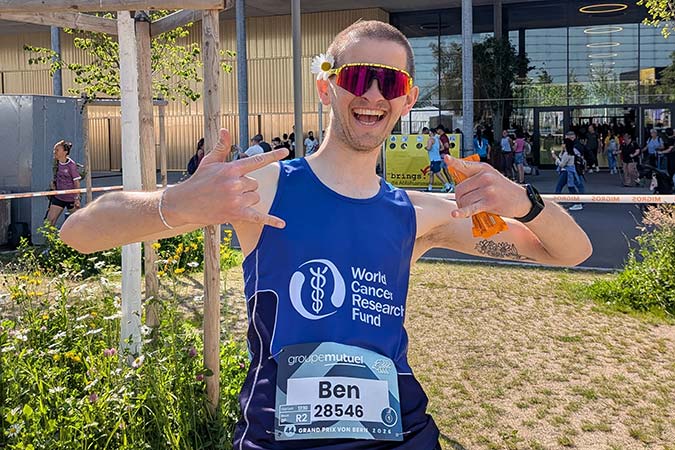
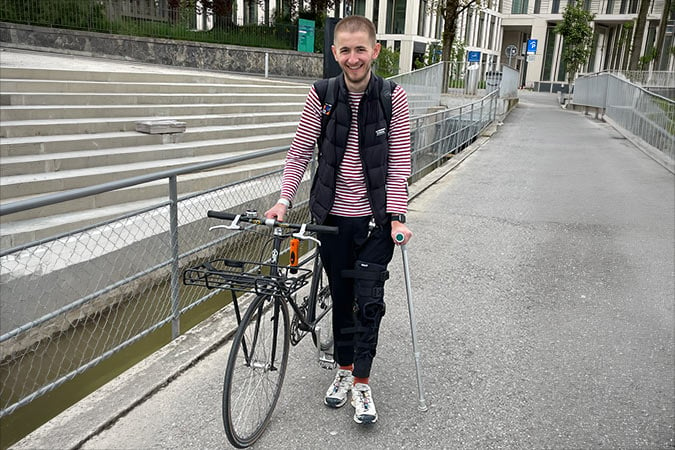
Now, Ben hopes his story will challenge assumptions about what living with cancer looks like.
“You’re not just your diagnosis. Cancer changes things but it doesn’t automatically end your life,” he shared.
Ben shares his journey as part of our Every Step Tells a Story campaign.
Feeling inspired? Why not sign up to one of our exciting events and challenges today.
Read more supporter stories
When Sharron Moffatt was diagnosed with triple positive breast cancer in January 2024, her world was turned upside down. But alongside the physical and emotional toll of cancer, she faced another challenge: a flood of cancer misinformation.
The mental health first aid (MFHA) trainer and speaker, from Buckinghamshire, was working in the corporate wellbeing industry when she noticed her right breast growing in December 2023.
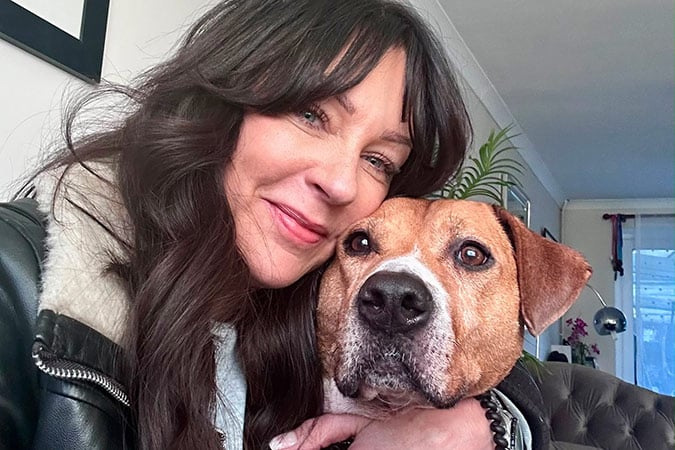
Sharron one day before her diagnosis with Rudy, the senior dog she adopted.
Just eighteen months earlier, Sharron’s mother died from metastatic breast cancer after facing the disease three times. It was this heartbreaking loss that prompted Sharron to always check her breasts.
“I miss my mum terribly, but I’m grateful to her because I learned so much about how to navigate cancer from watching her take it in her stride,” Sharron said.
Following tests at her local breast cancer clinic, Sharron was officially diagnosed with triple positive breast cancer on 7 January 2024.
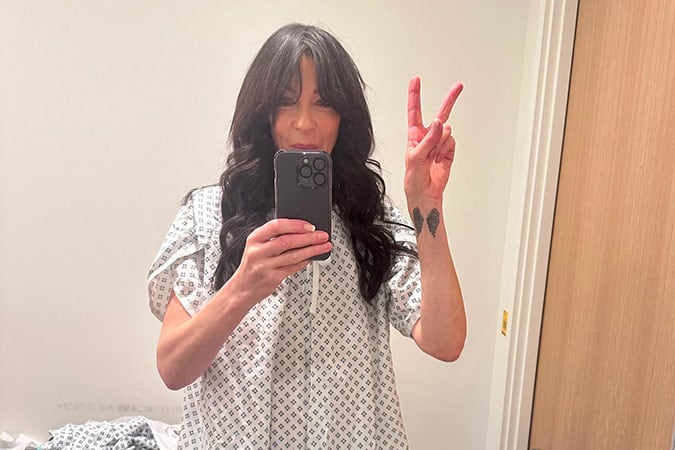
A hospital selfie taken during one of Sharron’s tests.
Further investigations, including an ultrasound and biopsy, revealed three large tumours in her right breast which measured 12 centimetres combined.
“I broke down in tears wondering how I would tell my family, if anyone would ever work with me again and how I would walk the senior dog I adopted just one week prior,” Sharron shared.
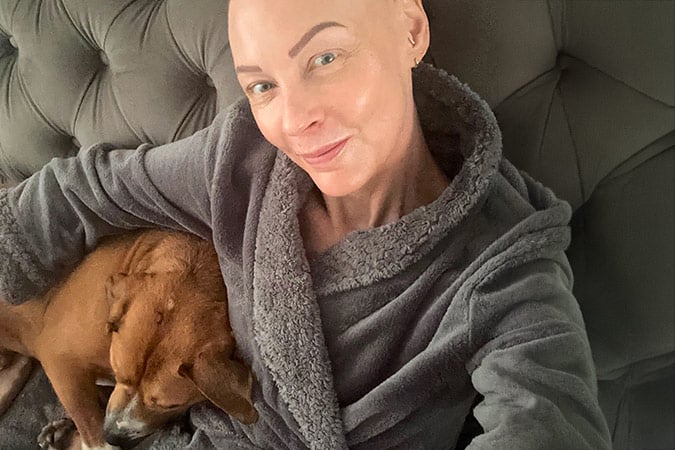
Sharron with Rudy during cancer treatment.
Her treatment included seven rounds of chemotherapy, a single mastectomy and radiotherapy followed by further chemotherapy – spanning twenty months in total.
“Cancer takes so much from you, I was even on the cusp of having to stop treatment because I lost so much weight. During my first round of chemotherapy, I was really sick for around three days. When I finally recovered, it was time for my next infusion,” Sharron explained.
Despite the gruelling effects of her treatment, which included fatigue, hair loss, nausea and even liver cirrhosis – the hardest part of Sharron’s experience wasn’t the cancer itself. It was the misinformation that preyed on her through one of the most vulnerable moments of her life.
“During chemotherapy, I became so ill I didn’t recognise myself. That was hard. But the hardest thing for me, which still makes me uncomfortable to this day, was the misinformation I received,” Sharron said.
After sharing her cancer diagnosis on social media, Sharron was inundated with messages and claims about apricot kernels – the seeds found inside apricot stones – which were positioned to her as a “natural” cancer cure.
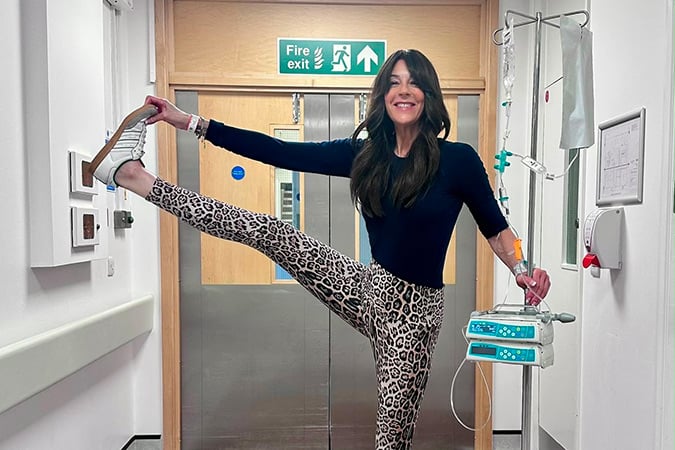
Sharron receiving an IV infusion.
The claims centre on a plant compound called amygdalin, which is found in apricot kernels, but there is no evidence that it treats cancer in humans. In fact, consuming apricot kernels can be dangerous because amygdalin releases cyanide in the body.
But the misleading claims didn’t end there. More recently, Sharron was contacted by someone on Instagram who claimed to have cured themselves of stage four melanoma by “healing their trauma.”
When Sharron asked for evidence to support the claim, she was met with defensiveness and hostility.
“Many of those on social media will deliberately target vulnerable people. I can understand why someone living with stage four cancer may be persuaded to try things like apricot kernels. However, they deserve access to reliable, evidence-based information that enables them to make informed choices about their treatment,” Sharron explained.
After completing her extended treatment plan in October 2025, Sharron continues long-term treatment (aromatase inhibitors). Following a meeting with her oncologist in May 2026, it was confirmed she currently has “no measurable evidence of disease” – marking an important milestone in her journey.
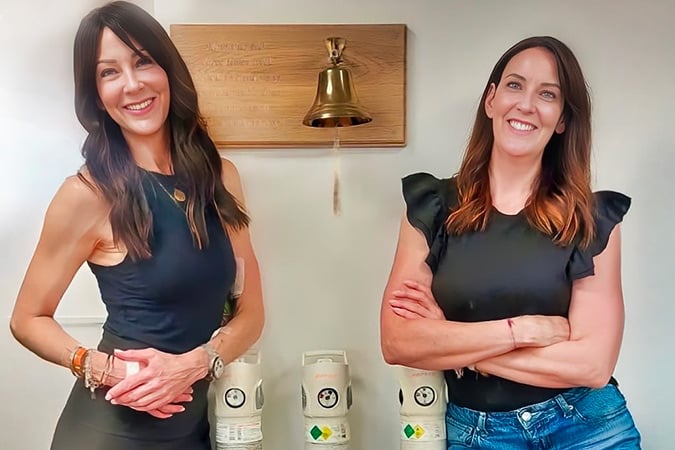
Sharron ringing the end of treatment bell with her identical twin sister, Lorraine.
Today, she dedicates herself to raising awareness about the dangers of misinformation and providing expert-led training on understanding cancer in the workplace.
“When you’re diagnosed with cancer, you’re dealing with fear and uncertainty. The last thing you need is misinformation adding to that. That’s why I’m passionate about encouraging people to know where to find trustworthy information and training employers on how to support people affected by cancer, including carers. No-one should have to face cancer and misinformation at the same time,” Sharron added.
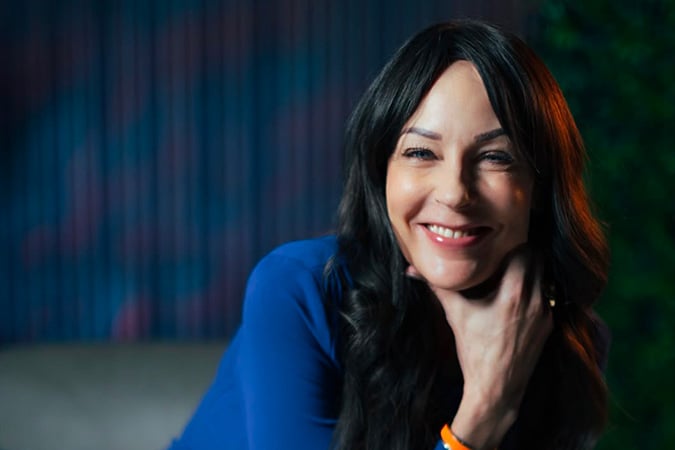
Sharron today.
World Cancer Research Fund Head of Information, Isobel Booth, said:
“Unfortunately, Sharron’s story is not unique. Misinformation is seeping into more and more lives every day. This is why we are drawing attention to this important issue during Cancer Prevention Action Week. While we recognise there is valuable information out there, the science is often taken out of context, twisted or manipulated. For anyone affected by cancer who has questions on nutrition or supplements, please contact our Cancer and Nutrition Helpline, which is staffed by specialist oncology dieticians who can help filter through the noise.”
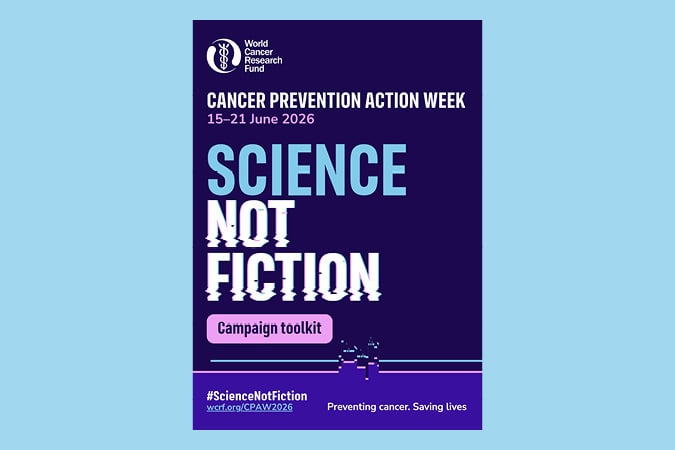
Sharron shares her story as part of World Cancer Research Fund’s Cancer Prevention Action Week campaign, which runs from 15-21 June 2026.


Latest news and blogs







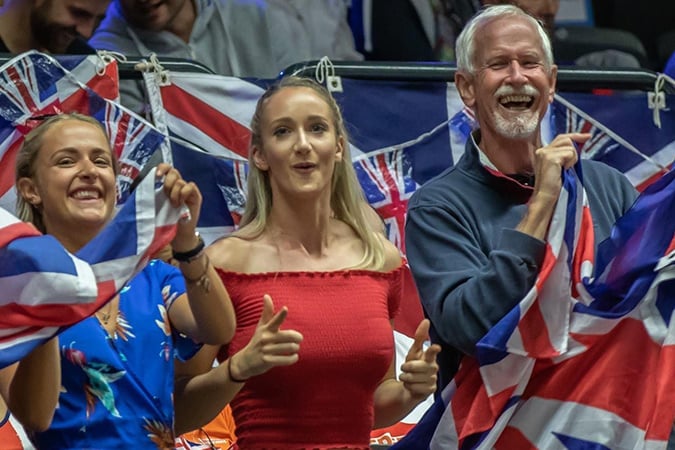
Alice Conroy completed the London Marathon for World Cancer Research Fund in April 2026 to help people live longer, happier and healthier lives.
The challenge was important to Alice after losing five family members to cancer including three grandparents, her uncle and her mum when Alice was just four years old.
“I have lots of memories of being in hospitals, being aware of cancer and knowing that my family was more at risk,” Alice shared.
Cancer also affected Alice’s sister, Amy Conroy, who went on to become a four-time wheelchair basketball Paralympian after surviving bone cancer as a teenager.
Driven by years of loss and resilience, Alice dedicated herself to a career in healthcare and is committed to supporting prevention research that could stop others facing the same heartbreak.
“These early, life-changing experiences shaped my understanding of cancer and the urgent need for better prevention and support,” Alice added.
A keen runner since 2017, Alice balanced her marathon training and long shifts on the ward with early-morning and late-night runs.
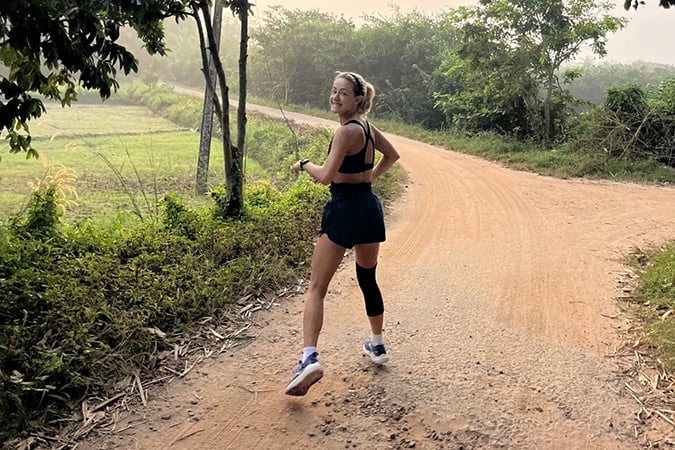
“Running is my release. With cancer, you know it is going to be a long road ahead. If my patients can go through everything that a cancer diagnosis involves, then this is nothing. I feel honoured to represent them,” Alice said.
World Cancer Research Fund CEO, Rachael Huston, added:
“We can’t thank Alice enough for going the extra mile for cancer prevention. Her courage, compassion and determination embody everything we stand for at World Cancer Research Fund. We are so grateful for her support, which is driving forward research that could save lives.”
Alice shares her journey as part of our Every Step Tells a Story campaign.
If, like Alice, you want to make a difference and support life-changing research, why not sign up to one of our exciting events and challenges.
Read more supporter stories
Over the last few years, both the mother and father of Kemi Williams died from cancer in their early sixties.
Following this, Kemi herself was diagnosed with a chronic condition which caused severe pain, inflammation, and immobility. She was left sofa bound with extreme weight fluctuations in the space of a year.
“I knew I wanted to respond to my parents’ deaths in a useful way, but I was paralysed with grief and my body was giving up on me. I began suffering from severe exhaustion and extreme pain to the point I could barely move,” Kemi said.
Determined to reclaim her health, Kemi drastically overhauled her nutrition, streamlined her food intake for recovery, and began rebuilding her fitness by going for short walks before incorporating running for one minute or two at a time.
This year, she will run the TCS London Marathon to support life-changing research and give hope to people with cancer.

Reflecting on her journey, Kemi shared:
“In October 2024, I could barely walk. But once the worst of my symptoms passed, I began run-walking. Those tiny, incremental steps were gruelling at the time, but they changed everything.”
By October 2025, significant improvements in her health enabled Kemi to run a half-marathon – a feat which solidified her dedication to using the sport as a cathartic tool for regaining control of her life.
“So many things in life are dependent on someone else being in charge and having control… over our jobs, opportunities, freedom, availability… on a daily basis and with regards to our long-term dreams. But running is the one thing you can take ownership of, it is you taking charge of yourself. It’s been so empowering to regain control of my body – from a place of illness and immobility – and rebuild my entire sense of self,” she said.
Running has been instrumental in helping Kemi cope with her grief as she comes to terms with the loss of her parents.
“I often wake up angry, stressed or feeling quite down. Using those moments to propel my body to run, when my mind might be wrecking havoc or in a state of apathy, and forcing myself into the repeated, rhythmic movement of putting one foot in front of the other somehow has a shake, cleanse, and reset effect. It leaves me recharged for the day ahead, and I can reframe and reflect on the grief that I carry,” she explained.
World Cancer Research Fund CEO, Rachael Hutson, commented:
“We are incredibly inspired by Kemi and her determination to not only improve her own health and wellbeing, but to fund life-changing research that will help people live free from the devastating effects of cancer. Our work would not be possible without the help of generous people like her, and we cannot wait to cheer her on.”
As she prepares for the 26.2-mile route, Kemi says the thought of seeing her two young daughters at the finish line, visualising them both beckoning her forth and cheering her on, is what gives her the mental strength to carry on.
“Near the end of my runs, when I’m tired and everything hurts, I picture my girls and their dad waiting for me at the end of the road. In my mind, I can hear them shouting ‘come on mummy.’ I know they’ll be there at the marathon waiting for me, and it’s the joy of having new life in my daughters that has been pivotal in navigating the end of life for my parents. If I can help give people more time with their loved ones, through the insight and tools they need to engage in the very best health and fitness their bodies can give them, then it’s a challenge worth doing.”
You can show Kemi your support by donating or sharing her story at the link below:
Read more supporter stories
Courtney Bundrick will run for World Cancer Research Fund on 26 April 2026 to support cancer prevention research following the deaths of her parents.
The internal medicine physician, from Little Rock, is fundraising in memory of her mother – who died from ovarian cancer when Courtney was just 12 years old.
Courtney’s role caring for people with advanced cancer was also inspired by her father, who was a physician before passing away in 2023.
This frontline healthcare experience motivated Courtney to take action beyond hospital walls. By fundraising for cancer prevention research, she hopes to improve outcomes for future patients.
“Most of the cancer patients I see are either newly diagnosed with severe symptoms or suffering from advanced disease,” Courtney explained. “By that point, treatment options can be limited. That’s why I’m passionate about fundraising for life-changing cancer research.”
For Courtney, running has been a healthy release since medical school, and she has embraced discipline and mental resilience ever since.
“Training for a marathon takes months of commitment, but I love the structure and focus it gives me. It’s also a healthier way to manage stress, especially after starting my career during the pandemic.”
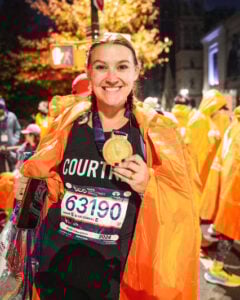
This dedication has not gone unnoticed by her patients, who are touched by Courtney’s efforts.
“Sometimes I’ll come into work after training, which often sparks conversations,” she shared. “Some of my patients were runners themselves, so it becomes a way for us to connect.”
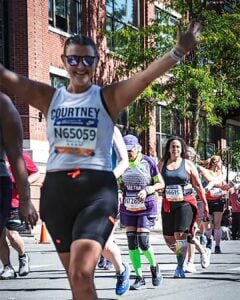
World Cancer Research Fund CEO, Rachael Hutson, said:
“Every day, we see the impact that cancer has on people, families, and communities. It’s people like Courtney, who bring both professional experience and personal insight, that inspire change. By running the London Marathon, she’s driving forward life-changing research into how diet, nutrition, and physical activity can reduce cancer risk and improve survival. We’re grateful for her dedication and are incredibly proud to have her on the team.”
As she prepares for London, Courtney carries the memory of her mother and the stories of the patients she cares for every day.
“I’m doing this for them,” she said. “Anything we can do to advance research and prevent others from reaching the late stages, that’s what matters most.”
You can show Courtney your support by donating or sharing her story at the link below.
Read more supporter stories
Riccardo Pilloni will take on the iconic event 22 years after his diagnosis and eight years after his father, Edmondo, died from liver cancer.
When Riccardo was 19 years old, he found a lump on his collarbone. He visited his GP and was told his symptoms could be seasonal flu related.
After his mother insisted that the doctor investigate further, Riccardo was referred to a haematologist. There, a biopsy revealed that this swollen lymph node was Hodgkin lymphoma – a type of blood cancer that begins in white blood cells.
“I remember feeling really healthy at the time, so the diagnosis was a huge shock,” Riccardo explained. “It felt like the rug has been pulled from under me.”
His treatment included chemotherapy followed by radiotherapy.
“When I looked in the mirror during treatment, I didn’t recognise myself. It destroys your body,” Riccardo shared.
Despite the long-term and late effects of his treatment, Riccardo considers himself “one of the lucky ones” having received an early diagnosis which meant his cancer had not spread. After months of treatment, he made a full recovery.
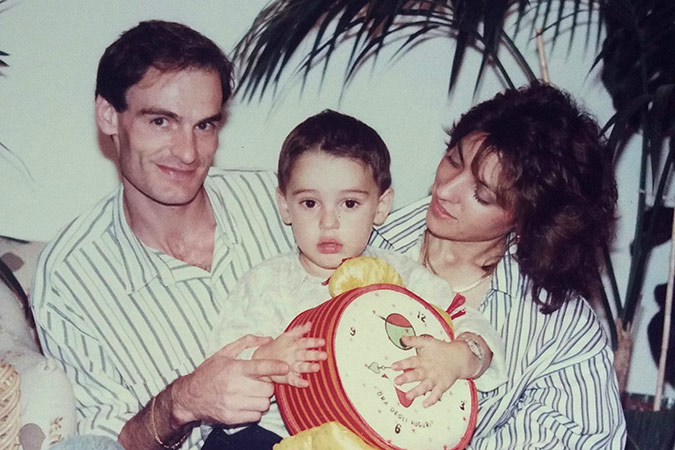
When his father was diagnosed with cancer years later, Riccardo felt a sense of helplessness as he watched him begin his own cancer journey.
“When I was fighting cancer, it was easier in a way because it was my own personal battle. But when it was happening to my dad, I felt powerless.”
After his father’s death, Riccardo became committed to supporting cancer prevention research and began his London Marathon training.
“Looking at how we can stop cancer before it starts feels like real progress. Trying to solve a problem like cancer before it begins, rather than treating it later, can save lives,” he added.
Riccardo says that grief and survival have shaped his outlook on life in equal measure.
“There is no finish line with grief, it stays with you forever. But when you’re going through cancer yourself, the finish line is going back to normal life,” he explained. “In both cases, you can’t see the finish line and you have to put the effort into moving forward.”
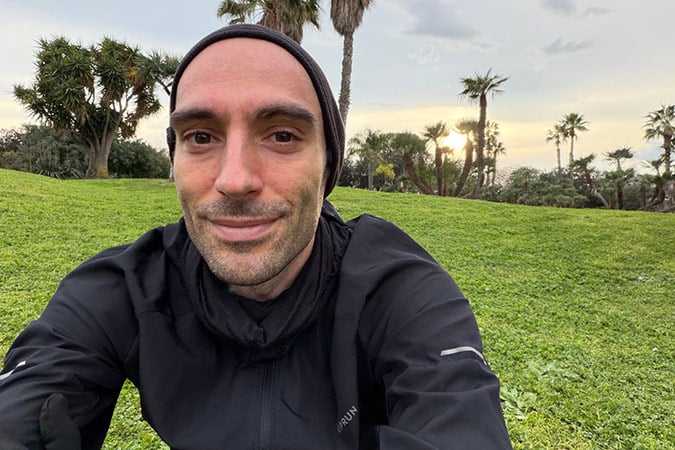
Running 26.2-miles through London is a personal commitment to honouring his dad’s memory and offering hope to others.
“I want people going through cancer to know that you’re not alone in this and there’s a beautiful life after.”
World Cancer Research Fund’s CEO, Rachael Hutson, said:
“We are incredibly grateful to Riccardo for turning such personal challenges into something positive. His experience, from a cancer diagnosis at such young age to the loss of his father, is the reality faced by so many families and shows why our work is so important. We will be cheering him on every step of the way.”
Now more than two decades in remission, Riccardo reflects both on the treatment that saved his life and the people behind it.
“I’m incredibly grateful to have survived and forever indebted to the healthcare professionals who treated me… and people I haven’t met too. Chemotherapy was developed and refined thanks to the tireless efforts of many scientists and I’m here today because of them.”
This gratitude is the driving force behind his fundraising efforts for World Cancer Research Fund.
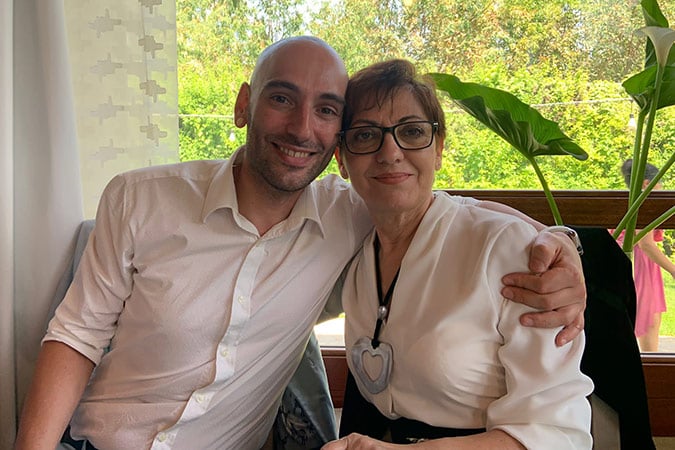
“Now I’m focused on helping others. I’m taking on the London Marathon to help people diagnosed today who may not be as lucky as I was.”
You can show Riccardo your support by visiting the link below:
Read more supporter stories
Marta Mixa is running the iconic TCS London Marathon for World Cancer Research Fund – earning all six stars from the original Abbot World Marathon Majors series (the world’s most prestigious long-distance running events).
Born in San Salvador and a US citizen for 40 years, Marta began her six-star journey back in 2019 with the New York City Marathon. After qualifying Boston and Chicago and running Berlin in the same year, Marta went on to complete three World Marathon Majors in 2022 alone.
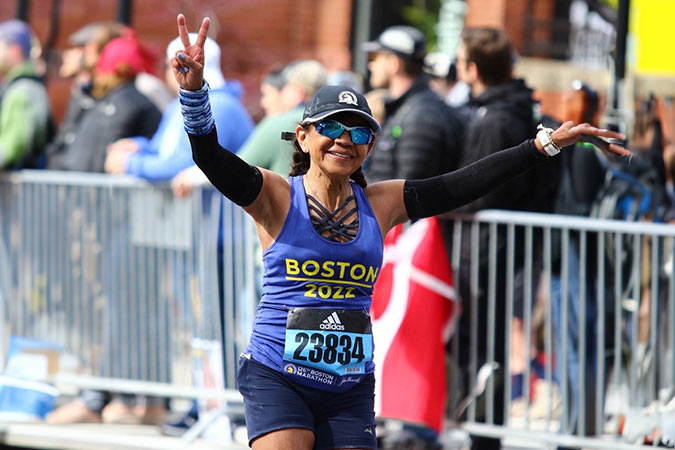
In 2024, she crossed the finish line once more, completing the Tokyo Marathon and bringing herself one step closer to the iconic medal. Now more determined than ever to conquer the programme, Marta registered for the TCS London Marathon in a bid to earn her sixth and final star.
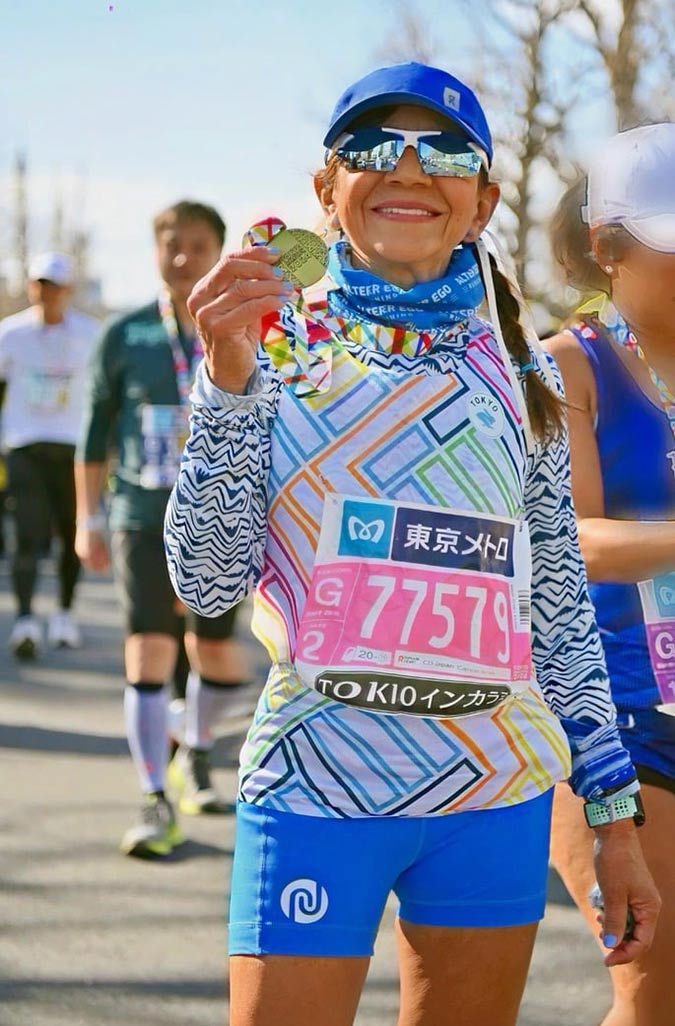
Fundraising for cancer prevention research is important to Marta after losing her aunt to breast cancer in 2024.
“She fought until the very end, but cancer stole her life, leaving three children, grandchildren, and her great grandchildren behind”, Marta shared. “It was really hard because she was the first family member that ever passed away from cancer.”
Marta’s sister-in-law, Sue, was also diagnosed with cancer in another devastating blow for the family.
“Sue was a vivacious, strong woman who loved the great outdoors and lit up every room. She fought for six long years and it was hard to see her go.”
Driven by her loss, Marta committed herself to not only support cancer research but to embracing a healthier lifestyle – which is proven by science to reduce risk of cancer along with many other conditions.
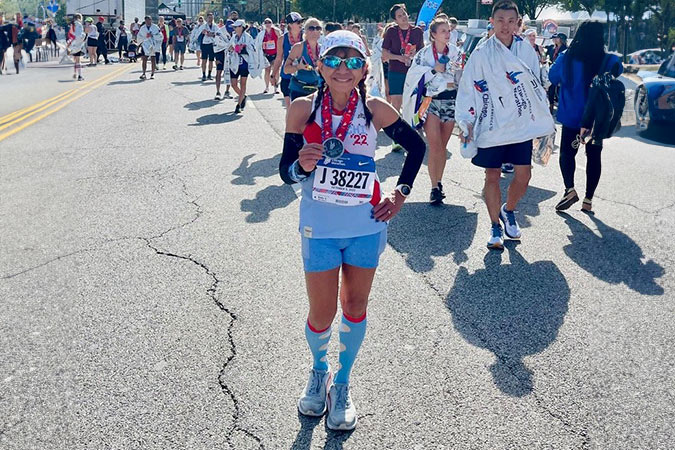
Marta’s love of running began in her late thirties, and over the past six years, she has completed 15 marathons. She credits her strength and endurance in her sixties to a balanced, nutrient-rich diet.
“The right protein is so important, together with carbohydrates. Carbs give you energy, and protein keeps you strong. I try to incorporate lots of fruit and vegetables into my diet, as well as lean protein such as salmon and chicken”, Marta explained.
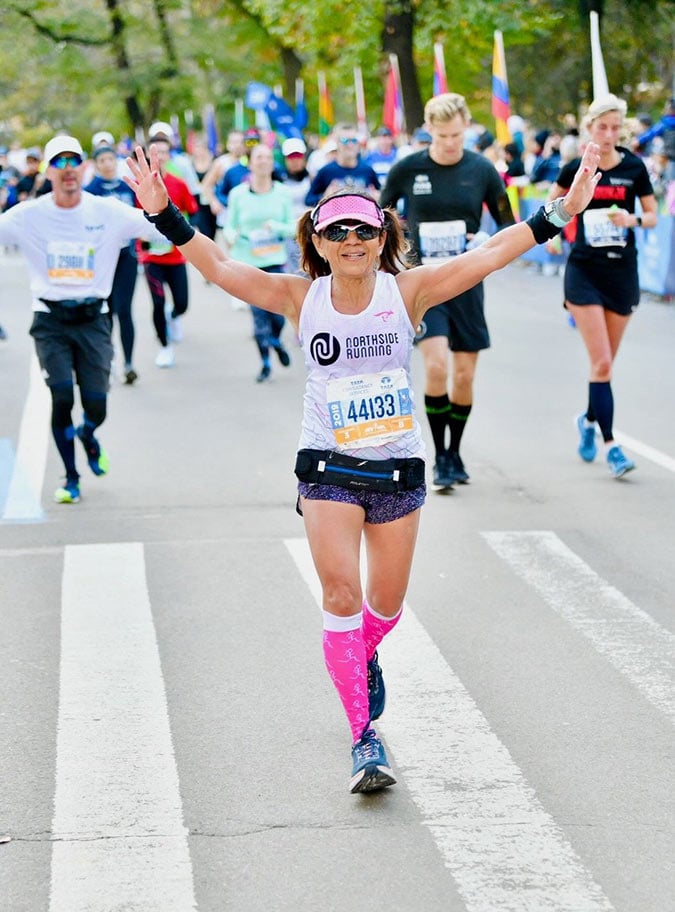
World Cancer Research Fund’s UK Director, Steve Greenberg, commented:
“Marta is an unstoppable force, and her dedication to funding life-changing research is truly inspirational. Her active lifestyle and balanced diet echos our Cancer Prevention Recommendations, which help people live longer, healthier, and happier lives free from the devastating effects of cancer. She embodies everything that World Cancer Research Fund is about, and we are truly grateful for her support.”
For Marta, the journey has always been about more than medals.
“My motivation is letting others know they can do it too. Your age doesn’t matter”, she explained. “Stay strong, stay fit, stay healthy. Your body will thank you for it.”
You can show Marta your support by donating or sharing her story at the link below:
Read more supporter stories
Neuroendocrine cancers are a group of cancers that develop in cells of the neuroendocrine system. They can develop in different parts of the body such as the stomach, bowel, pancreas, or lungs.
Raine was just 17 years old when her father called her and her siblings with the news.
“It felt like the whole world changed in a second”, she said. “In the following months, I was wracked by fear and unpredictability about what the future held for mum and us.”
For years, Raine also worried the diagnosis might mean a higher risk for her too. Recently, she learned that it isn’t hereditary and her mum’s long-term outlook is encouraging.
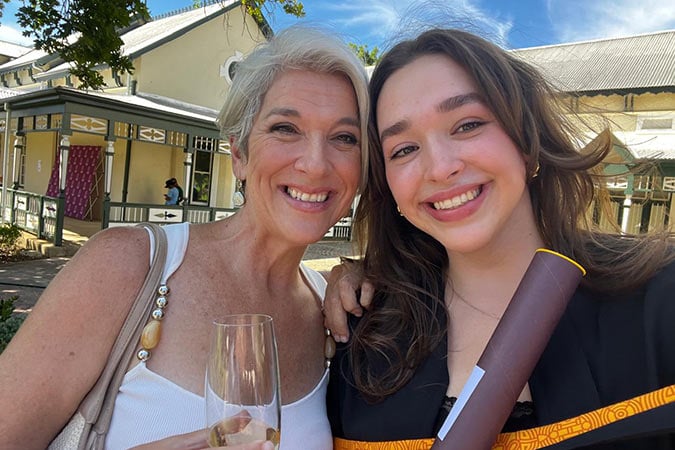
Raine watched her mum bravely keep moving forward through her illness, including completing an MBA degree along the way.
“The experience has reshaped how I see health, time, and what’s possible. Every step I take when training is for those who can’t”, Raine shared. “Running the London Marathon is my way of honouring what my mum has been through and helps fund research so families can have more years together.”
In July 2025, Raine ran her first 5km in years. Since then, she has learned so much about the world of nutrition and eating healthier for training. This helped her to steadily increase her distance, recently completing a punishing 28km run.
On long training days, Raine’s dad often cycles alongside her in locations including Stellenbosch, surrounded by beautiful landscapes.
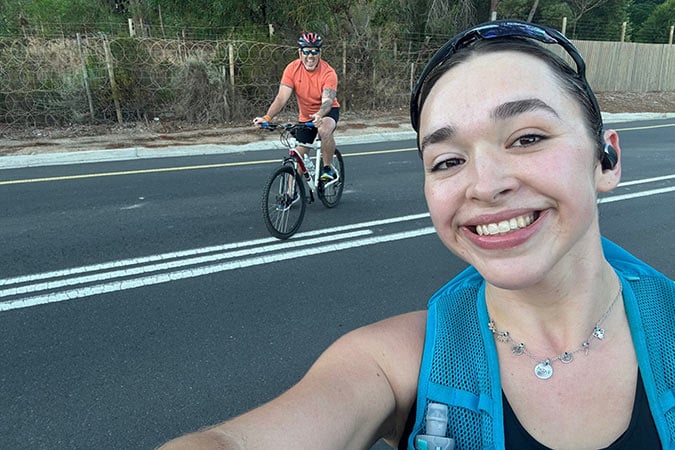
Raine has also started sharing her progress on social media, something she was initially nervous about.
“Don’t be scared to share your journey”, she said. “People really do want to back you.”
World Cancer Research Fund’s UK Director, Steve Greenberg, commented:
“We are so grateful to Raine for taking on the London Marathon in support of our vital work. Everyone here would like to wish Raine the best of luck as she takes on this incredible challenge in honour of her mum, all while raising awareness about the importance of cancer prevention research.”
Reflecting on her involvement with WCRF, Raine shared:
“I want to help people reduce cancer risk, including for cancers that receive less public attention.”
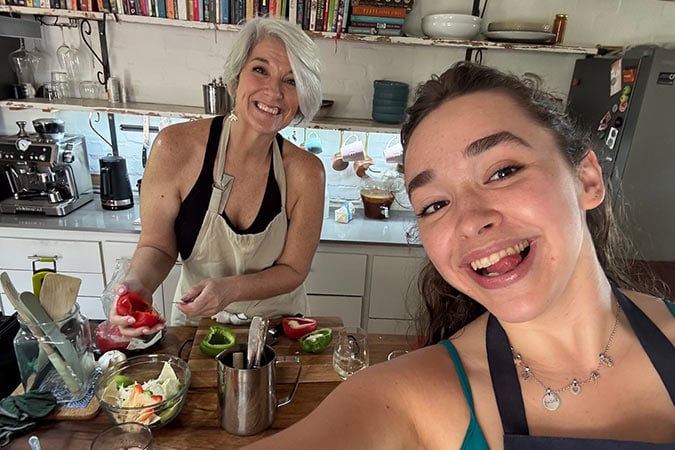
She’s asking supporters to donate, share her page, and help spread the word.
Read more supporter stories
The race will mark the halfway point in Val Aguilar’s effort to complete the original World Marathon Majors – a challenge in memory of her best friend who lost her life to brain cancer at just 18 years old.
The TCS London Marathon marks the third of Val’s six races, placing her midway through the series which also includes Tokyo, Boston, Berlin, Chicago, and New York.
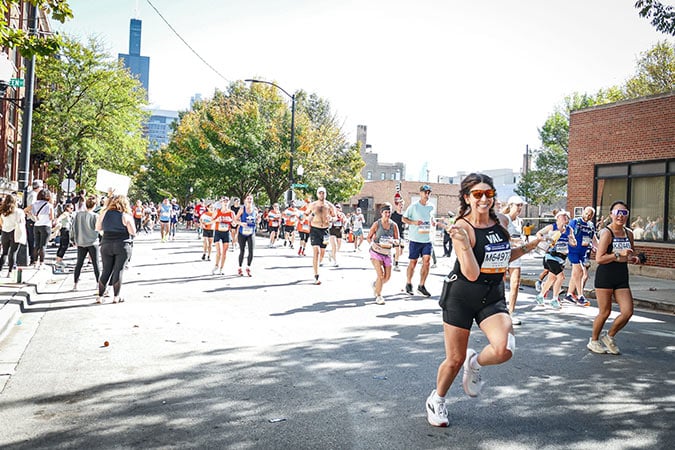
In London, Val will be running for World Cancer Research Fund – a charity that examines how diet, nutrition, weight and physical activity affect risk of developing and surviving cancer
Val met Mary Katherine in the first year of high school where they formed a friendship that would last a lifetime.
“With her, everything felt like an adventure. Even the simplest or the silliest of things felt like the coolest thing to be doing,” Val shared.
Just four years later, in March 2009, Mary Katherine was diagnosed with an aggressive brain tumour. Despite doctors’ best efforts to save her life, she survived just 14 months after her diagnosis.
“Having such a special meaning behind my miles after losing a best friend to cancer makes each run a little bit easier, and each race experience a little bit sweeter,” Val explained.
Through years of training, international travel and physical challenges, Val is fundraising to support organisations committed to understanding, preventing, and treating cancer.
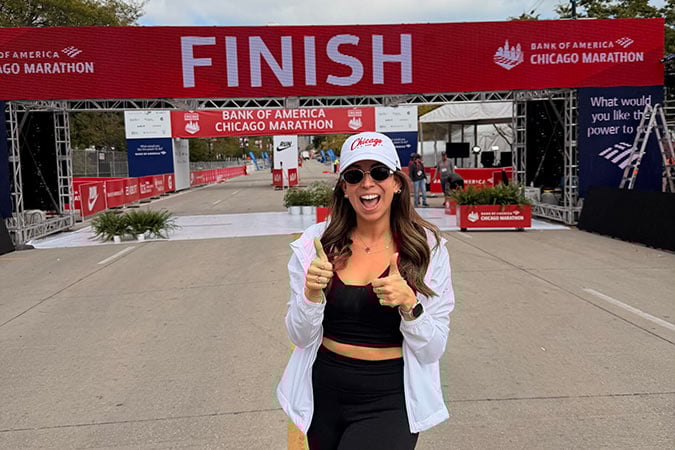
“When I’m racing, I think about who Mary Katherine would be now almost half our lives later. It makes me feel close to someone who I can no longer grow closer to,” she shared.
Val’s London Marathon bid for World Cancer Research Fund highlights the importance of evidence-based prevention strategies and global collaboration to reduce cancer risk.
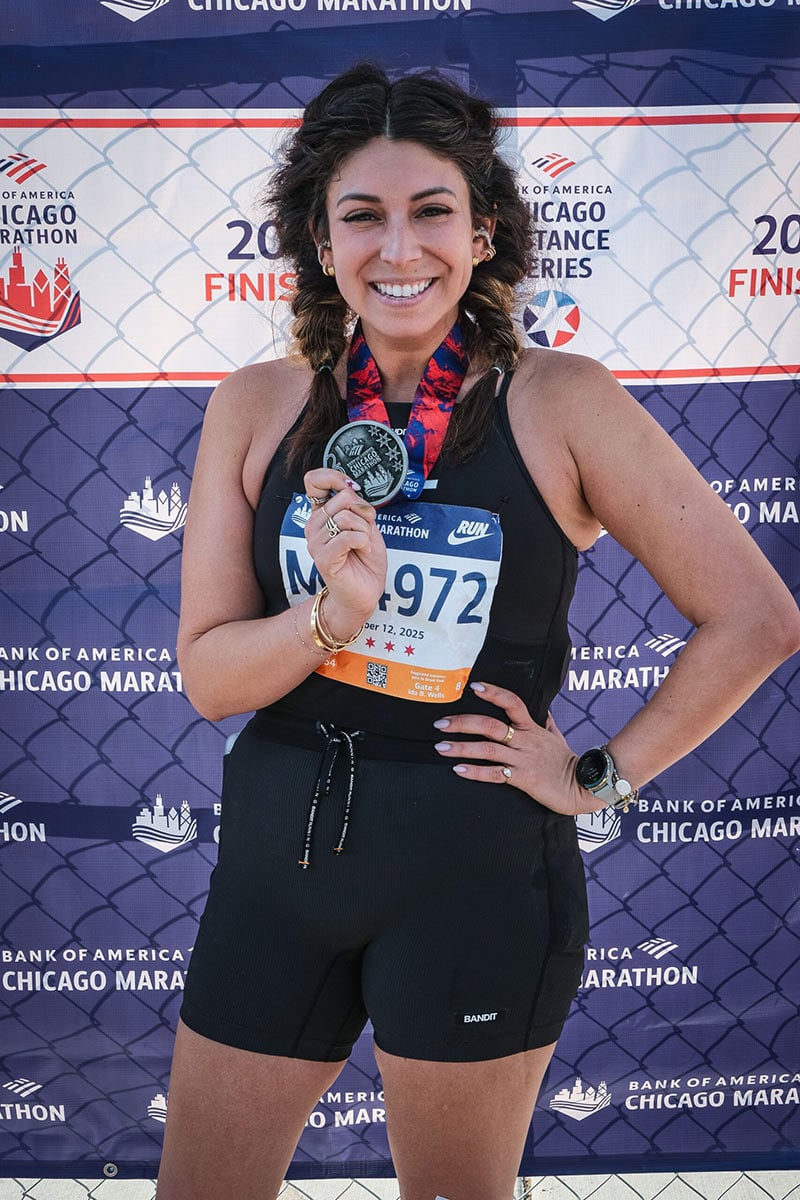
World Cancer Research Fund’s UK Director, Steve Greenberg, commented:
“We are incredibly grateful to Val for her determination and dedication to supporting cancer research. Her efforts not only raise vital funds but also inspire others to take action in the fight against cancer. By completing the world’s most iconic marathons, Val has transformed her grief into action, proving that one person’s determination can help drive change.
Val hopes her story will encourage others to fundraise for cancer research, live healthier lives, and spark vital conversations about the importance of prevention.
You can show Val your support by donating or sharing her story below:
Read more supporter stories
Nicole Latini is running the TCS London Marathon this April after training in her native US – raising vital awareness and funds for World Cancer Research Fund on both sides of the Atlantic.
Her London Marathon bid began in 2022 after her dad, Alan Latini, died following a three-year battle with bowel cancer.
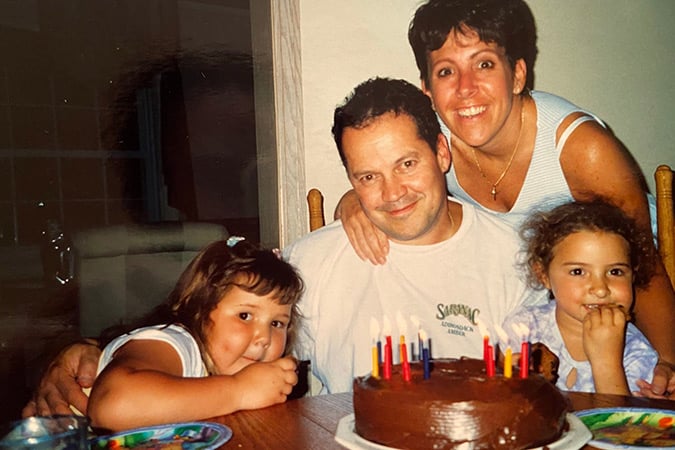
Following her dad’s diagnosis, Nicole became committed to transforming her health by losing over five stone (70lbs), running three half marathons, and ‘completely changing’ her diet and lifestyle to help reduce her own cancer risk.
Despite endless rounds of treatment including immunotherapy, chemotherapy, radiotherapy, surgery and clinical trials, Nicole’s dad faced his cancer with what she described as “gratitude and grace” before sadly passing away on 4 February 2022.
“Anyone who knew my father knew him as charismatic, witty, caring, loving, and someone who would do anything for his family. I miss my dad more with every passing day. Every milestone, holiday, and birthday is a reminder that he’s not here with us and should be.” Nicole added.
Nicole began running one week after her father’s death to cope with her grief, and soon set her sights on the 26.2-mile route to stop other families facing the same heartbreak.
“Running quickly became an instrumental part in coping, even though I was awful at it. Over time, I made it my goal to use my running through grief to give hope to others in honour of my dad,” she shared.
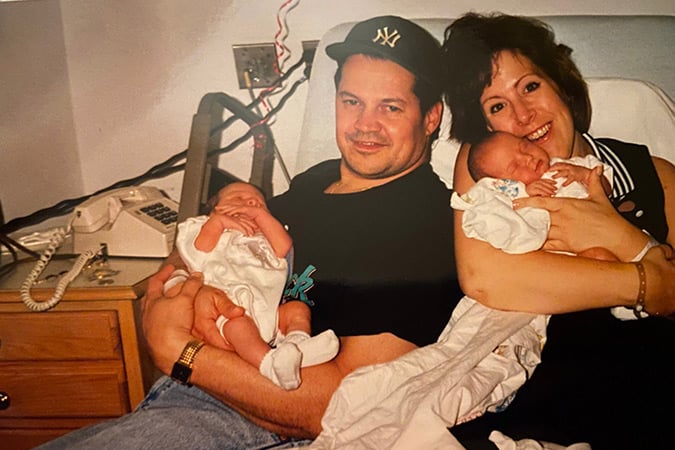
Reflecting on the challenge ahead, Nicole commented:
“Everyday, we have a choice to show up for our family, community and society. My dad showed up every single day for all of us. I’m choosing to train and show up everyday, even when I don’t want to, for him, for all those facing cancer, and for everyone experiencing grief.”
Running the London Marathon holds a special meaning for Nicole. She studied to become a vet in the city, often returning to the US for the holidays and staying close to her dad through regular video calls. He was determined to see her graduate, but heartbreakingly never made it to London.
World Cancer Research Fund’s UK Director, Steve Greenberg, added:
“We are in awe of Nicole’s commitment to improving outcomes for others in her father’s memory. Channelling her grief in a way that will offer hope to future generations is so selfless, and every step Nicole takes this April will make our vital work possible. We cannot wait to cheer her on and congratulate her at the finish line.”
You can show Nicole your support by donating or sharing her story at the link below: