Exercise and breast cancer risk: 7 easy ways to move more
Being active is one of the simplest things you can do to lower your risk of breast cancer, and you don’t need a gym or a free hour to do it.
“Get more exercise” is easy to say and harder to do. Between work, family and everything else, a gym session can feel impossible.
The good news is that you don’t need a gym or a free hour. Everyday movement counts.
This blog is a Breast Cancer Awareness Month collaboration between Breast Cancer UK and World Cancer Research Fund (WCRF).
Can exercise reduce breast cancer risk?
Studies suggest at least 1 in 4 breast cancers could be prevented through lifestyle changes and being active is one of them. The most active people have around a 15% lower breast cancer risk than the least active. Exercise helps to reduce risk by:
- Supporting healthier hormone levels
- Reducing inflammation
- Helping you keep a healthy weight, which matters most after the menopause
Sitting for long stretches has also been linked to higher risk, even if you exercise. So, as a rough guide, try to get up and move at least every 30 minutes.
How much exercise do I need?
The guidelines for weekly physical activity from the UK Chief Medical Officer recommends adults should try and aim for 150 minutes of moderate activity a week (or 75 minutes of vigorous activity), plus muscle-strengthening exercise twice a week.
That’s roughly 30 minutes, five days a week, and it can be split into even smaller chunks. Moderate activity raises both your heart and breathing rate, but you should still be able to chat.
Seven easy ways to fit exercise into your day
- Start with 10 minutes. A lunchtime walk is plenty to begin with. Anything is better than nothing.
- Leave the car at home. Or park further away or get off the bus a stop early when heading into work.
- Count what you already do. Cooking, cleaning, gardening, walking the dog and playing with the kids can all count.
- Break up your sitting. Stand and stretch or do leg extensions and glute squeezes at your desk. This also goes for the TV. Do squats during the ad breaks, or jog on the spot while the kettle boils.
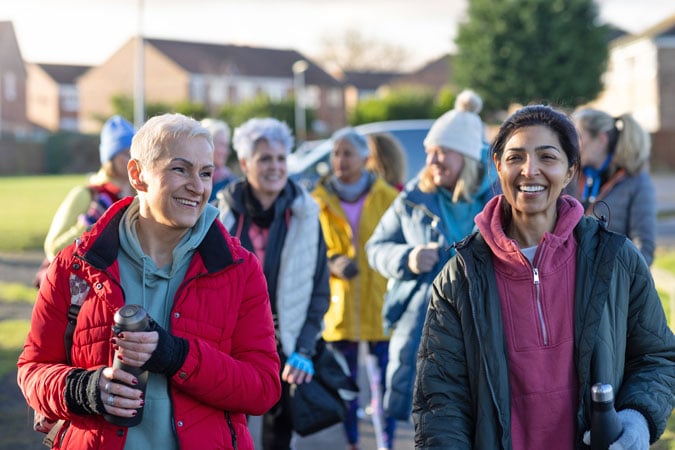
- Join a club. Why not attempt a weekly parkrun (but start just walking it) or join a local walking group near you?
- Build strength at home. Squats, planks, yoga, Pilates or resistance band exercises all work.
- Choose what you enjoy. You’re far more likely to stick with it if it feels fun.
Free apps to help you move more
Free apps* can help you get started. NHS Couch to 5K builds your running fitness up gently over nine weeks, and Moova reminds desk workers to move. Just Dance Now turns a dance party into exercise.
Strava isn’t just for runners either. You can log walks, yoga and gardening, join a walking club, take on a challenge or cheer on friends.
*Neither charity is affiliated with any of these apps.
Does age affect your breast cancer risk?
- In your 20s and 30s: Breast cancer under 40 is rare, at just 4% of annual UK cases on average. But being active, drinking less alcohol and eating well all help reduce risk at any age.
- In your 40s and beyond: Around 96% of cases in the UK each year are in women over 40, but it’s never too late to start reducing your risk through lifestyle modifications like being more active. If you want to get back into exercise, walking is a good option as it is low impact. Rest days, warm-ups and stretching help prevent injury. Even 10 minutes of activity a day can make a difference.
Your first step
Exercise is one piece of the puzzle. Things like diet, alcohol and weight all play a part too, but you don’t have to change everything at once. Pick one small thing this week.
Not sure where to start? Take Breast Cancer UK’s Breast Cancer Prevention Quiz to find out how you can reduce your risk. And if you haven’t exercised for a while or have health concerns, speak to your GP first.
Together, WCRF and Breast Cancer UK are making prevention simple this Breast Cancer Awareness Month.
Interested in reading more?
Explore our new ‘Moving more’ hub for practical tips on how to get moving, sit less and stay active at every stage of life.