Can supplements help prevent cancer? What health professionals need to know

Despite widespread use of dietary supplements, research has shown that taking supplements does not reduce the risk of cancer. Instead, the strongest evidence continues to support following healthy lifestyle recommendations, including eating a balanced diet, maintaining a healthy weight and being physically active.
In our guest blog for MyNutriWeb, we explore common beliefs about supplements and cancer prevention, and highlight the challenges health professionals face when helping patients navigate conflicting nutrition information.
Why food comes first
While vitamins and minerals are essential for good health, experts recommend obtaining them through food wherever possible. Whole foods contain a complex mix of nutrients and other beneficial compounds that work together in ways supplements cannot replicate.
Rachel Clark
We recommend that people do not use supplements for cancer prevention. When it comes to cancer prevention, for most people, eating a healthy, balanced diet is more likely to help protect against cancer than taking dietary supplements.
Supporting informed conversations
With nutrition misinformation widely available online, health professionals have an important role in helping people understand what the evidence shows about supplements and cancer prevention.
The NutriWeb article provides practical insights to support evidence-based conversations and reinforces the importance of promoting healthy dietary patterns rather than relying on supplements.
What does reduce the risk of cancer?
While supplements do not prevent cancer, our cancer prevention guidance is grounded in decades of global research into diet, weight, physical activity and cancer.
We bring together the best available evidence to help people make informed choices – without hype or false promises.
Healthy dietary patterns, such as sustainable plant-based diets which prioritise vegetables, fruits, whole grains, legumes, nuts, and seeds, continue to show more consistent associations with cancer prevention than isolated supplements.
 Learn more
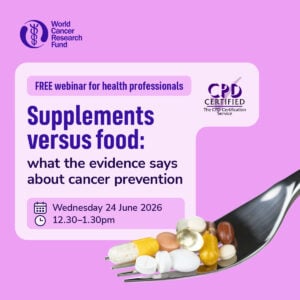
To explore the evidence in more detail, join our webinar, Supplements versus food: What the evidence says about cancer prevention, which will examine the latest research and provide practical guidance for health professionals.