
TRUST Test
Our TRUST Test helps you ask the right questions and approach health information more critically.
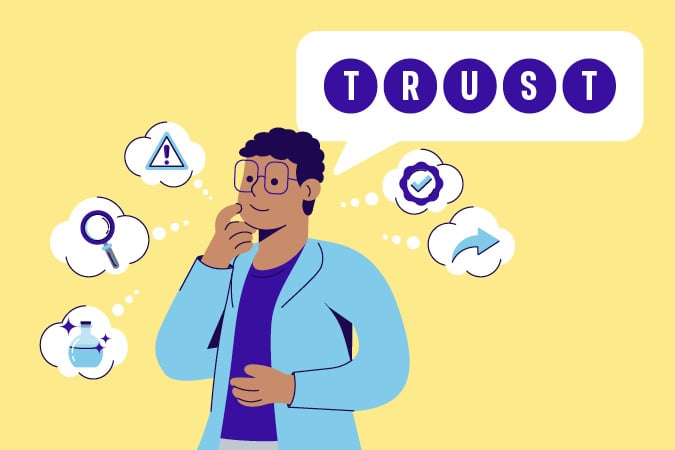
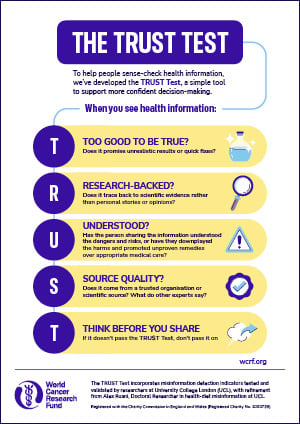 The TRUST Test won’t tell you what to think. Instead, it helps you ask the right questions and approach health information more critically.
Whether you’re reading about supplements, nutrition, cancer prevention or general wellbeing, taking a moment to use the TRUST Test can help you make more informed decisions and avoid being misled by claims that sound convincing but aren’t supported by evidence.
The TRUST Test is a simple way to pause before acting on or sharing a health claim, and can be used by the public and health professionals.
The TRUST Test won’t tell you what to think. Instead, it helps you ask the right questions and approach health information more critically.
Whether you’re reading about supplements, nutrition, cancer prevention or general wellbeing, taking a moment to use the TRUST Test can help you make more informed decisions and avoid being misled by claims that sound convincing but aren’t supported by evidence.
The TRUST Test is a simple way to pause before acting on or sharing a health claim, and can be used by the public and health professionals.
Latest news and blogs

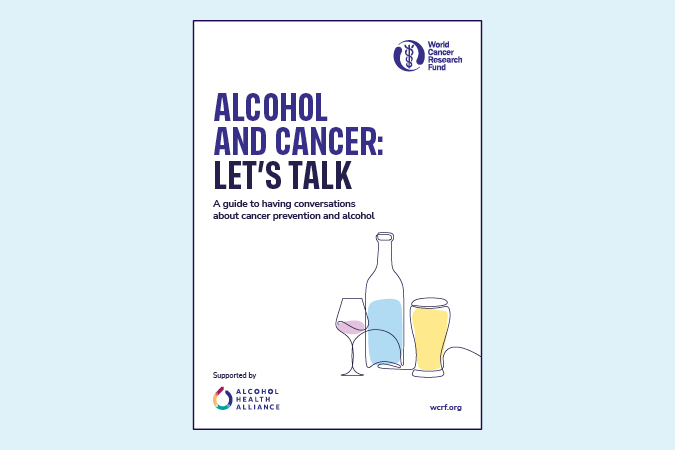
Alcohol and cancer: let’s talk
A guide to help health professionals have conversations about alcohol and cancer prevention with patients
Publication review date: May 2028
Alcohol and cancer: Let’s talk
This guide supports health professionals having conversations with patients and clients about alcohol and cancer prevention.
This development of this resource was supported by Alcohol Health Alliance.
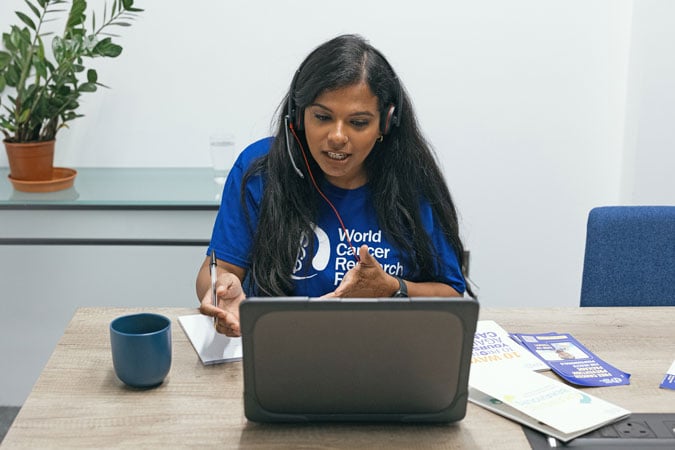
Sign up to our free package for health professionals
The package includes access to free resources, news updates and CPD opportunities to help you support your patients reduce their risk of cancer
More on alcohol


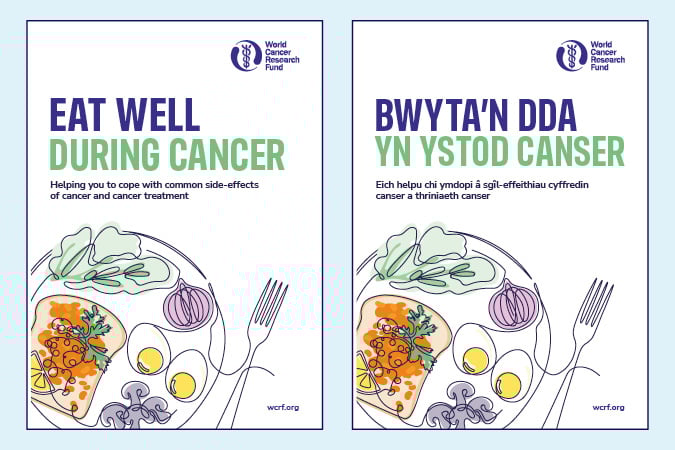
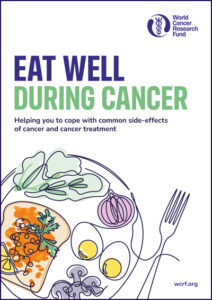
Eat well during cancer
A practical guide for people living with cancer, offering tips on eating well to manage common side effects of cancer and treatment
Publication date: November 2024
Next review date: November 2027
Eat well during cancer: Helping you to cope with the common side-effects of cancer and cancer treatment
This is a practical, evidence-based guide to help you feel more confident about what to eat to help you manage common side effects like fatigue, weight loss and digestive issues. It offers supportive advice and recipe ideas to help you maintain a nourishing diet that supports your strength, recovery and overall wellbeing.
What’s inside?
- Answers to common questions about diet during cancer and treatment
- Supportive advice and recipes for managing common side effects
- Information about our Cancer and Nutrition Helpline for expert support
- Inspiring stories from others living with cancer.
Why this guide?
This guide is based on the latest scientific evidence and expert insights from the British Dietetic Association (BDA) Oncology Specialist Group.
This is a valuable resource that is evidence based and peer reviewed, and will benefit many patients undergoing cancer treatment. It will provide clear guidance for their friends and families. It has been a privilege to have been involved in its development and will be utilised by many oncology dietitians.

Who is it for?
This guide is suitable for most adults with cancer. However, it may not be suitable for you if:
- You are eating very little
- You have experienced significant unintentional weight loss
- You are receiving palliative care
- If you follow a special diet or have had a colostomy/ileostomy, speak to your care team for personalised advice.
Always follow the advice of your cancer care team. This guide is designed to complement their guidance and provide additional support.
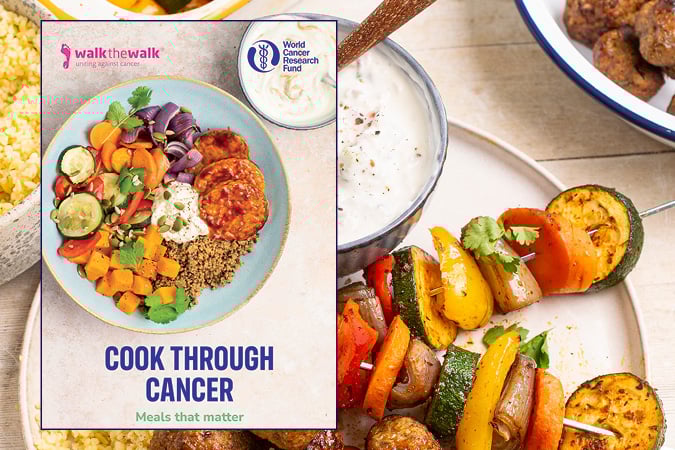
Cook through cancer recipe book
Download or order this FREE cookbook with 12 nutritious recipes created by Registered Nutritionist Gopi Chandrathevan for patients, carers, families and health professionals looking for practical, supportive meal ideas

Support our work
We can only offer our guides and recipe booklets for free thanks to the generosity of people like you
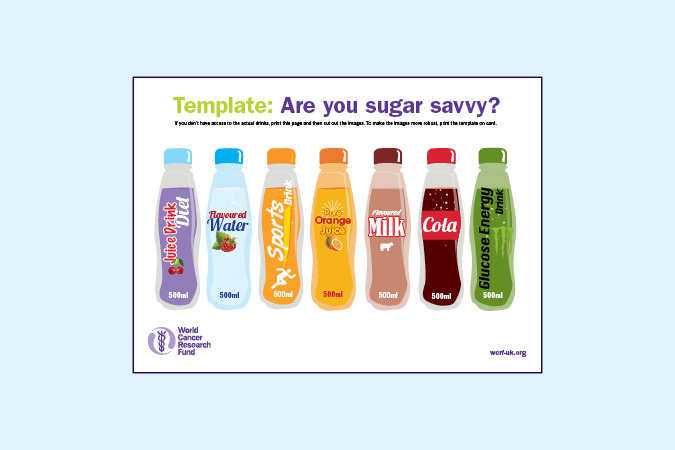
Are you sugar savvy?
Use this game at health-related events and workshops to show people how much sugar some drinks contain. It helps to encourage people to limit their intake of sugary drinks and replace them with low-sugar or sugar-free options.
This resource has been designed for you to use with your patients and clients. We have lots of other booklets, posters and cookbooks for patients to take home.
Changing behaviours
A guide to having conversations to support healthy behaviour change.
Publication review date: December 2028
Changing behaviours: A guide to having conversations to support healthy behaviour change
This guide supports health professionals to have effective conversations with patients and clients about healthy lifestyle choices. It includes listening and communication techniques, as well as examples and activities to complete.
This resource is accredited by the Royal Society for Public Health (RSPH), meeting their standards for quality, clarity and best practice. It aligns with recognised behaviour change frameworks and supports the education of health professionals.
Sign up to our free package for health professionals
The package includes access to free resources, news updates and CPD opportunities to help you support your patients reduce their risk of cancer
Fundraising guide
Your complete guide to fundraising, from inspiration to get you started to details on how to pay in your donations.
Healthy living after cancer
This guide is for those who have finished their cancer treatment to keep healthy and help reduce the risk of cancer recurring
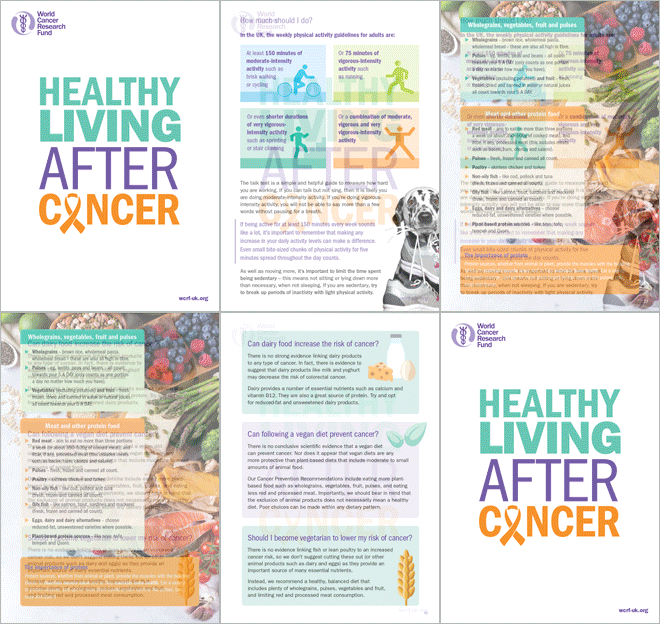 This comprehensive guide is for anyone who wants to know the facts about keeping healthy after cancer.
Even if you’ve been given the all-clear, it can be a daunting time and is often made worse by the mixed messages about what diet and lifestyle advice people should be following.
We provide the latest scientific evidence on what practical changes people can make to their diet and lifestyle to help reduce the chance of cancer recurring.
It’s full of practical advice on:
- ways to eat more healthily
- how to manage weight loss and gain
- getting more activity into the day
- and how to make healthy changes stick.
It also addresses some of the common myths that people have around diet and cancer.
Related content

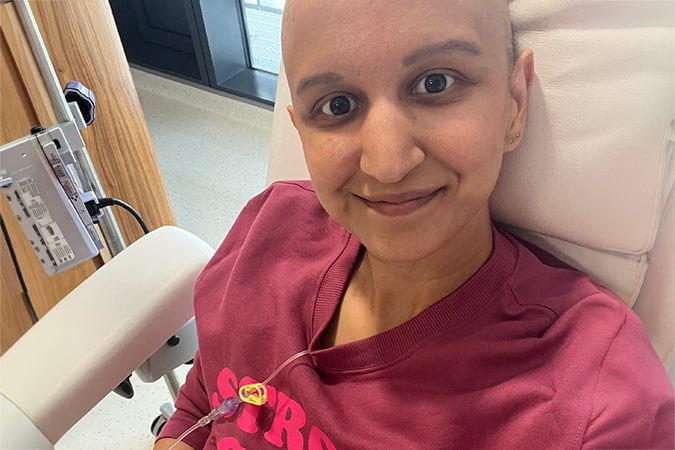
Support our work
We can only offer our guides and recipe booklets for free thanks to the generosity of people like you
Protect yourself against bowel cancer
A practical leaflet on how diet and lifestyle affects your risk of bowel cancer (also known as colorectal cancer).
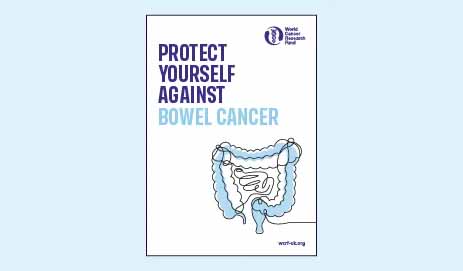
Publication review date: April 2026
Protect yourself against bowel cancer
This evidence-based leaflet provides information on who is most at risk of bowel cancer and what you can do to protect your health. Inside, you’ll find:
- Diet and lifestyle risk factors for bowel cancer
- Tips to help reduce your risk
- Guidance on the main symptoms to look out for
- Information on bowel cancer screening in the UK
Support our work
We can only offer our guides and recipe booklets for free thanks to the generosity of people like you
Women’s health guide
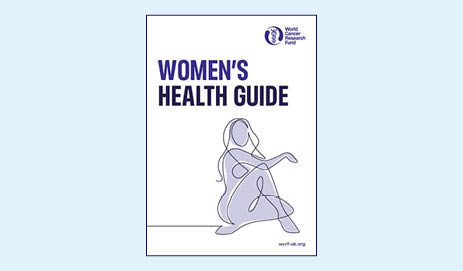
Publication review date: August 2026
Women’s health guide
Women’s health is important at every stage of life. World Cancer Research Fund’s guide helps women make healthier lifestyle choices, improve wellbeing and reduce the risk of cancer.
The guide explains:
- The most common cancers affecting women, including breast cancer
- How keeping a healthy weight, eating well and being physically active can support women’s health and help reduce cancer risk
- Why staying healthy matters at different life stages, including menstruation, pregnancy, breastfeeding and menopause
Support our work
We can only offer our guides and recipe booklets for free thanks to the generosity of people like you
Men’s health guide
This booklet is specially designed for men. It looks at the cancers that are most common in men, and gives lots of tips and advice on how you – or the men in your life – can be healthier and make cancer less likely.
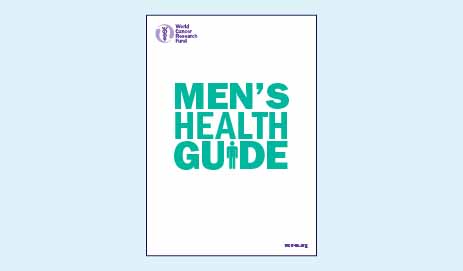
Find out the facts and stay in control of your health with our recently updated Men’s health guide.
Our guide covers the most common cancers in men in the UK, with the latest scientific evidence on how you can help to reduce your risk.
We help you stay on top of lifestyle factors such as exercise, eating and drinking, with real-life advice on the foods to avoid and how to make change last.
Support our work
We can only offer our guides and recipe booklets for free thanks to the generosity of people like you
10 ways to protect yourself against cancer
A comprehensive guide to our Cancer Prevention Recommendations.
Available as a booklet and a poster.
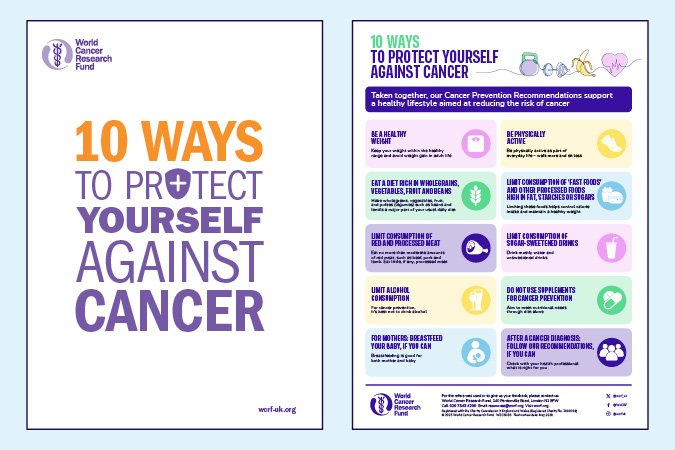
The Cancer Prevention Recommendations in this booklet and poster are based on the latest review of research into cancer prevention and survival related to diet, weight and physical activity, to ensure we provide the most reliable and up-to-date guidance on reducing your cancer risk.
As well as a comprehensive guide to all our Recommendations, this booklet and poster contain practical advice to help you make healthy choices to protect yourself against cancer, as well as other diseases such as heart disease and type 2 diabetes.
Support our work
We can only offer our guides and recipe booklets for free thanks to the generosity of people like you
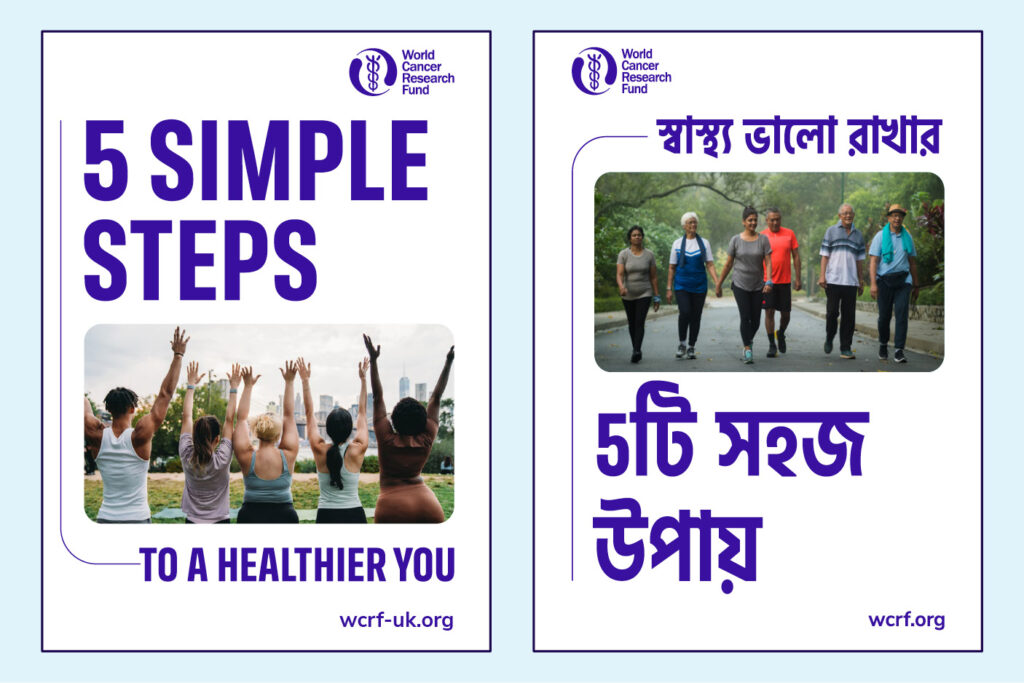
5 simple steps to a healthier you
Our practical booklet to help you keep healthy in 5 simple steps. Available in English and Bengali.
Publication review date: August 2026
5 Simple steps to a healthier you
This short booklet is for people wanting to make healthy changes to their lifestyle but aren’t sure where to start.
Inside you’ll find simple, practical guidance on:
- Being a healthy weight
- Moving more
- Eating well
- Limiting junk food
- Drinking less alcohol
World Cancer Research Fund’s health resources give you the tools to build habits that support long-term health and reduce your cancer risk.
Support our work
We can only offer our guides and recipe booklets for free thanks to the generosity of people like you