Bowel cancer causes
Find out what the main causes and risk factors linked to bowel cancer.

On this page
What causes bowel cancer?
There is no single cause of bowel cancer. Instead, a combination of factors can influence your risk. Some of these you cannot change, such as your age or family history. Others relate to your diet and lifestyle, and making small changes in these areas can help lower your overall risk.
Diet and lifestyle causes of bowel cancer
Research shows that around 54% of bowel cancer cases in the UK could be prevented. Evidence also shows that some diet and lifestyle choices can increase your risk.
Not eating enough dietary fibre
 There is strong scientific evidence that not eating enough fibre-rich foods (such as fruit, vegetables, beans, nuts and seeds), including wholegrains (like brown bread, rice, pasta and breakfast cereals), can increase your bowel cancer risk.
TIP: Aim for 30g of fibre a day. You can reach this by eating at least 5 portions of fruit and vegetables a day, choosing wholegrain or brown varieties of bread, grains and pasta, and adding more pulses, nuts and seeds to your daily meals and snacks.
Download our factsheet about fibre to understand the importance of fibre for your health and how to get more in your diet.
Eating too much red and processed meat
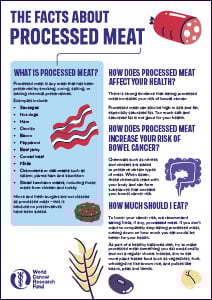 There is strong evidence that eating too much red meat, and eating any amount of processed meat, increases your risk of bowel cancer.
TIP: Limit red meat to no more than three portions a week (around 350-500g or 12-18oz cooked weight).
For bowel cancer specifically, research shows that your risk increases by 16% for every 50g portion of processed meat eaten each day. That’s why we suggest you eat little, if any, processed meat such as ham and bacon.
To cut down, try swapping some red or processed meat for other sources of protein like beans, lentils, tofu, eggs, dairy foods, fish, chicken or turkey.
Download our factsheet about processed meat for tips and advice to help you cut down on how much you eat.
Drinking alcohol
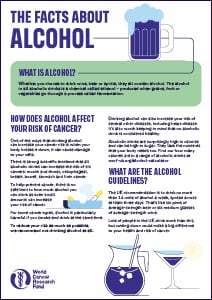 There is strong evidence that drinking alcohol increases your risk of bowel cancer. Because of this, we recommend avoiding alcohol altogether to help lower your risk.
TIP: Choose smaller servings of alcohol, dilute your drinks with mixers like soda water and try alternating each alcoholic drink with a non‑alcoholic one.
Download our factsheet about alcohol for more tips on cutting down.
Not doing enough physical activity
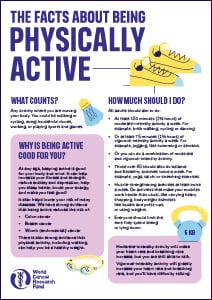 There is strong evidence that not being regularly active can increase your risk of bowel cancer.
TIP: Aim to do 20-30 minutes of moderate intensity activity a day (like brisk walking), or 10-15 minutes of vigorous intensity activity a day (like running).
Download our factsheet about being physically active to get ideas on how to be more active every day.
Living with overweight or obesity
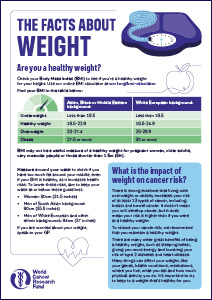 There is strong evidence that living with overweight or obesity increases your risk of bowel cancer. Keeping to a healthy weight can help lower your bowel risk, and it also reduces your risk of at least 12 other cancers.
TIP: Eat more fibre-rich foods like vegetables, fruit, wholegrains, pulses, nuts and seeds to help support a healthy weight. Move your body often throughout the day to help you achieve a healthy weight too.
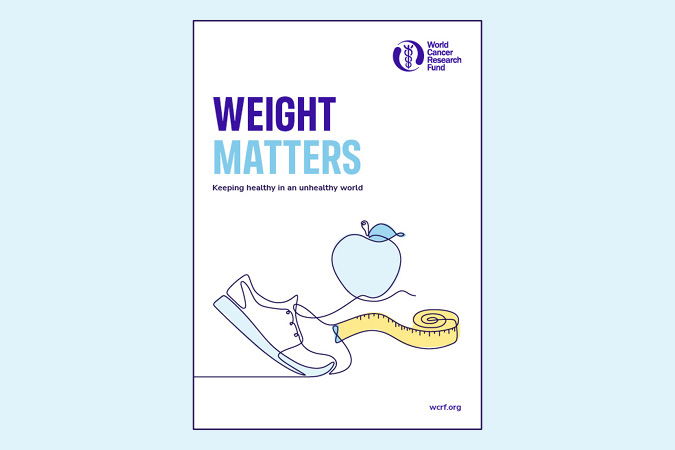
Download our factsheet about weight for more information and support.
Smoking tobacco
There is strong evidence that smoking tobacco can increase your risk of bowel cancer. For bowel cancer, smoking two packs a day can increase your risk by 40%.
TIP: Cut down or quit smoking tobacco. For support and services to help you cut down and stop, speak to your GP.
Other bowel cancer risk factors
Alongside the lifestyle factors you can influence, there are also some risk factors for bowel cancer that you cannot change, such as your age or family history. Understanding these can help you make informed choices and focus on the areas where you can take steps to support your health.
Being older
The risk of bowel cancer increases with age, particularly after the age of 50.
Having a family history of bowel cancer
Your chance of developing bowel cancer may be higher if you have a family history. This means that a first-degree relative (parent, sibling or child) has been diagnosed with bowel cancer.
Inheriting gene faults
Some people inherit faults in specific genes (known as mutations) that can increase their risk of bowel cancer. Genetic conditions linked to bowel cancer include Lynch syndrome, familial adenomatous polyposis (FAP) and MUTYH associated polyposis (MAP).
A history of polyps in your bowel
Having a history of polyps (non-cancerous growths) in your bowel can increase your bowel cancer risk.
Long-term health conditions
Having type 2 diabetes or an inflammatory bowel disease such as Crohn’s disease or ulcerative colitis can increase your bowel cancer risk.
Being tall
Being taller as an adult is linked to an increased risk of bowel cancer. Height itself doesn’t cause cancer, but it reflects a range of factors like nutrition, hormones and genetics that influence growth earlier in life.
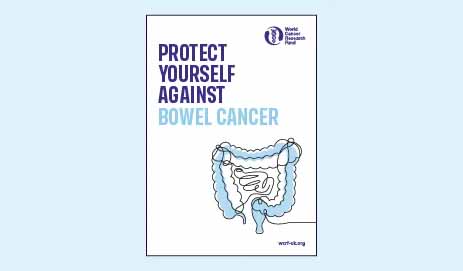
Resources to support you
Page last reviewed: March 2026
-
References
-
- World Cancer Research Fund/ American Institute for Cancer Research. Diet, nutrition, physical activity and colorectal cancer [Internet]. 2018. Available from: https://www.aicr.org/wp-content/uploads/2020/01/colorectal-cancer-2017-report.pdf
- Bowel Cancer UK. Risk factors [Internet]. 2025. Available from: https://www.bowelcanceruk.org.uk/about-bowel-cancer/risk-factors/
- Bowel Cancer UK. Family history [Internet]. 2025. Available from: https://www.bowelcanceruk.org.uk/about-bowel-cancer/risk-factors/family-history
-