Physical activity and cancer
Find out more about the link between being active and cancer prevention.

On this page
What is physical activity?
Physical activity is any movement that uses your body, muscles and energy. It includes everyday movement, exercise and sport, such as:
- Walking, using a wheelchair or cycling as part of your journey
- Gardening and household tasks like vacuuming, mopping or cleaning
- Being active in your job – walking, lifting, carrying or standing
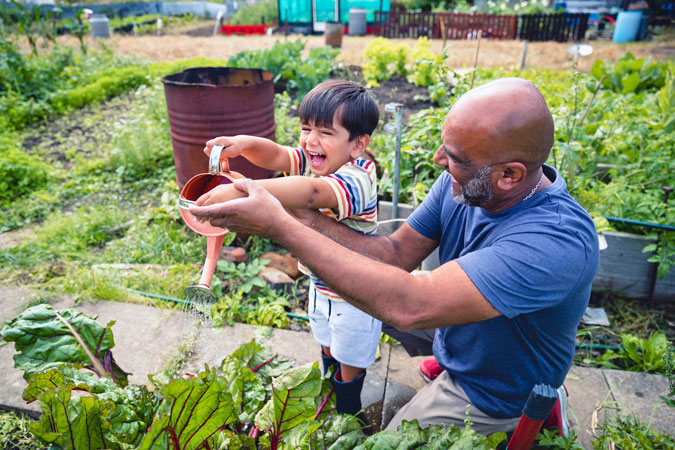
- Playing with children, grandchildren or pets
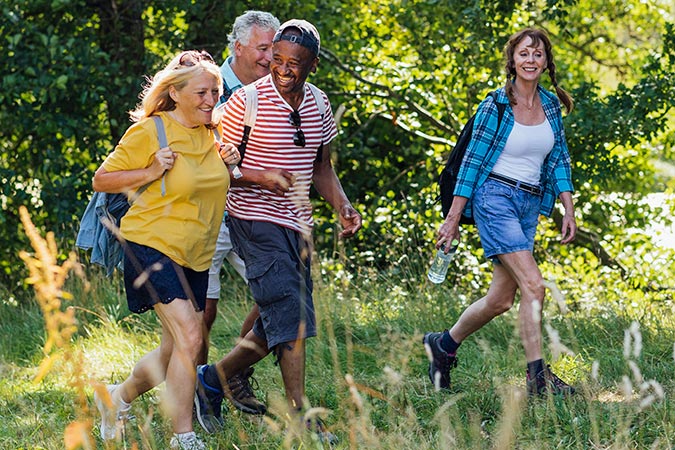
- Dancing, swimming, fitness classes and playing sports
- Stretching, yoga and chair-based exercises like seated marching
Try to find ways to move your body in a way that you enjoy and that works for you.
The benefits of being active
In the short term, moving your body more often can help you:
- Keep to a healthy weight
- Improve your mood and help with stress and anxiety
- Sleep better
- Keep your muscles and bones strong
- Reduce your risk of falls and help you stay steady
- Keep your immune system working well
In the long term, being active can help lower your risk of some cancers, heart disease, type 2 diabetes and dementia.
If you are not very active, starting to move more can bring health benefits. Even a few extra minutes a day can make a difference.
As you build up towards the physical activity guidelines the Government recommends, the benefits continue to grow.
Can exercise prevent cancer?
Research from World Cancer Research Fund (WCRF) shows that being active in everyday life can help lower your risk of:
- Bowel (colon) cancer
- Breast cancer after the menopause
- Womb (endometrial) cancer
Being more active can also help you keep to a healthy weight. Being a healthy weight can help protect you against at least 13 types of cancer, including kidney, pancreatic and oesophageal cancers.
That’s why moving more in everyday life and sitting less is one of WCRF’s Cancer Prevention Recommendations.
FAQ: Is what I eat more important than how active I am?
Eating well and being active are both equally important. Eating a healthy, balanced diet is good for your overall health.
That means eating plenty of fibre-rich foods like fruit, vegetables, beans and wholegrains (like brown rice), limiting red and processed meat and cutting back on alcohol, fast food and sugary drinks. Eating well and being active work best together and offer the best protection against cancer, along with not smoking and being safe in the sun.
How does exercise affect cancer?
Being active in your daily life can help keep your hormone levels healthy, control your blood sugar and reduce inflammation. It also helps keep your digestion working well.
Together, these can help keep your body healthy and lower your risk of cancer.
Free guides and programmes to help you move more
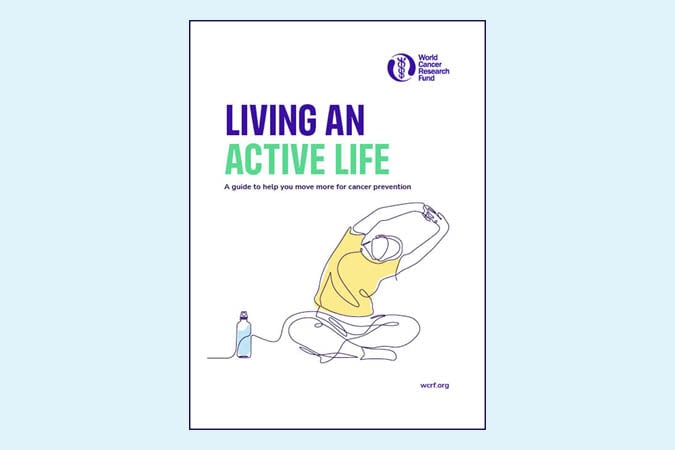
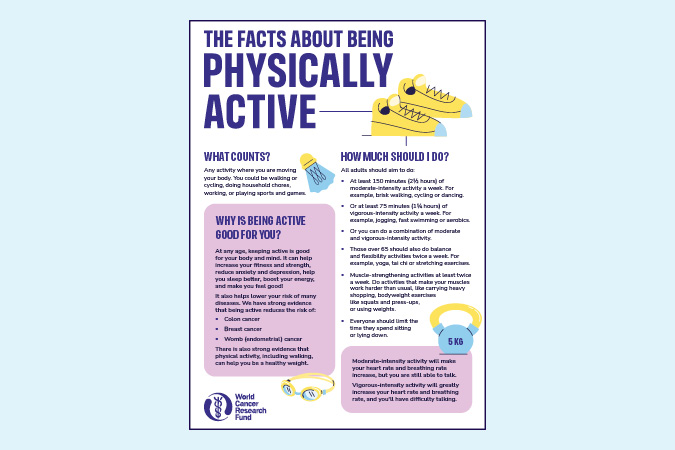
Explore our free guides, factsheets and online programme to help you move more.
-
References
- Department of Health & Social Care. UK Chief Medical Officers’ physical activity guidelines [Internet]. 2026. Available from: gov.uk/government/publications/physical-activity-guidelines-uk-chief-medical-officers-report/uk-chief-medical-officers-physical-activity-guidelines
- World Cancer Research Fund / American Institute for Cancer Research. Continuous Update Project Expert Report 2018: Physical activity and the risk of cancer [Internet]. 2018. Available from: wcrf.org/research-policy/library/physical-activity/
- World Cancer Research Fund/ American Institute for Cancer Research. Continuous Update Project Expert Report 2018. Diet, nutrition and physical activity: Energy balance and body fatness [Internet]. 2018. Available from: wcrf.org/research-policy/library/energy-balance-and-body-fatness/
- World Cancer Research Fund. New study links overweight and obesity to more cancers than previously shown [Internet]. 2023. Available from: wcrf.org/about-us/news-and-blogs/new-study-links-overweight-and-obesity-to-more-cancers-than-previously-shown/
We are certified by the Patient Information Forum (PIF) as a Trusted Information Creator, recognising that our health information meets trusted quality standards.
Last reviewed: October 2026
Next review date: October 2029