
TRUST Test
Our TRUST Test helps you ask the right questions and approach health information more critically.

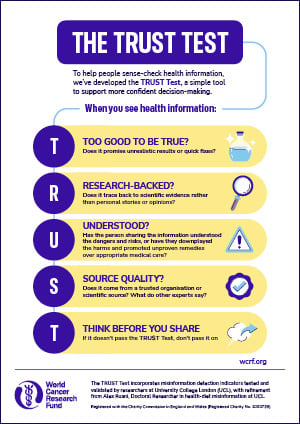 The TRUST Test won’t tell you what to think. Instead, it helps you ask the right questions and approach health information more critically.
Whether you’re reading about supplements, nutrition, cancer prevention or general wellbeing, taking a moment to use the TRUST Test can help you make more informed decisions and avoid being misled by claims that sound convincing but aren’t supported by evidence.
The TRUST Test is a simple way to pause before acting on or sharing a health claim, and can be used by the public and health professionals.
The TRUST Test won’t tell you what to think. Instead, it helps you ask the right questions and approach health information more critically.
Whether you’re reading about supplements, nutrition, cancer prevention or general wellbeing, taking a moment to use the TRUST Test can help you make more informed decisions and avoid being misled by claims that sound convincing but aren’t supported by evidence.
The TRUST Test is a simple way to pause before acting on or sharing a health claim, and can be used by the public and health professionals.
Latest news and blogs

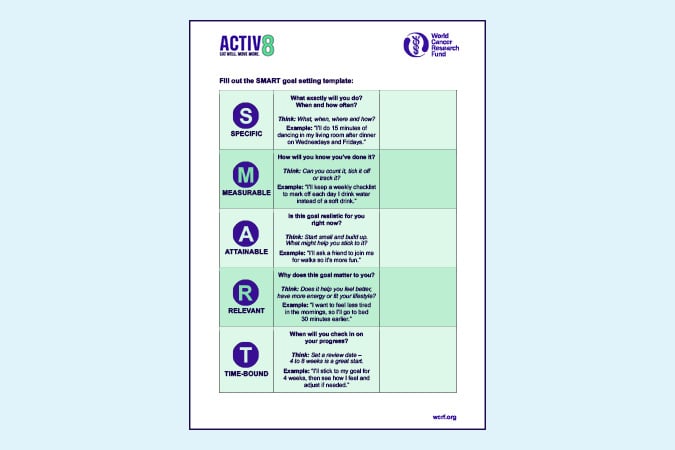
Activ8 SMART goal setting template
Use the Activ8 SMART goal setting template to choose the health goal you want to focus on and break it down into smaller, doable steps to stay motivated and track your progress along the way.

Support our work
We can only offer our resources for free thanks to the generosity of people like you
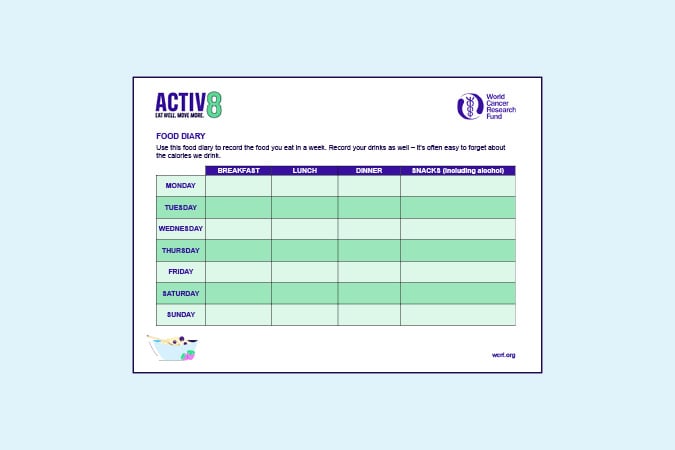
Activ8 food diary template
Use the Activ8 food diary template to log everything you eat and drink over a week. By keeping a record, you’ll spot patterns and discover simple ways to make healthier choices.
Support our work
We can only offer our resources for free thanks to the generosity of people like you
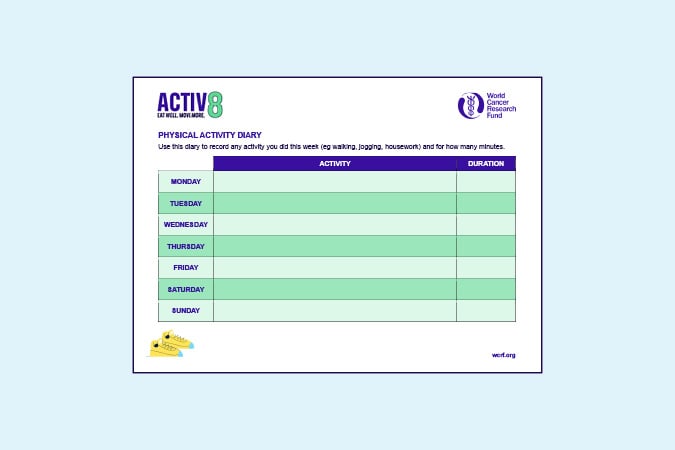
Activ8 physical activity diary template
Use the Activ8 physical activity diary template to log all the activities you do in a week. Tracking your activity helps you spot opportunities to boost your movement and reach your health goals.
Support our work
We can only offer our guides and recipe booklets for free thanks to the generosity of people like you
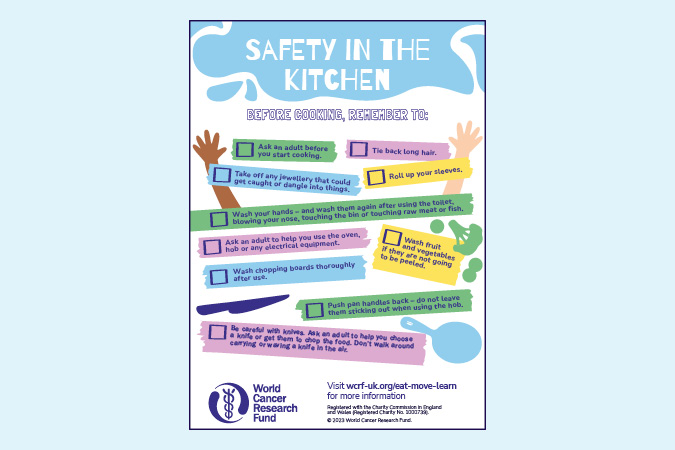
Poster: Safety in the kitchen
Download our free poster to help children learn how to stay safe in the kitchen.
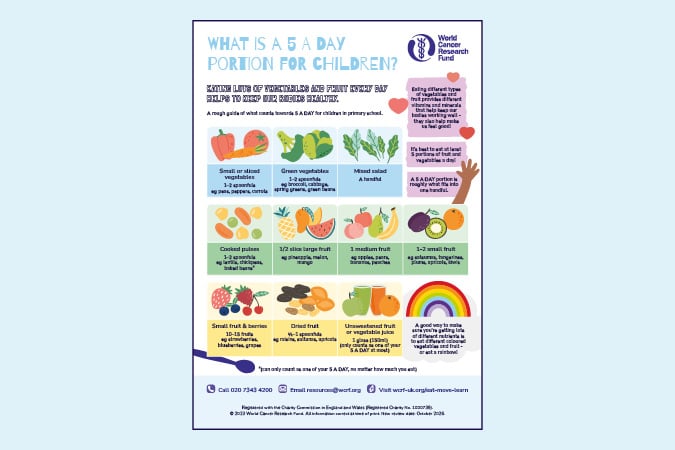
Poster: What is a 5 A DAY portion for children?
Download World Cancer Research Fund’s free 5 A DAY portion size poster for children.
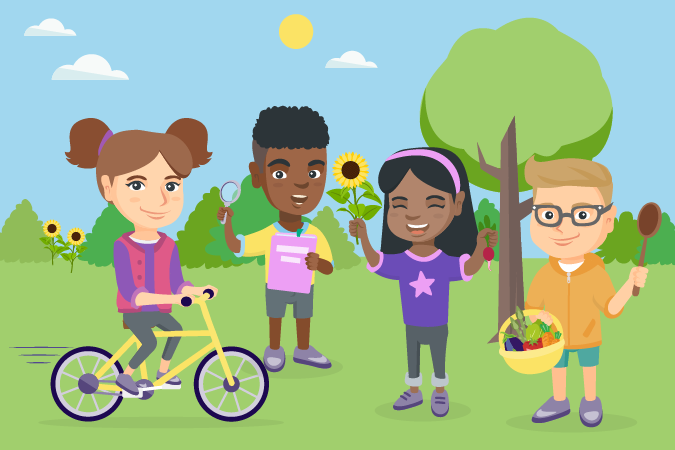
Discover more about Eat Move Learn
Eat Move Learn is hub for children aged 7-11 to learn in a fun way about healthy eating and keeping active with different activities and recipes.
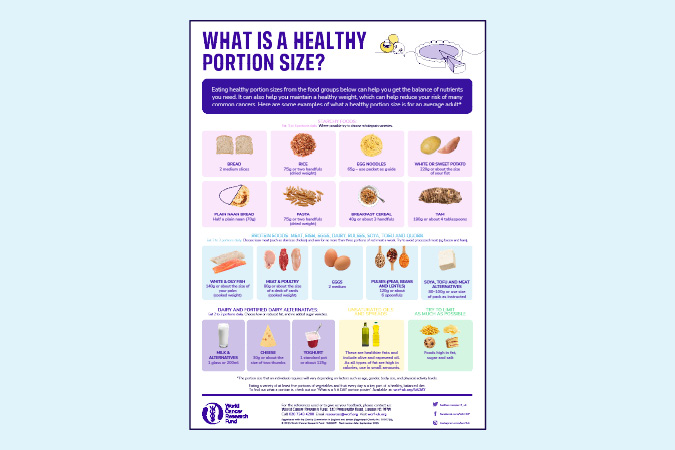
What is a healthy portion size?
This poster provides guidance on portion sizes for carbohydrates, protein, dairy, and oils and spreads.
Publication review date: January 2029
Healthy portion size poster
Many people are unsure what a healthy portion looks like. This poster provides clear, practical guidance on portion sizes for carbohydrates, protein, dairy, and oils and spreads.
Eating the right portion sizes helps ensure we get the nutrients we need to keep healthy and supports a healthy weight. Maintaining a healthy weight is important for overall health and can help reduce the risk of at least 13 types of cancer.
Support our work
We can only offer our guides and recipe booklets for free thanks to the generosity of people like you
10 ways to protect yourself against cancer
A comprehensive guide to our Cancer Prevention Recommendations.
Available as a booklet and a poster.
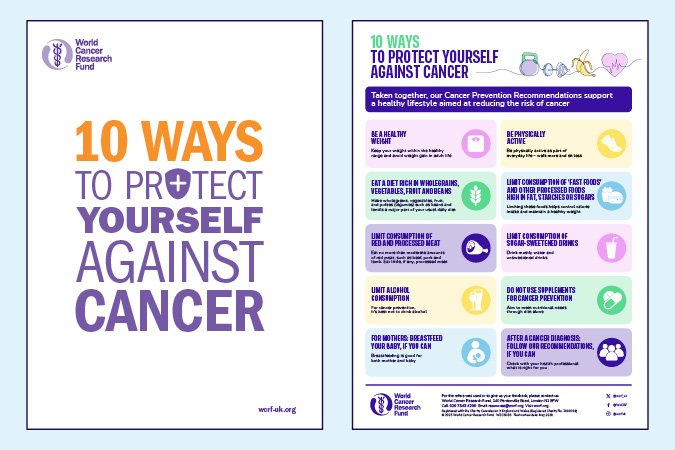
The Cancer Prevention Recommendations in this booklet and poster are based on the latest review of research into cancer prevention and survival related to diet, weight and physical activity, to ensure we provide the most reliable and up-to-date guidance on reducing your cancer risk.
As well as a comprehensive guide to all our Recommendations, this booklet and poster contain practical advice to help you make healthy choices to protect yourself against cancer, as well as other diseases such as heart disease and type 2 diabetes.
Support our work
We can only offer our guides and recipe booklets for free thanks to the generosity of people like you
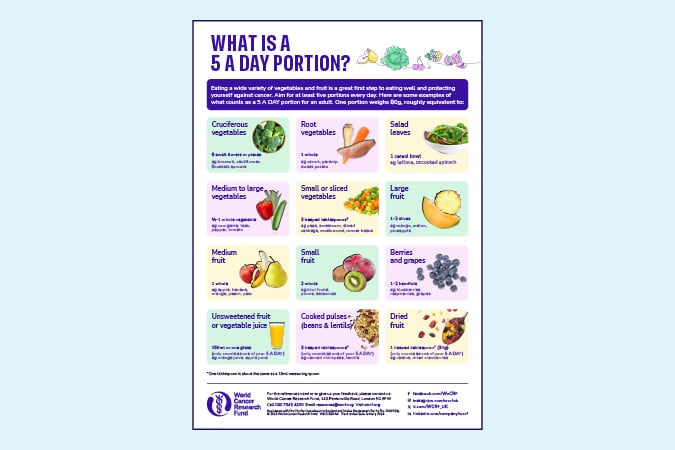
What is a 5 A DAY portion?
This poster provides guidance on portion sizes for fruit and vegetables, including fruit juice and beans.
Publication review date: January 2029
5 A DAY portion poster
Eating at least 5 portions of fruit and vegetables every day, known as 5 A DAY, supports good health. Fruit and vegetables provide essential nutrients such as vitamins, minerals and fibre, which help keep your body healthy.
One portion is around 80g for adults, but what does that look like in everyday foods? This poster shows what counts as one portion for a range of fruit and vegetables, as well as fruit juice and beans.
What about children? Download our 5 A DAY portion poster for children.
Support our work
We can only offer our guides and recipe booklets for free thanks to the generosity of people like you