
Alcohol and cancer
Drinking any type of alcohol increases your risk of 7 different types of cancer, and our evidence shows that there is no safe level of drinking.

On this page
Cutting down on alcohol is good for your health in many different ways. Drinking less alcohol can reduce your risk of cancer.
Evidence from World Cancer Research Fund shows that there is no safe level of alcohol.
What’s the link between alcohol and cancer?
Drinking alcohol increases the risk of the following cancers:
Some evidence suggests that drinking alcohol may lower the risk of kidney cancer, but this is outweighed by the increased risk of other cancers listed above.
Are some alcoholic drinks worse than others?
World Cancer Research Fund evidence shows that all types of alcoholic drinks have a similar impact on cancer risk: beers, wines or spirits. Drinking any amount of all types of alcoholic drinks increase cancer risk.
What’s the science behind alcohol and cancer?
When alcohol is broken down in the body, compounds are formed that can directly damage the DNA, which can then lead to cancer.
Drinking alcohol can also lead to liver cirrhosis (scarring), which is a known cause of liver cancer.
Alcohol may make it easier for other dietary or environmental cancer-causing compounds, such as those in tobacco smoke, to get into the cells and cause DNA damage.
Our evidence shows that for some cancer types, alcohol is particularly harmful if you also smoke.
Our Cancer Prevention Recommendation
- Limit alcohol consumption. For cancer prevention, it’s best not to drink alcohol at all.
- If you do drink alcoholic drinks, do not drink more than national guidelines. In the UK, this is 14 units a week, spread over at least 3 days.
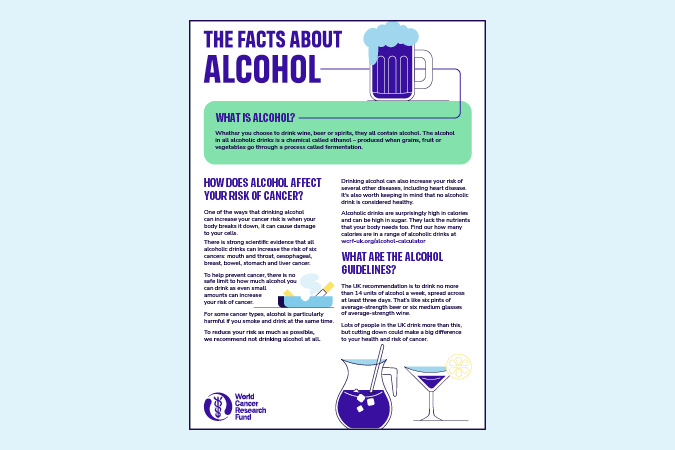
Get your free alcohol factsheet
Learn more about alcohol, different alcohol units and tips to reduce
Tips for drinking less alcohol
1. Go small
Choose smaller servings – like a 125ml glass of wine instead of a large one, or a half pint instead of a full pint.
This will save you money too.
Avoid double shots of spirits.
2. Alternate
Replace every other alcoholic drink with a non-alcoholic drink such as water or a low-calorie soft drink
3. Dilute alcoholic drinks
Dilute your alcoholic drinks with sugar-free calorie mixers to make them last longer. For example, fill half your wine glass with wine and the rest with soda water or sugar-free lemonade.
4. Avoid salty snacks
Salty snacks can make you thirsty and may encourage you to drink more.
5. Don’t stock up
The more you buy and have in the house, the more likely you are to drink.
6. Drink water
Before reaching for an alcoholic drink, at home or in the pub, have a glass of water first as you may just be thirsty.
7. Sip slowly
Instead of holding onto your glass, take a sip and then set it down.
This will help you drink more slowly and might reduce how much you drink.
8. Plan ahead and keep track
At the start of the week, think about your social plans and set a limit for how much you’ll drink at each event.
While drinking, keep a note of how much you drink too. This can help you stay on track.
Let others know it’s your alcohol-free night to reduce social pressure to drink.
9. Change your drinking habits
People often drink alcohol to relieve boredom or stress.
Try to set goals such as doing something creative instead – exercise is also a great distraction.
Why not allocate certain days of the week when you don’t drink any alcohol too.
10. Buy low-alcohol or alcohol-free alternatives
There are many low-alcohol and alcohol-free choices available today.
This way, you can enjoy a drink without feeling worried about not drinking alcohol.
Alcohol and calories
Alcohol can be surprisingly high in calories. They’re often called ‘empty calories’ because alcoholic drinks don’t contain any essential nutrients your body needs, such as vitamins, minerals, fibre or protein.
The lack of fibre means it’s easy to drink large amounts without feeling full. For example:
- A pint of beer or lager contains about 170 calories – similar to three chocolate chip biscuits.
- A large 250ml glass of wine contains about 190 calories – similar to a plain butter croissant.
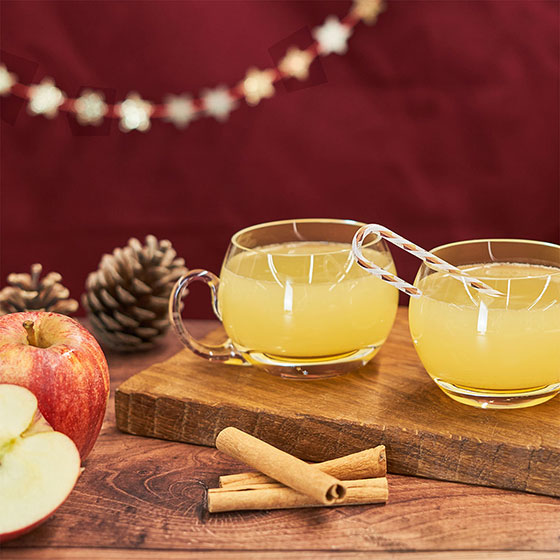
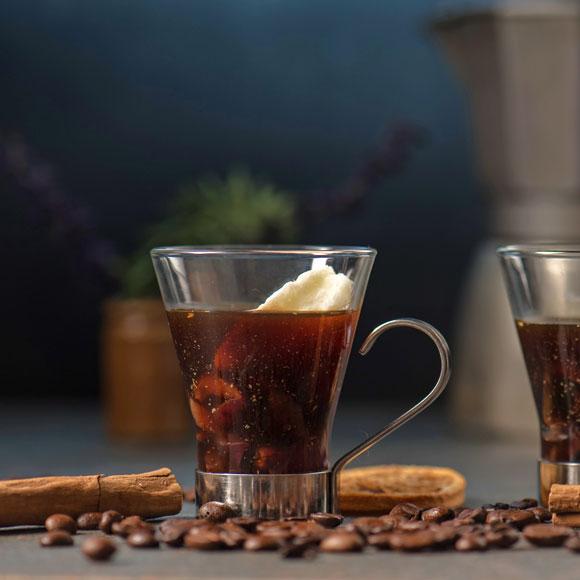
Try one of our mocktails

Alcohol policy
Our policy position on alcohol and cancer outlines what governments need to do to reduce the harms caused by alcohol. How much a person drinks is not entirely down to individual choice. Policies on alcohol make a difference. We recommend the following to help people drink less:
- Making alcohol less affordable, including a minimum unit price
- Restricting where and when alcohol can be sold
- Health labels on alcohol showing the risks
- Restricting or banning alcohol companies from sponsoring events
Page last reviewed: June 2026
Next review: June 2029
-
References
- World Cancer Research Fund/ American Institute for Cancer Research. Alcoholic drinks and cancer [Internet]. 2018. Available from: https://www.wcrf.org/research-policy/library/alcoholic-drinks-and-cancer/
Related content



Preventing cancer. Saving lives
While society continues to search for a cure, our prevention and survival work helps people to live longer, healthier lives – free from the devastating effects of cancer.